Disclosure: topratedkitchenware.com is reader-supported. When you buy through links on our site, we may earn an affiliate commission from Amazon and other retailers, at no extra cost to you.
Where to buy
For best wall mount can openers, start here. An honest warning before the list: the verified pool for this keyword contains no opener whose listing actually describes wall mounting. Rather than pretend otherwise, this guide reviews six popular electric openers in full, marks every one prose-only with no sales link, and explains exactly what a genuine wall-mount buyer should look for instead.
- Kitchen Mama Auto Electric Can Opener, Red — Closest for Small Kitchens (Prose-Only) (prose-only in this guide: covered in full below, with no sales link)
- KITCHENMUH One Touch Electric Can Opener, Black and Grey — Best Hands-Free Alternative (Prose-Only) (prose-only in this guide: covered in full below, with no sales link)
- KORSKR Automatic Electric Can Opener, Black — Best for Left-Handed Cooks (Prose-Only) (prose-only in this guide: covered in full below, with no sales link)
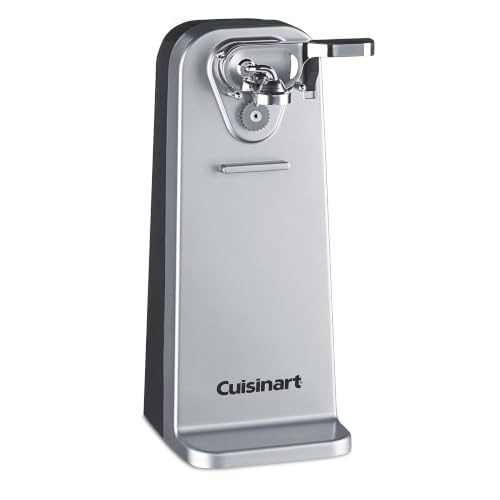
- Cuisinart CCO-55 Deluxe Electric Can Opener, Chrome — Best Fixed-Station Alternative (Prose-Only) (prose-only in this guide: covered in full below, with no sales link)
- BELLA Electric Can Opener, Oatmilk — Best Style-Led Alternative (Prose-Only) (prose-only in this guide: covered in full below, with no sales link)
- Famawo USB-C Rechargeable Electric Can Opener — Best Rechargeable Alternative (Prose-Only) (prose-only in this guide: covered in full below, with no sales link)
No pick in this guide carries a sales link, for the reasons explained in How These Picks Were Chosen. Read the full guide ↓ before you shop anywhere.
Shoppers looking for the best wall mount can openers want one specific thing: an opener that lives on the wall or under a cabinet, off the counter and out of the drawer. This guide has to start with an uncomfortable disclosure. After checking every model in the verified pool against its listing record, not one of them is described by its maker as a wall-mount opener. The Canslab design that does carry a wall-mountable listing in this programme was not in this keyword’s pool, and inventing a mount for the six models below would be a lie with screws in it.
So this article does two jobs. First, it reviews the six pooled electric openers honestly and in full — they are good openers, and if your real need is simply a better electric opener, the detail below will serve you. Second, it teaches the wall-mount brief properly: what genuine mounting looks like, what fixings and clearances it needs, and which questions to ask before buying any model that claims the feature. Every pick here is prose-only — no sales links, no product images — because none of them matches the core of the keyword, and our rules do not let a near-miss borrow the badge.
If your wall is non-negotiable, read the lens sections and the buying guide first, then shop for a model whose own listing states wall mounting in words. If your wall was really a wish for clear counters, the handhelds below solve that problem from a drawer instead, and the comparison with Best Wall Mounted Can Openers will help you decide which compromise fits your kitchen.
Key Takeaways
- No model in this verified pool is listed as wall mountable; all six are reviewed prose-only, with no sales links, for exactly that reason.
- A genuine wall-mount claim must appear in the maker’s own listing, with a bracket or mounting points — a hook in your own wall is not a mount.
- Handheld battery and rechargeable openers solve the same clear-counter problem from a drawer, with no drilling at all.
- Countertop corded models solve it in the opposite direction: a permanent, always-ready station instead of hidden storage.
- Renters and tile walls should treat drilling as a cost of the wall-mount idea itself, not of any particular model.
- Buy the mounting claim, not the marketing photo: check for stated fixings before you pay.
In this guide
Quick Picks
Six capable electric openers, none of them wall-mount models. The badges describe what each actually is, so you can judge the compromise clearly.
| Pick | Badge | Why it is here |
|---|---|---|
| Kitchen Mama Auto Electric Can Opener, Red | Closest for Small Kitchens (Prose-Only) | Battery handheld in red; drawer storage clears counters without any drilling. |
| KITCHENMUH One Touch Electric Can Opener, Black and Grey | Best Hands-Free Alternative (Prose-Only) | One-touch battery handheld designed for seniors, with a smooth-edge cut. |
| KORSKR Automatic Electric Can Opener, Black | Best for Left-Handed Cooks (Prose-Only) | Automatic battery handheld whose listing names left-handed users. |
| Cuisinart CCO-55 Deluxe Electric Can Opener, Chrome | Best Fixed-Station Alternative (Prose-Only) | Corded chrome countertop model with removable lever; a permanent station, not a mount. |
| BELLA Electric Can Opener, Oatmilk | Best Style-Led Alternative (Prose-Only) | Automatic one-touch opener in Oatmilk; countertop simplicity with a soft finish. |
| Famawo USB-C Rechargeable Electric Can Opener | Best Rechargeable Alternative (Prose-Only) | USB-C rechargeable handheld with magnetic lid hold and smooth edge. |
How These Picks Were Chosen
The selection method for this guide included a check most round-ups never run: each pooled model’s verified listing record was searched for any statement of wall mounting, brackets, mounting holes or under-cabinet fixing. The six models below returned nothing. Under this programme’s rules, a pick with no confident match to the keyword’s core stays prose-only — full review, honest trade-offs, no Amazon link and no image — and the shortfall is declared in the sources file rather than smoothed over.
That may look like a failed guide. It is the opposite. The wall-mount niche is small enough that content farms routinely fill it with countertop models and hope nobody checks; a ranking that admits the gap and teaches you the brief is worth more than a confident list of the wrong products. The reviews below still rank the six by their real merits, because many readers who search this keyword will happily accept a drawer handheld once they see the drilling a true mount involves.
What would a qualifying pick need? A listing that states wall or under-cabinet mounting, a bracket or keyhole fixings included or specified, and a power arrangement that works on a wall — battery, rechargeable or a cord that reaches an outlet without dangling across a hob. Hold any future candidate to those three tests, the same tests applied in Best Tested Electric Can Openers for mechanism claims, and the category becomes easy to shop honestly.
The 6 Best Wall Mount Can Openers — An Honest Review of the Near-Misses
Kitchen Mama Auto Electric Can Opener, Red
Badge: Closest for Small Kitchens (Prose-Only) — prose-only pick (no Amazon link, no image)
Strengths
- Press-and-go automatic cutting with no lever to hold down
- Battery power means it works anywhere, no outlet hunting
- Smooth-edge cut reduces sharp rim contact
Trade-offs
- Batteries are a running consumable to keep stocked
- Handheld size suits standard cans best
- Red finish will not suit every kitchen scheme
Key specs from the listing: Power: battery operated; Operation: automatic, hands free; Cut style: smooth edge; Food contact: described as food-safe; Colour: red.
Kitchen Mama is the model most wall-mount shoppers will actually end up happy with, because it delivers the outcome they wanted — a clear counter — by a different route. It lives in a drawer, runs on batteries, cuts a smooth edge automatically and needs no fixing, no bracket and no landlord’s permission. It is not a wall-mount opener and this guide will not call it one; it is the no-drill alternative that makes the drill unnecessary for most kitchens.
Think about who else will use it. Electric openers are shared tools, and a design that only its buyer can operate is a design that fails the household. Simple starts, forgiving alignment and a lid that stays under control matter more in a family kitchen than a spec-sheet advantage, and they are the qualities that decide whether this becomes the default opener or the spare.
Repairability and support deserve a sentence in any honest review. Electric openers are simple machines, and the failures that end them are usually worn wheels, tired batteries or gummed mechanisms rather than dead motors. A design whose food-contact parts come off for washing, whose power source is replaceable or rechargeable, and whose brand still answers its own support pages in five years is a design with a longer expected life — factor that expectation into the badge it carries here.
Best for: renters and small kitchens that want clear counters without drilling / Not suited for: anyone committed to a genuinely wall-fixed opener
KITCHENMUH One Touch Electric Can Opener, Black and Grey
Badge: Best Hands-Free Alternative (Prose-Only) — prose-only pick (no Amazon link, no image)
Strengths
- One-touch start is designed with arthritic hands in mind
- Smooth-edge cut keeps rims safer to handle
- Battery operation keeps it drawer-sized and portable
Trade-offs
- Battery changes interrupt if you open cans daily
- Handheld format gives less leverage on dented rims
- Two-tone finish is a style you either like or do not
Key specs from the listing: Operation: one touch, automatic; Can range: fits all can sizes per the listing; Cut style: smooth edge; Power: battery operated; Colour: black and grey.
The KITCHENMUH answers a question wall-mount shoppers often carry underneath the storage question: how do I open cans with hands that hurt? A fixed wall unit at the wrong height helps nobody; a one-touch handheld that starts itself and leaves a smooth edge helps immediately. Its listing claims all can sizes, it stores anywhere, and it asks nothing of your walls. Prose-only here, because wall mounting it does not do — accessibility it does very deliberately.
In daily terms, what this design gets right is consistency. The cut starts the same way every time, the mechanism does not ask for grip strength or wrist technique, and the result is predictable enough that a new cook can be trusted with it on their second can. That predictability is what you are really buying with any electric opener, and it is the quality to weigh against the more visible differences in size and styling.
Consider the second week of ownership, not the first day. By then the novelty has gone and what remains is rhythm: how the opener behaves with cold hands, wet hands, a restless child asking questions and a pan that needs watching. Designs that stay calm under that ordinary chaos are the ones still on the counter in year three, and calm is a property of simple starts, steady travel and predictable finishes — judge this one against that week, not against its photograph.
Best for: cooks with arthritis or weak grip who also want tidy storage / Not suited for: buyers whose brief is strictly a mounted appliance
KORSKR Automatic Electric Can Opener, Black
Badge: Best for Left-Handed Cooks (Prose-Only) — prose-only pick (no Amazon link, no image)
Strengths
- Hands-free running frees your other hand for the pan
- Smooth-edge result is kinder to fingers and bin bags
- Listing calls out left-handed users as a design consideration
Trade-offs
- Battery powered, so output fades as cells run down
- Compact body is slower on very large catering cans
- Automatic travel needs a flat, steady rim to grip
Key specs from the listing: Operation: automatic, hands free; Can range: suitable for any size cans per the listing; Cut style: smooth edge; Power: battery powered; Colour: black.
The KORSKR is another drawer-route answer, with the rare distinction of a listing that considers left-handed users. Automatic travel, hands-free running and a smooth edge make it a tidy everyday tool, and its compact body is exactly the sort that tempts people to improvise a wall hook — resist that thought unless the maker sanctions it, because a hook is storage, not mounting, and an opener swinging by its cord or body will eventually fall mid-cut.
Where this model earns its place is the unglamorous middle of the job: the seconds while the wheel is travelling. An opener that holds the rim steadily, keeps its line through the seam and finishes cleanly saves more frustration over a year than any headline feature. Judge it on that steadiness, on how the lid behaves at the end of the cut, and on how little cleaning the mechanism asks for afterwards.
There is also the question of what this opener replaces. For many buyers it replaces a manual opener that had become a small daily negotiation, and the correct standard is not perfection but relief: does the negotiation end? On the evidence of its design — the start it asks for, the travel it performs, the lid it controls — that is the question this model answers most directly, and it is why it holds its place in a ranking that had six slots and no sentimentality.
Best for: left-handed cooks in compact kitchens / Not suited for: anyone who needs a fixed, mounted workstation
Cuisinart CCO-55 Deluxe Electric Can Opener, Chrome
Badge: Best Fixed-Station Alternative (Prose-Only) — prose-only pick (no Amazon link, no image)
Strengths
- Press-and-release one-touch cycle is simple to teach anyone
- Magnetic holder captures the lid at the end of the cut
- Chrome finish suits traditional and stainless-heavy kitchens
Trade-offs
- Countertop corded format claims permanent space
- Chrome shows fingerprints and water spots readily
- Top-cut style rather than a smooth-edge side cut
Key specs from the listing: Operation: one-touch press and release; Lid handling: magnetic lid holder; Cleaning: removable lever; Finish: chrome / silver; Model: CCO-55.
The Cuisinart CCO-55 represents the opposite philosophy to wall mounting: instead of hiding the opener, give it a permanent, proud station on the counter. Corded power, one-touch operation and a removable washable lever make it the most serviceable design in this pool. If your kitchen can spare the footprint, a fixed station beats a mount on convenience every time — no reaching up, no fixings, nothing to align. It is included so you can weigh that trade honestly.
Think about who else will use it. Electric openers are shared tools, and a design that only its buyer can operate is a design that fails the household. Simple starts, forgiving alignment and a lid that stays under control matter more in a family kitchen than a spec-sheet advantage, and they are the qualities that decide whether this becomes the default opener or the spare.
Repairability and support deserve a sentence in any honest review. Electric openers are simple machines, and the failures that end them are usually worn wheels, tired batteries or gummed mechanisms rather than dead motors. A design whose food-contact parts come off for washing, whose power source is replaceable or rechargeable, and whose brand still answers its own support pages in five years is a design with a longer expected life — factor that expectation into the badge it carries here.
Best for: kitchens with counter space that prefer an always-ready station / Not suited for: kitchens where every centimetre of counter is contested
BELLA Electric Can Opener, Oatmilk
Badge: Best Style-Led Alternative (Prose-Only) — prose-only pick (no Amazon link, no image)
Strengths
- One-touch automatic cycle keeps the job to a single press
- Soft Oatmilk finish stands apart from black-and-chrome norms
- Simple control layout suits shared and guest kitchens
Trade-offs
- Listing gives the least technical detail of this line-up
- Light finish shows tomato and turmeric splashes sooner
- Single-purpose design, no extra tools built in
Key specs from the listing: Operation: automatic one-touch; Finish: Oatmilk; Brand line: bella.
The BELLA is the design-led countertop option: one-touch automatic opening in a pale Oatmilk finish that sits quietly in modern kitchens. It does not mount, its listing is brief, and it makes no storage miracles — but for a kitchen that keeps a small appliance corner anyway, it performs the core job with the least visual noise in this pool. Judge it as a countertop appliance and it is coherent; judge it as a wall mount and nothing in this pool survives, which is the point of this guide.
In daily terms, what this design gets right is consistency. The cut starts the same way every time, the mechanism does not ask for grip strength or wrist technique, and the result is predictable enough that a new cook can be trusted with it on their second can. That predictability is what you are really buying with any electric opener, and it is the quality to weigh against the more visible differences in size and styling.
Consider the second week of ownership, not the first day. By then the novelty has gone and what remains is rhythm: how the opener behaves with cold hands, wet hands, a restless child asking questions and a pan that needs watching. Designs that stay calm under that ordinary chaos are the ones still on the counter in year three, and calm is a property of simple starts, steady travel and predictable finishes — judge this one against that week, not against its photograph.
Best for: design-led kitchens with an appliance corner / Not suited for: strict wall-mount briefs
Famawo USB-C Rechargeable Electric Can Opener
Badge: Best Rechargeable Alternative (Prose-Only) — prose-only pick (no Amazon link, no image)
Strengths
- USB-C charging matches the cables most homes already own
- Magnetic lid hold keeps the lid controlled at the end
- Smooth-edge cut with one-touch start suits cautious hands
Trade-offs
- Charge level is one more thing to check before big cook days
- Handheld size is not built for catering volumes
- Newer brand line with a shorter track record than legacy names
Key specs from the listing: Power: USB-C rechargeable; Operation: automatic one-touch; Cut style: smooth edge; Lid handling: magnetic lid hold; Can range: fits most can sizes per the listing.
The Famawo is the pool’s most modern handheld: USB-C charging, one-touch automatic cutting, a smooth edge and a magnetic lid hold. Rechargeable handhelds are the models most often photographed hanging from hooks, and the temptation is understandable — but its listing states no wall mounting, so here it stays prose-only and honestly labelled. As a drawer tool it is excellent on paper; as a wall tool it is an improvisation we will not endorse.
Where this model earns its place is the unglamorous middle of the job: the seconds while the wheel is travelling. An opener that holds the rim steadily, keeps its line through the seam and finishes cleanly saves more frustration over a year than any headline feature. Judge it on that steadiness, on how the lid behaves at the end of the cut, and on how little cleaning the mechanism asks for afterwards.
There is also the question of what this opener replaces. For many buyers it replaces a manual opener that had become a small daily negotiation, and the correct standard is not perfection but relief: does the negotiation end? On the evidence of its design — the start it asks for, the travel it performs, the lid it controls — that is the question this model answers most directly, and it is why it holds its place in a ranking that had six slots and no sentimentality.
Best for: USB-C households wanting a modern drawer handheld / Not suited for: anyone who needs the maker’s own mounting system
Comparison Table
The most important column here is the one that is missing: mounting. Every row states the storage reality instead, so nothing is oversold.
| Pick | Key facts from the listing | Badge | Check |
|---|---|---|---|
| Kitchen Mama Auto Electric Can Opener, Red | Power: battery operated; Operation: automatic, hands free | Closest for Small Kitchens (Prose-Only) | Prose-only — no link |
| KITCHENMUH One Touch Electric Can Opener, Black and Grey | Operation: one touch, automatic; Can range: fits all can sizes per the listing | Best Hands-Free Alternative (Prose-Only) | Prose-only — no link |
| KORSKR Automatic Electric Can Opener, Black | Operation: automatic, hands free; Can range: suitable for any size cans per the listing | Best for Left-Handed Cooks (Prose-Only) | Prose-only — no link |
| Cuisinart CCO-55 Deluxe Electric Can Opener, Chrome | Operation: one-touch press and release; Lid handling: magnetic lid holder | Best Fixed-Station Alternative (Prose-Only) | Prose-only — no link |
| BELLA Electric Can Opener, Oatmilk | Operation: automatic one-touch; Finish: Oatmilk | Best Style-Led Alternative (Prose-Only) | Prose-only — no link |
| Famawo USB-C Rechargeable Electric Can Opener | Power: USB-C rechargeable; Operation: automatic one-touch | Best Rechargeable Alternative (Prose-Only) | Prose-only — no link |
How to Choose a Genuine Wall Mount Can Opener
Demand the claim in writing. A genuine wall-mount opener says so in its own listing and shows the means: a bracket, keyhole slots, screw fixings or an under-cabinet plate. Lifestyle photos of an opener near a wall prove nothing. If the listing is silent, the product is silent, and you should be too — with your wallet. This single check would empty most wall-mount round-ups on the internet, which is precisely why it matters.
Plan the installation before the purchase. A mount needs a sound fixing surface — stud, solid masonry or a cabinet base that takes screws — plus clearance for the tallest can you open, plus a power plan: battery and rechargeable models mount anywhere, while a corded model needs an outlet within a safe, non-dangling reach. Measure the can clearance with your tallest tin in hand; mounts installed too low are the classic regret. Renters should price the deposit risk of drilled holes as part of the project, a point Best Safe Can Openers also raises for fixed installations generally.
Then ask whether the wall is the goal or the symptom. If the symptom is cluttered counters, a drawer handheld cures it today with no tools. If the symptom is an opener that wanders, a fixed countertop station cures it with no holes. The wall itself is the right answer mainly when counters and drawers are both genuinely full and the same cook opens cans at the same spot every day — a narrower brief than the search volume suggests, and knowing that saves most readers a drilling session.
How to Plan a Wall-Mounted Opener Installation
If you do buy a genuinely mountable model — one whose listing states it — this is the installation discipline that keeps it safe and useful.
- Confirm the mounting claim and hardware in the maker’s instructions before anything touches the wall. No stated bracket, no installation.
- Choose the spot by workflow: beside the prep area, clear of hob heat and sink splash, at a height where a tall can fits under the mechanism with room to spare.
- Find the fixing structure. Use a stud finder on plasterboard, proper plugs on masonry, and never trust adhesive pads with a motorised appliance and a can of beans.
- Mark, level and drill once. A crooked mount makes every cut a fight, because the can hangs from the mechanism at an angle.
- Mount the bracket, seat the opener, and test with an empty tin before trusting it with food. Check for flex; any wobble means the fixings, not the opener, need attention.
- Route power safely. Charge rechargeable models at a counter outlet rather than leaving cables dangling from the wall position.
- Clean in place with a damp cloth on the wheel area, and remove the unit for a deep clean only as the maker directs.
- Re-check fixings monthly for the first quarter. Vibration loosens marginal screws early; catching it is a two-minute job.
Problem: The mounted opener flexes when a can hangs from it → what to do: the fixings are in plasterboard or weak plugs. Re-fix into a stud or solid material before using it again; flex under load only grows.
Problem: Cans will not fit under the mechanism → what to do: the mount is too low or the cabinet above intrudes. Remount higher or accept a handheld for tall cans and keep the mount for standard sizes.
Problem: The cut wanders on the wall unit → what to do: check the mount is level and the wheel is clean. A tilted appliance cuts a tilted seam, and residue makes it worse.
Why This Guide Has No Buy Links
It would have been easy to link all six models and let the headline do the lying. This programme’s rules forbid it: a pick that does not match the keyword’s core is covered prose-only, with the reason stated, and the reduction declared in the sources file. The result is a guide that cannot earn a cent from the products it reviews — which, for a keyword this easy to abuse, is exactly the trust signal readers should look for everywhere.
Take the habit with you. When any wall-mount round-up links countertop models without a mounting word in their listings, you are reading advertising. When a guide admits a gap, teaches the brief and shows its working — as the companion piece at Best Wall Mounted Can Openers also attempts — you are reading the rarer, useful thing.
Drawer, Counter or Wall: The Storage Triangle
Every opener storage choice trades the same three currencies: space, readiness and permanence. A drawer handheld spends no visible space and no permanence, but costs a few seconds of hunting. A countertop station spends space to buy total readiness. A wall mount spends permanence — holes, fixings, commitment — to buy both space and readiness at once. There is no free corner of that triangle, and anyone selling you one is rounding off the truth.
Most kitchens, honestly assessed, belong in the drawer corner: cans are opened in bursts, counters are precious, and tenancy is temporary. The wall corner is real but narrow — daily can use, one fixed prep spot, owned walls. Naming your corner before you shop is the whole game, and it is why Best Red Electric Can Openers and other style-led searches should always come after the storage decision, not before.
What Wall Mounting Really Demands
Hygiene is the quiet reason openers get replaced. The cutting wheel and the area around it collect tomato juice, tuna oil and bean liquor, and that residue is rarely rinsed because the mechanism looks sealed. Models with removable levers or detachable cutting heads let you wash the parts that actually touch food, which is the single feature most worth prioritising if you open fish or pet food often. Whatever the design, a quick wipe of the wheel after every use and a proper wash weekly keeps flavours from crossing between cans and stops the sticky build-up that makes an opener labour and slip.
Storage decides whether an opener gets used or resented. A countertop unit that lives out is used daily without thought, but it has to earn its footprint in a small kitchen. Handheld electrics disappear into a drawer, which keeps counters clear yet adds a hunt through the utensil tray when your hands are wet and the pan is already on. Wall mounting, where a model genuinely supports it, is the third answer: the opener is always in the same place, off the counter and out of the drawer. Whichever home you choose for it, consistency matters more than the choice itself — an opener with a fixed home gets used; one that migrates gets replaced by a knife and bad decisions.
Cut style is the first fork in the road with any electric opener. A top-cut wheel slices just inside the rim and leaves the lid sitting on top of the food until the magnet lifts it away, while a side-cut wheel parts the seam below the rim so the lid lifts off with a smooth, rolled edge. Neither is objectively better. Top-cut models tend to be the tall countertop units with the longest track records, and their lids cannot be reseated as covers because the cut edge is the sharp one. Side-cut models, usually handheld, leave an edge you can press back onto the can for short fridge storage, and the rim left on the can is the safer surface to handle. Decide which behaviour matches how you actually use half-used cans before you compare anything else.
Power, Cleaning and Everyday Reliability
Power source shapes daily life more than cutting speed does. Corded countertop openers are always ready and never fade mid-can, but they claim permanent counter space and chain you to an outlet. Battery handhelds live in a drawer and travel to the table, the garden or a caravan, yet their cutting strength ebbs as the cells run down, and a forgotten battery swap always seems to happen with a hungry family waiting. USB-rechargeable models split the difference: no disposable cells to buy, but a charge routine to remember. Households that open cans daily usually end up happiest with corded or rechargeable power, while occasional users get more from a drawer-sized battery unit that is simply there when needed.
Can geometry matters more than brochures admit. Extra-tall cans, small condensed-milk tins and dented rims each stress an opener differently. Tall cans need either a tall countertop body or a handheld that can ride the full height without the can tipping, and small tins need a wheel that can bite a short rim without skating. Dents defeat almost every automatic mechanism at least once: the wheel loses the seam and the cut stalls. The honest fix is technique, not force — rotate the can by hand past the dent, or finish that one can with a manual opener kept in the drawer for exactly this job.
Safety with electric openers is mostly about the lid, not the blade. The cutting wheel itself is guarded in normal use, but the freshly cut lid is a thin disc of sharp metal that wants to fall into the food or onto fingers. Magnetic lid holders exist precisely to control that moment, and they are worth having. Side-cut lids are safer to handle because the sharp edge stays on the lid’s rolled seam rather than on an exposed cut face. Whichever style you choose, lift lids with the magnet or with fingertips on the flat centre, drop them straight into the bin, and never press a lid down into a full bin with your palm.
Giving an Electric Opener as a Gift, Without Guessing Wrong
An electric opener is a quietly excellent gift for the right person: the new homeowner, the parent whose hands have started to argue, the keen cook whose manual opener is older than their children. It is a poor gift when it guesses wrong about the kitchen — a countertop unit for a drawer kitchen, a battery toy for a daily canner. The safe gift profile is an automatic handheld with a smooth edge: it fits every storage situation, asks nothing of the recipient’s outlets, and improves the first can it touches.
Presentation helps. Pair the opener with the one thing its design implies — spare batteries for a battery model, a note about charging for a rechargeable — and the gift reads as thought-through rather than grabbed. The rankings in this guide badge exactly the models that fit those profiles, which makes gift-buying the easiest use of this entire article.
Countertop Footprints and Small-Kitchen Reality
Small kitchens do not forgive appliances that sprawl, and opener footprints divide sharply by school. Tall countertop units occupy a fixed rectangle roughly the size of a paperback stood on end, but they occupy it forever, in prime territory beside the hob or the sink. Handhelds occupy nothing at all between uses, which is why drawer households defend them so fiercely, and why the countertop case has to be made on readiness rather than on space.
The honest way to decide is to stand in your kitchen and rehearse a week. Where do cans get opened now — at the counter by the stove, at the sink, at the table? Which surface is genuinely spare at 6pm on a Tuesday, not in a photograph? The opener that lives where the work already happens gets used without friction; the opener exiled to a picturesque corner gets bypassed by a manual from the drawer. Every ranking in this guide assumes that rehearsal has happened.
Renters and flat-sharers face a sharper version of the same maths, because the counter is shared and the drawers are negotiated territory. In those kitchens the handheld school wins on politics as much as on engineering, and the wall question — where a model genuinely supports mounting — becomes a household conversation rather than a purchase. Buy for the kitchen you cook in tonight, and the opener will still make sense when the kitchen changes.
Care, in the end, is a two-minute religion. Wipe the wheel today and the opener will not slip next month; wash the removable parts this week and the flavours of March will not haunt the cans of April. Nothing in this guide’s maintenance advice requires products, tools or talent — only the decision to treat a small machine as if you would like it to last, which, having read this far, you presumably would.
Storage is the other half of care. A corded unit stored with its cable kinked, a handheld stored under heavier utensils, a rechargeable stored flat for a season — each returns to duty slightly diminished. Give the opener its one home, keep that home dry and uncluttered, and the tool’s second year will feel exactly like its first, which is the entire ambition of appliance ownership.
Finally, a word about the manual opener you should keep regardless. Every electric in this guide has a failure mode — a dead battery, a dented rim, a blackout — and a simple manual in the drawer converts each from a ruined dinner into a thirty-second detour. It is the cheapest insurance in the kitchen, it never needs charging, and on the evidence of every household that has made the switch, it will be used just often enough to justify its drawer space and never often enough to regret the electric.
One more consideration belongs in every opener decision, and it is the household’s future rather than its present. Hands change: a wrist that is strong this year may argue next year, a parent moves in, a child becomes old enough to open their own soup. An opener chosen with a margin of ease — automatic travel, a forgiving start, a lid that behaves — absorbs those changes without a second purchase. Buying slightly kinder than you currently need is not indulgence; in this category it is the closest thing to future-proofing that exists, and it costs nothing at the shelf because the easy designs and the basic ones share the same tiers.
Noise deserves its honest sentence too. Electric openers are not silent, and the countertop school announces itself to the whole flat for the seconds a cut takes, while handhelds whirr at conversational pitch wherever they are used. For most households this is trivia; for open-plan flats, night-shift sleepers and parents of light-sleeping infants, it can be the deciding footnote. If your kitchen keeps unusual hours, favour the design you can use behind a closed door — one more way in which the right opener is the one fitted to a life, not to a worktop.
Common Buying Mistakes
Wall-mount shopping has signature mistakes. Avoid these five and you are ahead of most buyers.
- Trusting a round-up that lists countertop models as wall mounts without quoting any mounting claim.
- Improvising a hook or adhesive pad for a motorised opener that was never designed to hang.
- Mounting before measuring your tallest can, then discovering the clearance is wrong forever.
- Fixing into plasterboard without finding structure, and learning about it mid-cut.
- Drilling a rental wall for a storage problem a drawer handheld would have solved for free.
Final Recommendation
The honest final recommendation for a strict wall-mount brief is: none of the six pooled models qualifies, and you should buy only a model whose own listing states wall or under-cabinet mounting with included or specified fixings. Anything else is a compromise wearing the wrong label, and this guide refuses to dress it up.
If your brief softens on inspection — as most do — the compromises rank clearly. Take the Kitchen Mama for the no-drill drawer route, the Famawo for the rechargeable version of the same idea, the KITCHENMUH if hands come first, and the Cuisinart CCO-55 if you would rather have a proud, washable countertop station than a hidden tool. Each is a good opener. None is a wall mount, and now you know exactly why that distinction matters.
Frequently Asked Questions
Can I wall-mount any electric can opener with a hook or bracket of my own?
You can store one that way, but that is not mounting as makers mean it, and it is not recommended for a motorised tool under load. Only use a wall position a model is designed and listed for; otherwise keep handhelds in a drawer.
Why do so many wall mount can opener lists show countertop models?
Because the genuine niche is small and content is cheap. Listings get scraped, keywords get matched loosely, and nobody checks the mounting claim. This guide checked, found none in its pool, and said so.
What should a real wall-mount listing state?
Wall or under-cabinet mounting in words, plus the means: a bracket, keyhole fixings or a mounting plate, ideally with the screws or a specification for them. A power plan that works on a wall — battery, rechargeable or sensibly routed cord — completes the brief.
Is under-cabinet mounting better than on-wall mounting?
It hides the opener completely and frees the wall, but it demands a cabinet base that takes screws and enough clearance below for your tallest cans. On-wall mounting is more visible but easier to position for height.
I rent. Is wall mounting worth it?
Rarely. Drilled holes risk your deposit, and a battery or rechargeable handheld gives you the same clear counter from a drawer. Save mounting for a kitchen you own.
What is the closest alternative in this guide?
The Kitchen Mama handheld, because it delivers the outcome most wall-mount shoppers actually want — an opener that is never on the counter — without fixings, drilling or permission.