Disclosure: topratedkitchenware.com is reader-supported. When you buy through links on our site, we may earn an affiliate commission from Amazon and other retailers, at no extra cost to you.
Where to buy
For best wall mounted can openers, start here. One of the six verified models below genuinely belongs here: the Canslab Ultrablade PRO, whose listing states it is wall mountable, carries full links. The other five are popular electric openers whose listings make no mounting claim, so they are reviewed in full but prose-only — no links, no images — and this guide says exactly why.
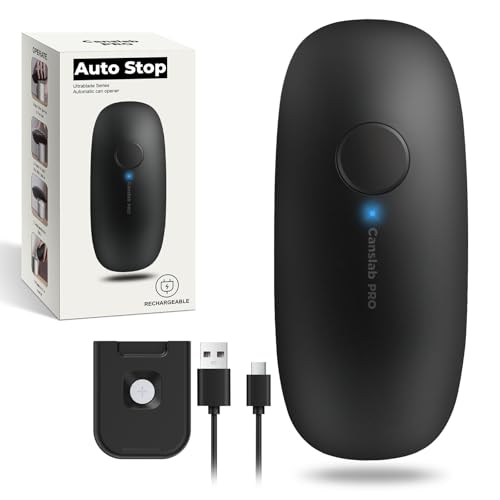
- Canslab Ultrablade PRO Electric Can Opener, Black — Best Wall Mounted Pick
- Amazon Basics 3-In-1 Electric Can Opener, Black — Best Countertop Multi-Tool (Prose-Only) (prose-only in this guide: covered in full below, with no sales link)
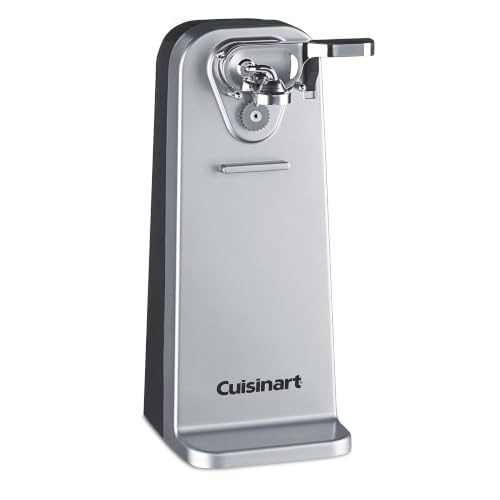
- Cuisinart Deluxe Electric Can Opener CCO-50BKN, Black — Best Washable Station (Prose-Only) (prose-only in this guide: covered in full below, with no sales link)
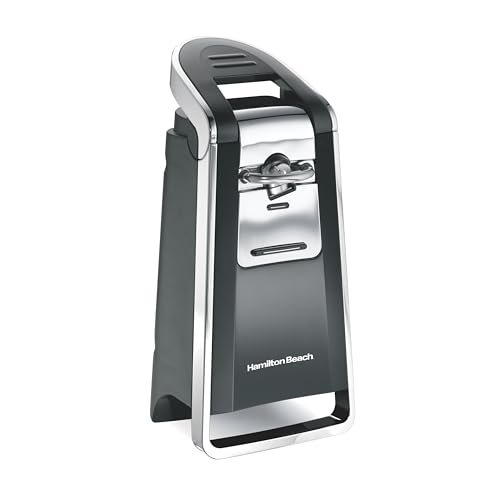
- Hamilton Beach Smooth Touch Electric Can Opener 76606AG — Best for Tall Cans (Prose-Only) (prose-only in this guide: covered in full below, with no sales link)
- Kitchen Mama Auto Electric Can Opener, Red — Best Drawer Alternative (Prose-Only) (prose-only in this guide: covered in full below, with no sales link)
- KITCHENMUH One Touch Electric Can Opener, Black and Grey — Best for Arthritic Hands (Prose-Only) (prose-only in this guide: covered in full below, with no sales link)
Check on Amazon — start with our first pick, then read the full guide ↓ for the honest trade-offs behind every ranking.
The best wall mounted can openers are a narrower category than the internet pretends. A wall-mounted opener is fixed: bracketed to a wall or screwed beneath a cabinet, always in the same place, opened with cans brought to it. Most models sold under this keyword are nothing of the sort. In this guide’s verified pool of six, exactly one listing — the Canslab Ultrablade PRO — states wall mounting. That honesty shapes everything below: one linked pick that truly fits the brief, and five prose-only reviews of good openers that do not.
Why insist on the distinction? Because a mounted opener changes your kitchen permanently. It needs sound fixings, the right height, clearance for tall cans and a cleaning routine you can do in place. Buying a countertop model under a wall-mounted headline gives you none of that planning and all of the disappointment. Readers who arrived from Best Wall Mount Can Openers will find this guide is the stricter twin: same pool discipline, same refusal to let a near-miss borrow the label.
If you own your walls, open cans daily at one prep spot, and want the opener permanently out of the drawer-and-counter argument, the Canslab deserves your first look and carries our first badge. If your situation is softer than that, the five prose-only alternatives below map the compromises — drawer handhelds, an accessibility specialist and two proud countertop stations — so you can choose the compromise with your eyes open.
Key Takeaways
- Only the Canslab in this pool is listed as wall mountable, so only it carries sales links in this guide.
- A mounted opener needs structure to fix into, clearance for your tallest can, and a power plan that works on a wall.
- Rechargeable power suits mounting best: no dangling cord, no battery swaps at height.
- The other five picks are good openers solving different problems — drawer storage, weak grip, permanent countertop stations.
- Measure can clearance before drilling; a mount set too low is a permanent daily annoyance.
- If you rent, the drawer route almost always beats the deposit risk of fixings.
In this guide
Quick Picks
One true wall-mount pick, five honest alternatives. Badges name what each model actually does, so the comparison stays truthful.
| Pick | Badge | Why it is here |
|---|---|---|
| Canslab Ultrablade PRO Electric Can Opener, Black | Best Wall Mounted Pick | The one genuinely wall-mountable model here: rechargeable, side-cut, auto stop. |
| Amazon Basics 3-In-1 Electric Can Opener, Black | Best Countertop Multi-Tool (Prose-Only) | Corded 3-in-1 countertop unit; a fixed station rather than a wall mount. |
| Cuisinart Deluxe Electric Can Opener CCO-50BKN, Black | Best Washable Station (Prose-Only) | Single-touch countertop Cuisinart with a removable, washable lever. |
| Hamilton Beach Smooth Touch Electric Can Opener 76606AG | Best for Tall Cans (Prose-Only) | Side-cut countertop model listed for standard, extra-tall and pop-top cans. |
| Kitchen Mama Auto Electric Can Opener, Red | Best Drawer Alternative (Prose-Only) | Battery handheld in red; the no-drill route to a clear counter. |
| KITCHENMUH One Touch Electric Can Opener, Black and Grey | Best for Arthritic Hands (Prose-Only) | One-touch battery handheld designed for seniors, smooth-edge cut. |
How These Picks Were Chosen
Selection began with the verified pool and a single screening question: does the model’s own listing record state wall mounting? One did — the Canslab Ultrablade PRO, described in its listing as wall mountable alongside its USB-rechargeable, side-cut, auto-stop specification. The other five listings were checked the same way and contain no mounting claim, so under this programme’s rules they are prose-only: reviewed fully, linked never, and flagged in the sources file with the reason.
Ranking then proceeded on two tracks. The qualifying pick was judged as a wall appliance: power practicality at height, cut quality, lid control and the cleaning you can realistically do in place. The alternatives were judged as what they are, because a reader whose brief softens still deserves a ranked answer. Spec boxes throughout contain only listing-verified facts, and no prices or ratings appear anywhere — check the live listing for the current price if the Canslab earns your click.
A word on what mounting does to the other criteria. Fixed appliances collect the same splashes as countertop ones but are harder to move to the sink, so in-place wipeability rises in importance; fixed appliances also vibrate against their fixings with every cut, so sound installation matters more than motor power. Those are the judgements woven through the reviews, and the same lens is applied in Best Tested Electric Can Openers to mechanism claims generally.
The 6 Best Wall Mounted Can Openers, Ranked Honestly

Canslab Ultrablade PRO Electric Can Opener, Black
Badge: Best Wall Mounted Pick
Strengths
- Side cut leaves a smooth edge and a lid you can reseat
- Smart auto stop ends the cut without you watching the can
- Cordless, rechargeable design moves between counter, table and wall mount
Trade-offs
- Rechargeable battery needs topping up between heavy sessions
- Compact handheld body still needs two hands free at the start
- Side-cut technique takes one or two cans to learn
Key specs from the listing: Power: USB rechargeable, cordless in use; Operation: automatic with smart auto stop; Cut style: hands-free side cut with smooth edge; Mounting: listed as wall mountable; Colour: black.
The Canslab is this guide’s only fully linked pick because it is the only one whose listing claims the keyword’s core feature: it is described as wall mountable. The rest of its specification suits the wall unusually well. USB-rechargeable power means no cord trailing from the mount and no battery swaps performed on tiptoe; the side cut leaves smooth edges and resealable lids; smart auto stop means you can set a can going and use both hands for the pan. Mounted at prep height, it becomes the fixed station this keyword promises.
In daily terms, what this design gets right is consistency. The cut starts the same way every time, the mechanism does not ask for grip strength or wrist technique, and the result is predictable enough that a new cook can be trusted with it on their second can. That predictability is what you are really buying with any electric opener, and it is the quality to weigh against the more visible differences in size and styling.
Consider the second week of ownership, not the first day. By then the novelty has gone and what remains is rhythm: how the opener behaves with cold hands, wet hands, a restless child asking questions and a pan that needs watching. Designs that stay calm under that ordinary chaos are the ones still on the counter in year three, and calm is a property of simple starts, steady travel and predictable finishes — judge this one against that week, not against its photograph.
Best for: homeowners with one daily prep spot and walls they can fix into / Not suited for: renters or anyone unwilling to drill
Amazon Basics 3-In-1 Electric Can Opener, Black
Badge: Best Countertop Multi-Tool (Prose-Only) — prose-only pick (no Amazon link, no image)
Strengths
- Three tools in one footprint, handy in small kitchens short on gadgets
- Magnetic lid holder keeps the cut lid out of the food
- Corded 50W motor gives consistent cutting without battery management
Trade-offs
- Corded design needs a free outlet near the worktop
- Top-cut style leaves the rim edge that side-cut models avoid
- Extra functions add bulk compared with a single-purpose opener
Key specs from the listing: Functions: can opener, bottle opener and knife sharpener in one unit; Blade: stainless steel; Lid handling: magnetic lid holder; Power: 50W, corded; Colour: black.
The Amazon Basics 3-in-1 is the fixed-station alternative for kitchens that can spare counter but not commitment. It opens cans, bottles and sharpens knives from one corded footprint, with a magnetic lid holder doing the tidy work. Nothing in its listing suggests mounting, and its corded countertop design would gain nothing from a wall — its whole value is breadth at one station. Prose-only, honestly labelled, and genuinely useful if your brief turns out to be a station rather than a mount.
Where this model earns its place is the unglamorous middle of the job: the seconds while the wheel is travelling. An opener that holds the rim steadily, keeps its line through the seam and finishes cleanly saves more frustration over a year than any headline feature. Judge it on that steadiness, on how the lid behaves at the end of the cut, and on how little cleaning the mechanism asks for afterwards.
There is also the question of what this opener replaces. For many buyers it replaces a manual opener that had become a small daily negotiation, and the correct standard is not perfection but relief: does the negotiation end? On the evidence of its design — the start it asks for, the travel it performs, the lid it controls — that is the question this model answers most directly, and it is why it holds its place in a ranking that had six slots and no sentimentality.
Best for: kitchens wanting one fixed multi-tool station / Not suited for: strict wall-mounted briefs
Cuisinart Deluxe Electric Can Opener CCO-50BKN, Black
Badge: Best Washable Station (Prose-Only) — prose-only pick (no Amazon link, no image)
Strengths
- Single-touch operation suits cooks who struggle with manual openers
- Removable activation lever makes the cutting area easy to clean
- Tall countertop format handles standard cans without tipping
Trade-offs
- Countertop footprint is permanent counter space given up
- Corded only, so placement follows your outlets
- Top-cut action is not the smooth-edge side-cut style
Key specs from the listing: Operation: single-touch automatic; Lid handling: magnetic lid holder; Cleaning: removable activation lever; Colour: black; Model: CCO-50BKN.
The Cuisinart CCO-50BKN is the countertop traditionalist: single-touch, magnetic holder, and the removable lever that makes it the easiest mechanism here to keep properly clean. As a wall candidate it fails on its listing’s silence and its corded design; as a permanent counter station it is arguably better than a mount for heavy users, because everything about it — height, cleaning, reach — is effortless. Consider it the control group that shows what mounting has to beat.
Think about who else will use it. Electric openers are shared tools, and a design that only its buyer can operate is a design that fails the household. Simple starts, forgiving alignment and a lid that stays under control matter more in a family kitchen than a spec-sheet advantage, and they are the qualities that decide whether this becomes the default opener or the spare.
Repairability and support deserve a sentence in any honest review. Electric openers are simple machines, and the failures that end them are usually worn wheels, tired batteries or gummed mechanisms rather than dead motors. A design whose food-contact parts come off for washing, whose power source is replaceable or rechargeable, and whose brand still answers its own support pages in five years is a design with a longer expected life — factor that expectation into the badge it carries here.
Best for: heavy daily users with counter space to dedicate / Not suited for: kitchens where counter space is the whole problem
Hamilton Beach Smooth Touch Electric Can Opener 76606AG
Badge: Best for Tall Cans (Prose-Only) — prose-only pick (no Amazon link, no image)
Strengths
- Side-cut action leaves a smooth rim you can reseat as a cover
- Rated by its listing for extra-tall cans as well as standard sizes
- Push-down lever needs less grip strength than squeeze handles
Trade-offs
- Larger countertop body than handheld battery models
- Corded design ties it to one spot in the kitchen
- Side-cut lids can be fiddly to lift off the first few times
Key specs from the listing: Operation: easy push-down lever; Can range: standard, extra-tall and pop-top cans; Cut style: Smooth Touch side cut; Finish: black and chrome; Model: 76606AG.
The Hamilton Beach Smooth Touch earns its prose-only place on can range: its listing covers extra-tall and pop-top cans that would challenge a fixed mount’s clearance anyway. There is a real argument that tall-can households should not wall-mount at all, because clearance is the first casualty of a badly sited bracket — this countertop side-cutter sidesteps the issue entirely while keeping the smooth rim and the resealable lid. No mounting claim, no link, no apology: it solves a neighbouring problem better.
In daily terms, what this design gets right is consistency. The cut starts the same way every time, the mechanism does not ask for grip strength or wrist technique, and the result is predictable enough that a new cook can be trusted with it on their second can. That predictability is what you are really buying with any electric opener, and it is the quality to weigh against the more visible differences in size and styling.
Consider the second week of ownership, not the first day. By then the novelty has gone and what remains is rhythm: how the opener behaves with cold hands, wet hands, a restless child asking questions and a pan that needs watching. Designs that stay calm under that ordinary chaos are the ones still on the counter in year three, and calm is a property of simple starts, steady travel and predictable finishes — judge this one against that week, not against its photograph.
Best for: households using extra-tall cans that make mount clearance risky / Not suited for: buyers committed to a fixed wall installation
Kitchen Mama Auto Electric Can Opener, Red
Badge: Best Drawer Alternative (Prose-Only) — prose-only pick (no Amazon link, no image)
Strengths
- Press-and-go automatic cutting with no lever to hold down
- Battery power means it works anywhere, no outlet hunting
- Smooth-edge cut reduces sharp rim contact
Trade-offs
- Batteries are a running consumable to keep stocked
- Handheld size suits standard cans best
- Red finish will not suit every kitchen scheme
Key specs from the listing: Power: battery operated; Operation: automatic, hands free; Cut style: smooth edge; Food contact: described as food-safe; Colour: red.
Kitchen Mama is the answer most wall-mounted searches quietly settle for: a battery handheld that lives in a drawer, cuts smooth edges automatically and clears the counter as completely as any bracket. It mounts nothing and claims nothing, which is why it is prose-only — but if your tenancy, tiles or temperament say no to drilling, this is the compromise with the fewest regrets attached. The red finish even makes it findable in the drawer, a small daily mercy.
Where this model earns its place is the unglamorous middle of the job: the seconds while the wheel is travelling. An opener that holds the rim steadily, keeps its line through the seam and finishes cleanly saves more frustration over a year than any headline feature. Judge it on that steadiness, on how the lid behaves at the end of the cut, and on how little cleaning the mechanism asks for afterwards.
There is also the question of what this opener replaces. For many buyers it replaces a manual opener that had become a small daily negotiation, and the correct standard is not perfection but relief: does the negotiation end? On the evidence of its design — the start it asks for, the travel it performs, the lid it controls — that is the question this model answers most directly, and it is why it holds its place in a ranking that had six slots and no sentimentality.
Best for: renters and tile-walled kitchens avoiding fixings / Not suited for: homeowners who want a truly fixed appliance
KITCHENMUH One Touch Electric Can Opener, Black and Grey
Badge: Best for Arthritic Hands (Prose-Only) — prose-only pick (no Amazon link, no image)
Strengths
- One-touch start is designed with arthritic hands in mind
- Smooth-edge cut keeps rims safer to handle
- Battery operation keeps it drawer-sized and portable
Trade-offs
- Battery changes interrupt if you open cans daily
- Handheld format gives less leverage on dented rims
- Two-tone finish is a style you either like or do not
Key specs from the listing: Operation: one touch, automatic; Can range: fits all can sizes per the listing; Cut style: smooth edge; Power: battery operated; Colour: black and grey.
The KITCHENMUH closes the list with the accessibility brief. A wall mount fixes an opener at one height for every user; a one-touch handheld meets each user where they sit or stand. For arthritic hands that difference outweighs any storage elegance, and the listing’s all-can-sizes claim plus smooth-edge cut complete a design that thinks about its user first. Prose-only because mounting is not among its claims — inclusion is, and for the right household that trade is obviously correct.
Think about who else will use it. Electric openers are shared tools, and a design that only its buyer can operate is a design that fails the household. Simple starts, forgiving alignment and a lid that stays under control matter more in a family kitchen than a spec-sheet advantage, and they are the qualities that decide whether this becomes the default opener or the spare.
Repairability and support deserve a sentence in any honest review. Electric openers are simple machines, and the failures that end them are usually worn wheels, tired batteries or gummed mechanisms rather than dead motors. A design whose food-contact parts come off for washing, whose power source is replaceable or rechargeable, and whose brand still answers its own support pages in five years is a design with a longer expected life — factor that expectation into the badge it carries here.
Best for: cooks with arthritis or limited grip, at any storage arrangement / Not suited for: strict wall-mount shoppers
Comparison Table
One row carries links; the other five carry an explanation instead. That asymmetry is the most honest thing in this guide.
| Pick | Key facts from the listing | Badge | Check |
|---|---|---|---|
| Canslab Ultrablade PRO Electric Can Opener, Black | Power: USB rechargeable, cordless in use; Operation: automatic with smart auto stop | Best Wall Mounted Pick | Check on Amazon |
| Amazon Basics 3-In-1 Electric Can Opener, Black | Functions: can opener, bottle opener and knife sharpener in one unit; Blade: stainless steel | Best Countertop Multi-Tool (Prose-Only) | Prose-only — no link |
| Cuisinart Deluxe Electric Can Opener CCO-50BKN, Black | Operation: single-touch automatic; Lid handling: magnetic lid holder | Best Washable Station (Prose-Only) | Prose-only — no link |
| Hamilton Beach Smooth Touch Electric Can Opener 76606AG | Operation: easy push-down lever; Can range: standard, extra-tall and pop-top cans | Best for Tall Cans (Prose-Only) | Prose-only — no link |
| Kitchen Mama Auto Electric Can Opener, Red | Power: battery operated; Operation: automatic, hands free | Best Drawer Alternative (Prose-Only) | Prose-only — no link |
| KITCHENMUH One Touch Electric Can Opener, Black and Grey | Operation: one touch, automatic; Can range: fits all can sizes per the listing | Best for Arthritic Hands (Prose-Only) | Prose-only — no link |
How to Choose a Wall Mounted Can Opener
Start with the listing, not the headline. A wall-mounted candidate must state mounting in its own record and show the means — bracket, keyholes or a plate. In this entire verified pool, one model in six passed that test. Expect the same ratio in the wild, and budget your scepticism accordingly. If a listing is silent, treat the product as unmountable no matter what any round-up, photograph or review implies; the maker’s silence is the loudest fact available.
Then plan the physics. Fixings need structure: a stud, solid masonry or a cabinet base that genuinely takes screws. Clearance needs your tallest can plus working room, measured with the tin in hand, not estimated. Power needs a wall-friendly plan: rechargeable models like the Canslab mount anywhere and charge elsewhere, battery models mount anywhere and annoy at swap time, and corded models should make you ask why you are not simply keeping a countertop station. Splash zones matter too — mounts beside hobs collect grease that is harder to clean at height. The safety framing in Best Safety Can Openers applies to fixed installations with full force.
Finally, interrogate the brief itself. Wall mounting pays when the same cook opens cans at the same spot daily in a kitchen they own. It overpays when use is occasional, tenancy is temporary or drawers are half-empty. Most readers who run this honest check land on a drawer handheld or a countertop station and never miss the bracket — and the five prose-only reviews above exist to make that landing comfortable rather than sheepish.
How to Install and Use a Wall Mounted Can Opener
Written for a genuinely mountable model such as the Canslab. The discipline generalises to any fixed kitchen appliance.
- Read the maker’s mounting instructions first and use the specified fixings. Improvised hardware under a motorised load is how appliances end up on the floor.
- Pick the position by workflow: adjacent to the prep area, away from hob heat and direct sink splash, with the mechanism at a comfortable working height.
- Measure clearance with your tallest can in hand. Leave room for the can, the lid’s removal path and your hand, not just for the opener’s body.
- Fix into structure — stud, masonry with proper plugs, or a sound cabinet base. Mark, level, drill once, and check the bracket for flex before the opener goes on.
- Seat the opener, run an empty tin through it, and watch for wobble or wandering. Any movement at this stage is a fixing problem, not a product problem.
- For daily use, bring the can to the opener, start the cut, and let auto-stop or the mechanism finish before lifting the can clear with the lid controlled.
- Charge or power the unit away from the mount where the design allows, so no cable ever dangles across your prep space.
- Wipe the cutting area in place after use, and re-check the fixings monthly until you trust them, then quarterly.
Problem: The unit vibrates or shifts during a cut → what to do: stop using it at height until the fixings are re-checked. Vibration means the bracket is moving, and movement under load worsens quickly.
Problem: Tall cans foul the cabinet or wall above → what to do: the mount is sited too low. Either remount higher or reserve the mounted unit for standard cans and open tall tins with a handheld.
Problem: The cut quality fades over weeks → what to do: clean the wheel area in place first — mounted units collect splash and are easy to neglect — and confirm the battery or charge is not fading.
Mounted vs Stored: Living With the Decision
A mounted opener is a small piece of kitchen infrastructure, and it behaves like infrastructure: wonderful when sited well, faintly resented forever when sited badly. The first month decides which. Cooks who mount beside their prep zone, at their height, with their cans in mind, stop noticing the opener entirely — the highest praise a tool can earn. Cooks who mount where the wall happened to be free reach, stoop and swear in roughly equal measure.
There is also a household-politics dimension nobody mentions: a mount is a decision other cooks must live with. A drawer handheld offends nobody; a bracket at the wrong height offends everybody daily. If the kitchen has several cooks of different heights, that alone can settle the question — and it is a legitimate reason the alternatives in this guide, from the Kitchen Mama to the countertop Cuisinart, keep winning real kitchens. See Best Smooth Open Electric Can Openers for the cut-quality side of the same decision.
Cleaning and Hygiene at Height
Fixed appliances are cleaned less than portable ones; that is human nature, not a character flaw, and a good mounted routine designs around it. The wheel area needs a damp-cloth wipe after messy cans, a proper clean weekly, and a unit that detaches from its bracket — or charges and travels — makes the weekly clean dramatically more likely to happen. When you assess any mountable model, ask how the deep clean works before you ask how fast it cuts.
Splash geography matters too. Mounting beside a hob guarantees a grease film that a countertop unit would escape by being movable; mounting beside the sink guarantees water spots and the temptation to rinse what should never be rinsed. The quiet zone between prep and storage is the hygienic sweet spot, and it is usually available once you look for it deliberately rather than mounting where the drill first landed.
Fixings, Clearance and Power: The Mounted Triangle
Can geometry matters more than brochures admit. Extra-tall cans, small condensed-milk tins and dented rims each stress an opener differently. Tall cans need either a tall countertop body or a handheld that can ride the full height without the can tipping, and small tins need a wheel that can bite a short rim without skating. Dents defeat almost every automatic mechanism at least once: the wheel loses the seam and the cut stalls. The honest fix is technique, not force — rotate the can by hand past the dent, or finish that one can with a manual opener kept in the drawer for exactly this job.
Power source shapes daily life more than cutting speed does. Corded countertop openers are always ready and never fade mid-can, but they claim permanent counter space and chain you to an outlet. Battery handhelds live in a drawer and travel to the table, the garden or a caravan, yet their cutting strength ebbs as the cells run down, and a forgotten battery swap always seems to happen with a hungry family waiting. USB-rechargeable models split the difference: no disposable cells to buy, but a charge routine to remember. Households that open cans daily usually end up happiest with corded or rechargeable power, while occasional users get more from a drawer-sized battery unit that is simply there when needed.
Storage decides whether an opener gets used or resented. A countertop unit that lives out is used daily without thought, but it has to earn its footprint in a small kitchen. Handheld electrics disappear into a drawer, which keeps counters clear yet adds a hunt through the utensil tray when your hands are wet and the pan is already on. Wall mounting, where a model genuinely supports it, is the third answer: the opener is always in the same place, off the counter and out of the drawer. Whichever home you choose for it, consistency matters more than the choice itself — an opener with a fixed home gets used; one that migrates gets replaced by a knife and bad decisions.
Power, Cleaning and Everyday Reliability
Cut style is the first fork in the road with any electric opener. A top-cut wheel slices just inside the rim and leaves the lid sitting on top of the food until the magnet lifts it away, while a side-cut wheel parts the seam below the rim so the lid lifts off with a smooth, rolled edge. Neither is objectively better. Top-cut models tend to be the tall countertop units with the longest track records, and their lids cannot be reseated as covers because the cut edge is the sharp one. Side-cut models, usually handheld, leave an edge you can press back onto the can for short fridge storage, and the rim left on the can is the safer surface to handle. Decide which behaviour matches how you actually use half-used cans before you compare anything else.
Hygiene is the quiet reason openers get replaced. The cutting wheel and the area around it collect tomato juice, tuna oil and bean liquor, and that residue is rarely rinsed because the mechanism looks sealed. Models with removable levers or detachable cutting heads let you wash the parts that actually touch food, which is the single feature most worth prioritising if you open fish or pet food often. Whatever the design, a quick wipe of the wheel after every use and a proper wash weekly keeps flavours from crossing between cans and stops the sticky build-up that makes an opener labour and slip.
Safety with electric openers is mostly about the lid, not the blade. The cutting wheel itself is guarded in normal use, but the freshly cut lid is a thin disc of sharp metal that wants to fall into the food or onto fingers. Magnetic lid holders exist precisely to control that moment, and they are worth having. Side-cut lids are safer to handle because the sharp edge stays on the lid’s rolled seam rather than on an exposed cut face. Whichever style you choose, lift lids with the magnet or with fingertips on the flat centre, drop them straight into the bin, and never press a lid down into a full bin with your palm.
Can Sizes, Decoded: Standard, Tall and Everything Between
Can sizes sound standardised and are not, quite. The everyday food can in most kitchens holds roughly a family portion of vegetables, beans or soup; tall cans serve stock, large soups and catering habits; small tins carry condensed milk, pastes and pet portions. An opener’s relationship with that range is practical, not theoretical: tall cans test stability and clearance, small tins test whether the wheel can bite a short rim without skating, and every size tests whether the lid, once cut, is controlled or dropped.
The buying consequence is simple. If your cupboard is uniform, almost any opener in this guide serves you. If your cupboard is varied — and most family cupboards are — weight can-range claims heavily, keep a manual opener for the odd dented survivor, and treat “fits most cans” as an invitation to check the listing rather than as an answer. The can you cannot open is always the one the recipe needs tonight.
What Breaks First, and What It Costs You
Electric openers rarely die dramatically. They fade: a wheel that once bit cleanly starts to skate, a battery that once lasted a month lasts a week, a mechanism that once sounded smooth develops a labouring note on thick seams. Each fade has a cheap first remedy — clean the wheel, refresh the power, check the rim technique — and the reviews in this guide are written so those remedies stay visible, because an opener maintained at the fade stage usually recovers completely.
The genuinely terminal failures are mechanical: stripped gearing from forced cuts, a cracked housing from a counter-height fall, a motor burnt by a stalled seam held down too long. All three are behaviour-shaped, which is good news — they are the failures a careful owner simply never schedules. Treat a stall as information, never as a challenge, and the inexpensive machine in front of you will outlast a premium one in careless hands.
That is also the fairest frame for the whole category’s pricing. You are not buying cutting ability, which every model here possesses; you are buying the margin — of cleanliness, of power, of build — that decides how forgiving the tool is of real kitchens. Forgiveness, compounded over years of cans, is what the badges in this guide are really ranking.
Care, in the end, is a two-minute religion. Wipe the wheel today and the opener will not slip next month; wash the removable parts this week and the flavours of March will not haunt the cans of April. Nothing in this guide’s maintenance advice requires products, tools or talent — only the decision to treat a small machine as if you would like it to last, which, having read this far, you presumably would.
Storage is the other half of care. A corded unit stored with its cable kinked, a handheld stored under heavier utensils, a rechargeable stored flat for a season — each returns to duty slightly diminished. Give the opener its one home, keep that home dry and uncluttered, and the tool’s second year will feel exactly like its first, which is the entire ambition of appliance ownership.
One more consideration belongs in every opener decision, and it is the household’s future rather than its present. Hands change: a wrist that is strong this year may argue next year, a parent moves in, a child becomes old enough to open their own soup. An opener chosen with a margin of ease — automatic travel, a forgiving start, a lid that behaves — absorbs those changes without a second purchase. Buying slightly kinder than you currently need is not indulgence; in this category it is the closest thing to future-proofing that exists, and it costs nothing at the shelf because the easy designs and the basic ones share the same tiers.
Noise deserves its honest sentence too. Electric openers are not silent, and the countertop school announces itself to the whole flat for the seconds a cut takes, while handhelds whirr at conversational pitch wherever they are used. For most households this is trivia; for open-plan flats, night-shift sleepers and parents of light-sleeping infants, it can be the deciding footnote. If your kitchen keeps unusual hours, favour the design you can use behind a closed door — one more way in which the right opener is the one fitted to a life, not to a worktop.
Finally, a word about the manual opener you should keep regardless. Every electric in this guide has a failure mode — a dead battery, a dented rim, a blackout — and a simple manual in the drawer converts each from a ruined dinner into a thirty-second detour. It is the cheapest insurance in the kitchen, it never needs charging, and on the evidence of every household that has made the switch, it will be used just often enough to justify its drawer space and never often enough to regret the electric.
Common Buying Mistakes
Mounted purchases fail in predictable ways. These are the five to refuse.
- Buying any model as “wall mounted” without finding the mounting claim in its own listing.
- Siting the mount before measuring your tallest can, then living with the clearance error daily.
- Fixing into plasterboard or weak plugs and trusting vibration to be kind about it.
- Mounting beside the hob, where grease makes the fixed unit the dirtiest tool in the kitchen.
- Drilling as a renter, or in a multi-cook kitchen at one person’s height, without a household conversation first.
Final Recommendation
The recommendation is simple because the pool made it so: the Canslab Ultrablade PRO is the wall mounted pick. It is the only model here whose listing claims mounting, and its rechargeable, side-cut, auto-stop design is genuinely well shaped for life on a wall. If you buy one thing from this guide, buy that, site it carefully, and fix it into structure.
Everyone else should choose their compromise proudly. The Hamilton Beach if tall cans rule your cupboard, the Cuisinart CCO-50BKN if you would rather have a washable countertop station, the Amazon Basics if one station should do three jobs, the Kitchen Mama if drilling is out, and the KITCHENMUH if hands come before storage. A compromise chosen knowingly beats a mount bought on a headline — that is the whole lesson of this keyword.
The one linked pick in this guide is the opener whose listing supports the brief: Check on Amazon to see it, and hold every alternative — here or anywhere — to the same standard of proof.
Frequently Asked Questions
Which of these can openers can actually be wall mounted?
Only the Canslab Ultrablade PRO, whose listing describes it as wall mountable. The other five models in this guide make no mounting claim in their listings, so they are covered prose-only with no sales links.
What fixings does a wall mounted opener need?
Whatever the maker specifies, into structure: a stud, solid masonry with proper plugs, or a sound cabinet base. Never rely on adhesive pads or plasterboard alone for a motorised appliance under the load of a full can.
How high should a wall mounted opener be?
High enough that your tallest can fits beneath the mechanism with room for your hand and the lid’s removal, low enough that you are not working above shoulder height. Measure with the actual tin before drilling.
Are rechargeable openers good for wall mounting?
They are the best suited: no cord to route and no disposable batteries to change at height. Charge the unit at a counter outlet, return it to the mount, and the wall position stays clean.
Can I mount an opener under a cabinet instead?
If the model is designed and listed for it, yes — under-cabinet mounting hides the unit completely. Confirm the cabinet base takes screws and that clearance below suits your cans.
Is wall mounting worth it for occasional use?
Usually not. The benefits compound with daily use at one spot; occasional users get the same clear counter from a drawer handheld with none of the installation commitment.