Disclosure: topratedkitchenware.com is reader-supported. When you buy through links on our site, we may earn an affiliate commission from Amazon and other retailers, at no extra cost to you.
Where to buy
This guide to best zojirushi bread machines applies a strict fit rule: only picks that genuinely match the keyword carry Amazon links, where you can check the latest price on Amazon and confirm the exact variant before ordering. Picks that miss the keyword’s core requirement are reviewed prose-only, without links or images, and are marked as such in the list below and in the detailed reviews.
- Best Overall: Zojirushi Virtuoso Plus 2 Lb Breadmaker (BB-PDC20BA) — Check on Amazon
- Zojirushi Home Bakery Supreme Breadmaker — Check on Amazon
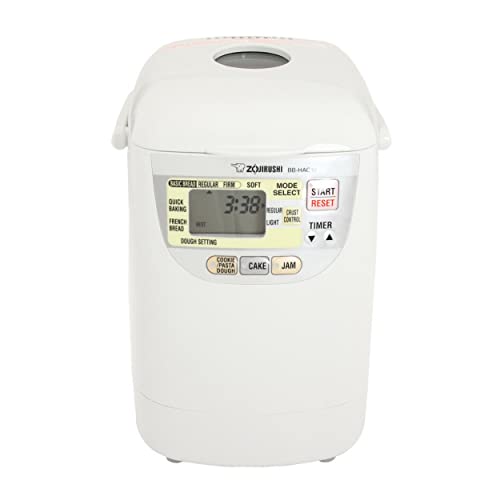
- Zojirushi Home Bakery Mini Breadmaker (BB-HAC10) — Check on Amazon
- Cuisinart Compact Automatic Bread Maker (CBK-110) — prose-only in this guide (no shopping link; see the review below for why)
- Zojirushi Home Bakery Maestro Breadmaker (BB-SSC10) — Check on Amazon
- Zojirushi Home Bakery Supreme Breadmaker Bundle (BB-CEC20) — Check on Amazon
Read the full guide ↓
If you have narrowed your search to the best zojirushi bread machines, you are already past the hardest decision — this is the brand most long-term home bakers end up recommending to each other. What remains is the genuinely useful question: which Zojirushi, for which kitchen? The range runs from a 1 lb mini to dual-heater 2 lb flagships, and the differences are about loaf size, heating hardware and program depth, not about basic competence.
This guide compares five Zojirushi machines in detail, plus one Cuisinart that arrived in the research pool and is reviewed prose-only for honesty’s sake — it is a decent machine, but it is not a Zojirushi, and this keyword is about Zojirushi. Every Zojirushi pick carries a verified listing link; the Cuisinart carries none, and the sources note explains why.
Read the size guidance first if you are torn. More Zojirushi buyers regret the wrong loaf size than any other choice, because a machine that makes too much bread quietly stops being used, while a machine that makes the right amount becomes part of the weekly routine.
If your shortlist is still open beyond one brand, our wider round-up of the Top 5 Best Bread Machines shows how these models sit in the overall market.
Key Takeaways
- Loaf size is the first decision: 1 lb for one or two people, 2 lb for families — Zojirushi makes both well.
- Dual heaters (Virtuoso Plus) give the most even top crust in the range.
- The Supreme models add cake, jam, dough and sourdough versatility beyond loaves.
- Every Zojirushi here has a long delay timer — the feature that makes home baking a habit.
- One pool pick (Cuisinart) is not a Zojirushi and is reviewed prose-only, without a link.
In this guide
Quick Picks
Six picks, six different reasons to buy. Scan the badges for the short answer, then read the detailed reviews for the honest trade-offs — every pick here has at least one.
| Pick | Badge | Standout points | Check it |
|---|---|---|---|
| Zojirushi Virtuoso Plus 2 Lb Breadmaker (BB-PDC20BA) | Best Overall | Loaf size: 2 lb; Programs: gluten-free and whole-wheat programs listed | Check on Amazon |
| Zojirushi Home Bakery Supreme Breadmaker | Best for Versatile Baking | Settings: cake, jam and dough settings listed; Timer: 13-hour timer | Check on Amazon |
| Zojirushi Home Bakery Mini Breadmaker (BB-HAC10) | Best for Small Households | Loaf size: 1 lb; Timer: 13-hour delay timer | Check on Amazon |
| Cuisinart Compact Automatic Bread Maker (CBK-110) | Best Cross-Brand Comparison (Prose-Only) | Loaf sizes: 3 loaf sizes up to 2 lb; Programs: 12 programs | Prose-only — see review |
| Zojirushi Home Bakery Maestro Breadmaker (BB-SSC10) | Best Everyday Zojirushi | Finish: premium white; Model: BB-SSC10WZ | Check on Amazon |
| Zojirushi Home Bakery Supreme Breadmaker Bundle (BB-CEC20) | Best for Sourdough and Big Loaves | Loaf size: 2 lb; Kneading: dual kneading blades | Check on Amazon |
How These Picks Were Chosen
This shortlist was built by comparing the current Zojirushi home range on the factors owners actually live with: loaf sizes offered, heating layout, kneading hardware, program list, timer length and footprint. Listings were cross-checked against the verified pool for this guide, and only specifications stated in those listings are printed in the spec boxes — nothing is copied from marketing summaries.
The method is research-led rather than hands-on: manufacturer documentation, listing data and the accumulated pattern of owner experience were weighed together, and no testing claims are made. Where a model is known for a particular strength or weakness — top-crust colour on single-heater machines, for example — the reviews say so plainly.
One pool product, a Cuisinart, was excluded from linking because this keyword is specifically about Zojirushi machines. It is still reviewed, honestly and in its place, so readers comparing across brands lose nothing — but it earns no link in a Zojirushi guide.
Bakers weighing American-made options can compare this range with the Best Us Made Bread Machines in our companion guide.
The Picks: best zojirushi bread machines in detail

Zojirushi Virtuoso Plus 2 Lb Breadmaker (BB-PDC20BA)
Badge: Best Overall
Strengths
- Dual heaters bake the top of the loaf as well as the base, giving a more even crust colour than single-element machines
- Dedicated gluten-free and whole-wheat programs take the guesswork out of the two hardest dough types
- The 13-hour timer means ingredients can be loaded at night for a fresh loaf in the morning
Trade-offs
- A full-size 2 lb machine takes real counter and cupboard space
- Two heaters and a large pan make it one of the heavier home breadmakers to move around
- The program list is long enough that the first few bakes involve some manual-reading
Key specs (from the verified listing)
- Loaf size: 2 lb
- Programs: gluten-free and whole-wheat programs listed
- Heating: dual heaters
- Timer: 13-hour timer
- Finish: black
- Model: BB-PDC20BA
The Virtuoso Plus is Zojirushi’s flagship-style home machine, and its defining feature is the dual-heater layout: elements at the base and in the lid, so the loaf bakes from both directions instead of relying on rising heat alone. In practice that is the difference between a pale, soft top crust and a loaf that looks like it came from an oven. The gluten-free and whole-wheat programs matter just as much — both doughs fail in predictable ways on generic cycles (gluten-free batter needs different kneading and proofing, whole-wheat needs a longer, gentler rise), and having tuned programs for each removes most of the trial and error.
It is a big, committed appliance: a 2 lb pan, a wide footprint, and enough settings that you will spend the first week learning rather than improvising. That is the right trade for a household that will actually bake weekly. If bread is an occasional weekend project, the smaller machines further down this list will suit you better and cost you less cupboard.
Within the Zojirushi range, this is the machine to measure the others against: if the Virtuoso Plus’s dual heaters and full program list feel like more than you need, step down the range with confidence — but know that this is the top of it.
Ownership details worth knowing: the pan and paddles are the parts to treat gently — hand-wash, no metal utensils — because the coating is doing real work in both kneading and release. The dual heaters also mean the lid gets genuinely hot during the bake, so the machine wants a little headroom and a moment’s care when you open it straight after the cycle. Schedule the timer so the loaf finishes when someone is home to take it out; a loaf left sitting in a warm, closed machine steams its own crust soft, which undoes exactly what the second heater achieved.
Best for: households baking full 2 lb loaves several times a week, including gluten-free and whole-wheat / Not suited for: solo bakers who mostly want small loaves, or very tight counters
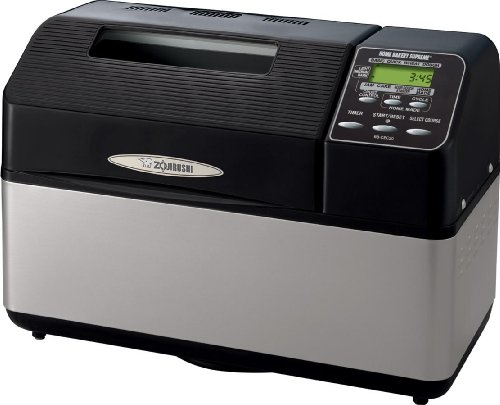
Zojirushi Home Bakery Supreme Breadmaker
Badge: Best for Versatile Baking
Strengths
- Cake, jam and dough settings stretch it well beyond loaf duty
- Quick-bake mode covers the days a standard cycle is too slow
- A long-running, well-documented model — recipes and advice for it are easy to find
Trade-offs
- An older design, so the control layout is less streamlined than the newest Virtuoso models
- No dual-heater lid, so top crust colour depends more on the standard bake
- The extra settings mean more menu scrolling for a plain white loaf
Key specs (from the verified listing)
- Settings: cake, jam and dough settings listed
- Timer: 13-hour timer
- Mode: quick-bake mode listed
- Line: Home Bakery Supreme
The Home Bakery Supreme is the machine that built Zojirushi’s reputation in home bread, and its appeal is breadth: alongside the standard loaf programs it carries cake, jam and dough settings, so the same appliance that turns out a sandwich loaf on Tuesday can make jam at the weekend and pizza dough on Friday night. The 13-hour timer supports the overnight routine, and the quick-bake mode is there for the days the standard cycle simply does not fit the schedule.
Because it has been sold for years, it is also one of the best-documented bread machines anywhere — community recipes, troubleshooting threads and replacement-part knowledge are all easy to find, which quietly matters over a decade of ownership. The compromises are age-related: the interface is functional rather than sleek, and without a lid heater the top crust can bake paler than on the dual-heater Virtuoso. If versatility and a proven track record top your list, this remains a very sound machine.
The Supreme earns its Zojirushi badge differently — through range breadth rather than flagship hardware. For a household that will use the jam and dough settings, it may be the most-used Zojirushi of all.
A practical strength of a long-running model is the recipe ecosystem around it: the manual’s recipes are well tested, and years of owner experimentation mean that whatever loaf you want to try, someone has published machine-specific timings for this exact pan. The jam setting deserves a specific mention — it turns the machine into a small-batch jam maker that stirs and heats without a watched pot, and owners who discover it tend to use it far more than they expected when they bought a ‘bread’ machine.
Best for: bakers who want one machine for loaves, dough, jam and cake batters / Not suited for: buyers who want the newest interface or the most even top crust

Zojirushi Home Bakery Mini Breadmaker (BB-HAC10)
Badge: Best for Small Households
Strengths
- Bakes true 1 lb loaves, so small households stop wasting half a big loaf
- Compact footprint suits small kitchens, dorms and motorhomes
- The 13-hour delay timer still allows the wake-up-to-fresh-bread routine
Trade-offs
- One small loaf size only — no scaling up for guests or batch baking
- Fewer programs than the full-size Zojirushi machines
- Small loaves stale at the same rate, so it suits frequent small bakes, not stocking up
Key specs (from the verified listing)
- Loaf size: 1 lb
- Timer: 13-hour delay timer
- Finish: white
- Model: BB-HAC10
- Line: Home Bakery Mini
The Home Bakery Mini exists because the standard 2 lb loaf is simply too much bread for a one- or two-person household. It bakes a true 1 lb loaf, which means the bread gets eaten while it is still good instead of ageing on the counter, and the machine itself is small enough to live in kitchens where a full-size breadmaker would be a genuine imposition. Despite the size, it keeps the feature that makes bread machines magical in the first place: a 13-hour delay timer, so a small loaf can still be timed to finish as you wake up.
The limits follow directly from the concept. There is one loaf size, a shorter program list than the flagship machines, and no way to scale up when visitors arrive. Treat it as a specialist: if your household honestly eats a small loaf at a time and bakes often, the Mini will get used far more than a bigger machine that feels like a production run every time you switch it on.
The Mini is the Zojirushi answer to a real problem: most bread-machine regret is size regret. It keeps the brand’s rise quality in a 1 lb format that small households will actually run three times a week.
Small loaves change the economics of home baking in your favour: ingredients per loaf are modest, a failed experiment costs little, and the short ingredient list for a 1 lb loaf makes it easy to keep the pantry stocked for spontaneous bakes. The Mini also suits kitchens where the machine must be lifted in and out of a cupboard — it is the only machine in this guide that treats that as a normal use case rather than a punishment. If your household might grow, though, remember it cannot scale up even once.
Best for: singles, couples and small kitchens that bake little and often / Not suited for: families, batch bakers or anyone who wants one machine for every loaf size
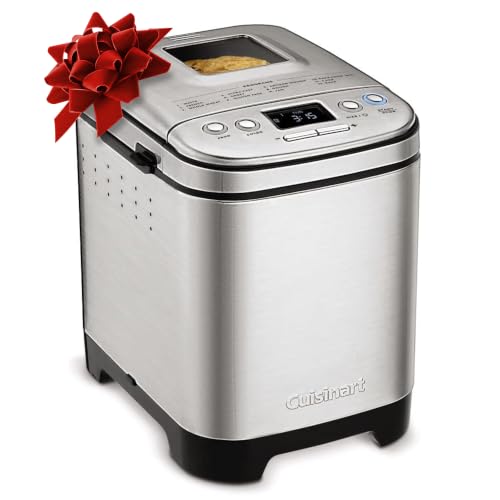
Cuisinart Compact Automatic Bread Maker (CBK-110)
Badge: Best Cross-Brand Comparison (Prose-Only)
Strengths
- Vertical compact design takes less counter width than horizontal 2 lb machines
- Three loaf sizes and three crust shades cover most household variation
- Twelve programs include the everyday cycles most bakers actually use
Trade-offs
- It is a Cuisinart, not a Zojirushi — it does not belong to the range this keyword is about, which is why it is reviewed prose-only here
- Vertical loaves slice less like a standard sandwich loaf
- Compact machines can walk slightly on the counter during heavy kneading
Key specs (from the verified listing)
- Loaf sizes: 3 loaf sizes up to 2 lb
- Programs: 12 programs
- Crust: 3 crust shades
- Format: compact vertical design
- Model: CBK-110
This Cuisinart is included in the pool supplied for this guide, and it is reviewed here prose-only — without a shopping link or image — because this keyword is specifically about Zojirushi machines and this is not one. On its own merits it is a sensible compact bread maker: a vertical design that fits narrower counters, three loaf sizes up to 2 lb, three crust shades and twelve programs covering the standard repertoire of white, whole-wheat, dough and sweet cycles.
If you are brand-flexible, it is a legitimate alternative to compare against the Zojirushi line, particularly where counter width is the binding constraint. If you came to this guide because you specifically want Zojirushi’s heaters, pan design and program tuning, then the honest advice is to stay with the five machines above and below this one, and treat this entry as context for what the wider market offers at a similar size.
A note on brand scope: this pick is here because it was in the verified pool, and it is genuinely worth comparing — but a guide to Zojirushi machines would mislead you if it linked out to another brand as if it were one. It is presented prose-only so the comparison stays honest.
Judged purely as a compact bread maker, the CBK-110’s vertical format is its most useful idea: family capacity on a narrow footprint, with the loaf rising tall rather than long. Slices come out squarer and smaller than from a horizontal pan, which some households prefer for lunchboxes and toast racks. Its twelve programs cover the standard repertoire without novelty settings, and the three crust shades give enough control for most recipes. None of that changes its status in this guide — context, honestly labelled, for a brand decision the reader may revisit elsewhere.
Best for: shoppers comparing across brands who want a compact 2 lb machine / Not suited for: buyers specifically shopping the Zojirushi range
Prose-only pick: no Amazon link and no image, for the reason given in this guide’s sources note.

Zojirushi Home Bakery Maestro Breadmaker (BB-SSC10)
Badge: Best Everyday Zojirushi
Strengths
- Premium-finished mid-size machine that suits design-conscious kitchens
- Zojirushi program tuning and pan quality in a less imposing body than the flagships
- A good middle path between the tiny Mini and the full 2 lb machines
Trade-offs
- Sits between sizes, so it is neither the smallest nor the most capacious option
- Fewer headline features than the Virtuoso line — no dual-heater story here
- The white finish shows flour dust and scuffs more readily than dark finishes
Key specs (from the verified listing)
- Finish: premium white
- Model: BB-SSC10WZ
- Line: Home Bakery Maestro
The Maestro is the middle child of the Zojirushi range, and that is a compliment: it pairs the brand’s program tuning and build quality with a body that does not dominate the counter, finished in a premium white that looks more like a design object than a utility appliance. For households that bake a loaf every few days rather than daily, this size class is usually the sweet spot — big enough for a proper family loaf, small enough to stay out permanently, which is what actually drives regular use.
What you give up against the Virtuoso models is headline hardware: no dual-heater arrangement and a shorter list of specialist programs. What you keep is the thing owners consistently value in this brand — predictable rises, even kneading and loaves that come out of the pan cleanly. If your baking is steady rather than ambitious, the Maestro is arguably the most liveable Zojirushi of the six.
The Maestro is the Zojirushi for buyers who find the flagships oversized and the Mini too small. In range terms it is the balanced middle, and for steady, unambitious baking it is often the wisest buy in the line.
The Maestro’s ownership experience is defined by what does not happen: it does not dominate the counter, it does not demand a recipe project every time, and it does not produce more bread than a mid-size household eats. Machines that fit the routine this quietly tend to be the ones still in weekly use years later. Keep the white finish wiped down after floury sessions — it shows dust honestly — and reseat the paddle firmly after washing, as with every machine here, so the knead starts cleanly.
Best for: regular bakers who want Zojirushi quality without flagship size / Not suited for: maximum-capacity baking or the deepest program list

Zojirushi Home Bakery Supreme Breadmaker Bundle (BB-CEC20)
Badge: Best for Sourdough and Big Loaves
Strengths
- Dual kneading blades work a full 2 lb dough more evenly than a single blade
- A sourdough starter setting supports bakers moving beyond basic yeast loaves
- Bundle format can include useful extras — check the listing contents before ordering
Trade-offs
- Bundle contents vary by listing, so verify exactly what is in the box
- Dual blades mean two blade seals to keep clean and seated correctly
- Full-size footprint, like the other 2 lb machines here
Key specs (from the verified listing)
- Loaf size: 2 lb
- Kneading: dual kneading blades
- Timer: 13-hour delay timer
- Programs: sourdough starter setting listed
- Model: BB-CEC20
- Format: bundle listing
This Supreme bundle centres on the BB-CEC20, whose distinguishing hardware is a pair of kneading blades rather than one. On a full 2 lb dough — especially whole-grain or enriched doughs that resist mixing — two blades pull ingredients in from both sides of the pan and reduce the unmixed flour pockets that single-blade machines can leave in the corners. The listed sourdough starter setting is the other draw: it holds a starter at a controlled temperature, which makes machine-assisted sourdough a realistic weekday habit rather than a weekend project.
Because this is a bundle listing, the practical advice is to read the box contents carefully on the listing before ordering and confirm the machine model matches the BB-CEC20 reviewed here. The dual-blade design also adds a small maintenance duty: both blade shafts and seals need a rinse and a proper reseat after washing, or the pan can weep liquid into the dough at the next bake.
The Supreme bundle is the Zojirushi for bakers graduating to sourdough and heavy doughs: the dual blades and starter setting are range features aimed at exactly that step up.
The dual-blade pan has one ownership habit attached: after washing, dry around both blade shafts properly and check both paddles are pushed fully home before the next bake. A slightly unseated paddle is the classic cause of a poor first knead on any machine, and with two blades there are two to check. In return, the pan handles the heavy, low-hydration doughs — seeded wholemeal, rye blends — that make single-blade machines labour, and the sourdough starter setting rewards bakers who keep a starter as a standing ingredient.
Best for: 2 lb households that bake sourdough and heartier doughs / Not suited for: small households or buyers who dislike checking bundle contents
Comparison Table
The table below puts the six best zojirushi bread machines picks side by side on the attributes that decide daily satisfaction. It deliberately carries no prices and no ratings — both change too often to print honestly; use the links to check the current listing.
| Pick | Badge | Format | Key detail | Check it |
|---|---|---|---|---|
| Zojirushi Virtuoso Plus 2 Lb Breadmaker (BB-PDC20BA) | Best Overall | Loaf size: 2 lb | Programs: gluten-free and whole-wheat programs listed | Check on Amazon |
| Zojirushi Home Bakery Supreme Breadmaker | Best for Versatile Baking | Settings: cake, jam and dough settings listed | Timer: 13-hour timer | Check on Amazon |
| Zojirushi Home Bakery Mini Breadmaker (BB-HAC10) | Best for Small Households | Loaf size: 1 lb | Timer: 13-hour delay timer | Check on Amazon |
| Cuisinart Compact Automatic Bread Maker (CBK-110) | Best Cross-Brand Comparison (Prose-Only) | Loaf sizes: 3 loaf sizes up to 2 lb | Programs: 12 programs | Prose-only |
| Zojirushi Home Bakery Maestro Breadmaker (BB-SSC10) | Best Everyday Zojirushi | Finish: premium white | Model: BB-SSC10WZ | Check on Amazon |
| Zojirushi Home Bakery Supreme Breadmaker Bundle (BB-CEC20) | Best for Sourdough and Big Loaves | Loaf size: 2 lb | Kneading: dual kneading blades | Check on Amazon |
How to Choose the Right Option for Best zojirushi bread machines
Start with loaf size, because it decides everything else and it is the one specification you cannot change later. A 1 lb machine suits one or two people who bake often; a 2 lb machine suits families and batch bakers but produces loaves that stale if they are not eaten. Count the mouths, be honest about how much bread your household actually gets through in two days, and buy the size that matches that number rather than the biggest pan on the shelf.
Next, look at heating and kneading hardware. A lid heater (dual heaters) gives an evenly coloured top crust; dual kneading blades handle heavy whole-grain doughs better than a single blade. Neither is essential for a basic white loaf, and both start to matter the moment your baking moves to whole-wheat, seeded or enriched doughs. Match the hardware to the bread you will actually bake in month three, not the bread you bake in week one.
Finally, weigh programs against routine. A 13-hour delay timer is the feature that turns a bread machine into a daily habit, because the loaf can be timed rather than attended. Specialist programs — gluten-free, sourdough starter, jam, cake — are worth having only if they match your real cooking. A shorter program list you use fully beats a long one you scroll past, and every pick in this guide was judged on that basis.
If counter footprint and machine weight are your deciding factors, see the Best Weighted Bread Machines comparison before ordering.
How to Get a Reliable Loaf From Any Bread Machine
A bread machine removes most of the labour from baking, but it rewards a few habits. The method below works for every machine in this guide and fixes the majority of disappointing first loaves.
- Add ingredients in the order the manual specifies — usually liquids first, then flour, then yeast on top, kept dry and away from salt until the cycle starts. Order matters because the timer may hold the ingredients for hours before mixing.
- Measure flour by weight if you can, or spoon it into the cup and level it. Scooped flour packs down and is the single most common cause of dense, dry loaves.
- Use yeast that is in date and stored cool and dry, and keep it out of direct contact with salt and hot liquid, both of which weaken it before the rise begins.
- Check the dough five to ten minutes into kneading. It should form a smooth, soft ball that cleans the sides of the pan. Add water a teaspoon at a time if it looks ragged and dry, or flour a spoonful at a time if it is slack and sticky.
- Let the finished loaf rest in the pan briefly, then turn it out onto a rack. Cutting into a steaming loaf compresses the crumb, so give it at least half an hour — the flavour and texture both improve.
- Wipe the pan and paddles clean after every bake and make sure the paddle is fully seated on its shaft before the next load; a loose paddle is a common cause of poor kneading.
Troubleshooting
Problem: the loaf rose, then collapsed in the middle → what to do: too much liquid or yeast for the flour, or the lid was lifted during the rise — reduce liquid slightly next bake and leave the lid closed
Problem: the loaf is dense and small → what to do: check the yeast first (age and storage), then flour measurement — weighed flour and fresh yeast fix most dense loaves
Problem: flour sits unmixed in the corners of the pan → what to do: the dough was too dry to move freely — add a little more liquid, and check the dough ball early in the knead as described above
Zojirushi Versus the Rest: Why the Brand Commands Its Premium
Zojirushi’s reputation rests on consistency: the rises are predictable, the pans release cleanly, and the programs are tuned conservatively, so a recipe that works once works the tenth time. Owners also report long service lives, and the machines hold their value in a way budget brands do not. None of that shows up in a specification table, but it is most of what you are paying for.
The premium is real, though, and it buys the least for occasional bakers. If bread is a monthly event, a mid-range machine from any reputable brand will satisfy you. If bread is a weekly staple, the calculation flips — the cost spreads over hundreds of loaves, and reliability becomes the cheapest feature on the list.
Whole-grain bakers should also read the Best Whole Grain Bread Flour Mix For Bread Machines guide — flour choice changes results as much as the machine does.
Matching a Zojirushi to Your Household: A Size-First Walkthrough
Start with eaters, not features. One or two people eating bread daily: the 1 lb Mini, baked often. Three to five people, or anyone baking for sandwiches through the week: a 2 lb machine — Virtuoso Plus for crust quality, Supreme for versatility, the bundle for sourdough ambitions. The Maestro sits between, for households whose consumption honestly falls in the middle.
Then check the cupboard, not just the counter: bread machines are tall, and a machine that cannot be stored or left out comfortably will not be used. Measure the space with the lid open before ordering any model in this guide — it is the dullest and most useful advice in home baking.
Keeping a Bread Machine in Weekly Service for Years
The machines that last are the ones with boring routines: pan washed gently and dried, paddle reseated, chamber brushed free of crumbs, and the machine stored where using it is effortless. The pan’s coating and the paddle seal are the wear points on every model in this guide, and both are protected by the same habit — hand-washing and a soft sponge, never the dishwasher’s harshest cycle or a metal tool.
Yeast management is the other half of longevity, oddly: a machine blamed for bad loaves gets retired, and the cause is usually yeast that died in a warm cupboard. Store yeast sealed and cool, check dates before a bake, and your machine’s reputation — and its working life — will take care of themselves.
Bread Machine Versus Oven Baking: An Honest Comparison
A bread machine wins on effort and timing: five minutes of loading, no heating a whole oven, and a timer that works around your sleep and your job. For the daily sandwich loaf, that convenience is decisive, and it is why owners who buy the right size tend to keep baking for years rather than months.
An oven wins on shape and crust theatre — boules, baguettes and crackling artisan crusts are oven work. The sensible household answer is usually both: the machine for the weekly staple loaf and dough-making (it is an excellent dough kneader for oven-baked rolls and pizza), and the oven for the weekend project loaf.
Understanding Loaf Sizes and Pan Shapes
Loaf size is quoted by baked weight: a 1 lb loaf is a small household loaf, 1.5 lb is the middle ground, and 2 lb is a full family size. Pan shape matters for slicing — vertical pans produce tall loaves with smaller slices, horizontal pans produce the familiar sandwich profile. If the bread is mainly for sandwiches and toast, pan shape quietly matters as much as capacity.
Oversizing is the common error: a 2 lb loaf in a two-person household becomes stale bread and, eventually, a machine that stops being used. Undersizing is rarer and easier to forgive, because a small machine simply gets used twice.
What the Delay Timer Really Changes
The delay timer is the feature that converts a bread machine from a gadget into a routine. Loading the pan in the evening and waking to a finished loaf removes the two frictions that kill home baking: finding a three-hour window, and being present for each stage. Every machine in this guide offers a long delay, and it is the first feature new owners say they underestimated.
Two rules make timers reliable: keep yeast dry and separated from liquid until the start (the standard ingredient order does this), and avoid perishable additions like fresh milk or egg on long delays in warm kitchens — use the recipes your manual marks as timer-safe.
Flour, Water and Ratios: The Numbers Behind the Loaf
Bread machine recipes are ratios wearing instructions. A dependable starting point for a standard loaf is flour at one hundred parts, water around sixty to sixty-five parts by weight, salt near two parts and yeast near one part — and the dough-ball check described in the how-to section is how you fine-tune the water for your flour and your kitchen’s humidity on the day. Weighing ingredients turns that adjustment from luck into a note you can repeat.
Whole-grain flours drink more water and rise more slowly, which is why dedicated programs and a slightly wetter dough ball suit them. Enriched doughs — milk, egg, butter — colour faster and prefer a lighter crust setting. None of this needs to be memorised: change one variable per bake, write the result on the recipe, and within a month your machine’s output will be calibrated to your household in a way no factory program can match.
Care, Cleaning and Making It Last
The pan is the part to protect. Its non-stick surface does the heavy lifting in kneading and release, so wash it by hand with a soft sponge, never metal utensils or abrasive pads, and dry it fully before storing. Check the paddle shaft seal occasionally: if the pan starts to leak into the machine, the seal, not the whole pan, is usually the service part.
Keep the heating chamber crumb-free — a soft brush or a slightly damp cloth after the machine has cooled keeps burnt-crumb smells out of future loaves. Store the machine with the lid ajar if it lives in a cupboard, and keep yeast, the ingredient the machine depends on, sealed, cool and dry, with the date checked before a bake rather than after a failure.
Ingredient quality matters too: the Best Yeast For Bread Machines guide covers the yeast side of the equation.
Common Buying Mistakes
- Buying the 2 lb flagship for a two-person household. the loaves stale before they are finished, baking feels wasteful, and the machine drifts into disuse — size to your eaters, not your aspirations
- Ignoring the lid-open height. bread machines are tall and open upwards; measure the cupboard or counter clearance before choosing a model
- Judging the brand by program count alone. a shorter list you use weekly beats twenty programs you scroll past; match programs to bread you actually eat
- Using old yeast and blaming the machine. Zojirushi rises are consistent, but no machine rescues dead yeast — check the date and storage first
- Expecting bakery-shaped loaves. machine loaves are pan-shaped by design; for boules and baguettes, use the dough program and finish in the oven
- Skipping the dough check. five minutes into the first knead, look at the dough ball — that one habit fixes most disappointing loaves on any model
At a Glance: Who Each Pick Suits
If you have read this far and want the whole guide compressed into one screen, this map matches each pick to the buyer it serves and the buyer it would frustrate. It repeats the verdicts from the detailed reviews in shorthand — use it to confirm a choice, not to skip the trade-offs entirely.
- Best Overall — Zojirushi Virtuoso Plus 2 Lb Breadmaker (BB-PDC20BA): best for households baking full 2 lb loaves several times a week, including gluten-free and whole-wheat; not suited for solo bakers who mostly want small loaves, or very tight counters.
- Best for Versatile Baking — Zojirushi Home Bakery Supreme Breadmaker: best for bakers who want one machine for loaves, dough, jam and cake batters; not suited for buyers who want the newest interface or the most even top crust.
- Best for Small Households — Zojirushi Home Bakery Mini Breadmaker (BB-HAC10): best for singles, couples and small kitchens that bake little and often; not suited for families, batch bakers or anyone who wants one machine for every loaf size.
- Best Cross-Brand Comparison (Prose-Only) — Cuisinart Compact Automatic Bread Maker (CBK-110): best for shoppers comparing across brands who want a compact 2 lb machine; not suited for buyers specifically shopping the Zojirushi range.
- Best Everyday Zojirushi — Zojirushi Home Bakery Maestro Breadmaker (BB-SSC10): best for regular bakers who want Zojirushi quality without flagship size; not suited for maximum-capacity baking or the deepest program list.
- Best for Sourdough and Big Loaves — Zojirushi Home Bakery Supreme Breadmaker Bundle (BB-CEC20): best for 2 lb households that bake sourdough and heartier doughs; not suited for small households or buyers who dislike checking bundle contents.
Final Recommendation
For most households, the Virtuoso Plus 2 Lb is the Zojirushi to buy: dual heaters, the right program depth, and the size family baking actually consumes. It is the complete expression of what this brand does well.
Choose the Supreme if your baking extends to jam, cake and dough work; the Mini if your household is small and honest about it; the Maestro if you want the balanced middle; and the Supreme bundle if sourdough is where your baking is heading. The Cuisinart remains a fair cross-brand comparison — just not a Zojirushi.
Whichever model you choose, buy the size you will use weekly. A Zojirushi earns its premium over years of routine baking, and routine starts with the right-sized loaf.
To revisit the top of the list: Zojirushi Virtuoso Plus 2 Lb Breadmaker (BB-PDC20BA) and Zojirushi Home Bakery Supreme Breadmaker — confirm the exact model and variant on the listing before ordering.
And if you are still deciding whether a machine fits your routine at all, the Best Yeast For Bread Making Machines discussion is a useful companion read.
A word on crust settings: every machine here offers crust shade control, and the middle setting is the right default while you learn a recipe. Darker crusts suit lean white doughs; enriched and sweet doughs colour fast and usually bake better a shade lighter. Change one variable at a time — crust, like every baking adjustment, teaches you more when it is isolated.
Finally, think about the second year, not the first week. Bread machines fail socially before they fail mechanically: they get bought for an ambitious version of the household. The Zojirushi that gets used is the one sized to your real bread consumption and stored where using it is effortless. Choose for the household you have, and the machine will still be earning its place years from now.
Frequently Asked Questions
Are Zojirushi bread machines worth the premium over cheaper brands?
For frequent bakers, generally yes: the value is in consistent rises, durable pans and long service life spread over hundreds of loaves. For occasional baking, a mid-range machine from any reputable brand is the more rational spend.
What is the difference between the Virtuoso Plus and the Supreme?
The Virtuoso Plus is the flagship line with dual heaters for a more even top crust; the Supreme is the versatility line, adding settings such as cake, jam and dough. Choose on whether crust quality or breadth matters more in your kitchen.
Which Zojirushi is best for a small household?
The Home Bakery Mini, which bakes true 1 lb loaves. Small households bake more often and waste less with a machine sized to what they eat in a day or two.
Can Zojirushi machines make gluten-free bread?
The Virtuoso Plus lists dedicated gluten-free programs, which adjust kneading and proofing for gluten-free doughs. Results still depend on the flour blend, so follow recipes written for bread machines.
Why is a Cuisinart included in a Zojirushi guide?
It was part of the verified research pool for this keyword. It is reviewed honestly but prose-only — without a link or image — because a Zojirushi guide should not present another brand as a Zojirushi pick.
How long do Zojirushi bread machines last?
They have a strong reputation for long service, and the pan and paddles are the parts that wear first. Gentle pan care — hand-washing, no metal utensils — is the main habit that extends the machine’s life.