Disclosure: topratedkitchenware.com is reader-supported. When you buy through links on our site, we may earn an affiliate commission from Amazon and other retailers, at no extra cost to you.
Where to buy
All six picks in this guide to top 5 best bread machines are listed on Amazon, where you can check the latest price on Amazon, confirm the exact variant, and read the current listing details before ordering. Listings and bundles change, so match the full model name on the listing to the pick reviewed below. Orders are placed on Amazon under its normal delivery and returns terms.
- Best Overall: Breville Custom Loaf Bread Maker (BBM800XL) — Check on Amazon
- Zojirushi Home Bakery Virtuoso Plus Breadmaker (BB-PPC20BA) — Check on Amazon
- Zojirushi Virtuoso Plus 2 Lb Breadmaker (BB-PDC20BA) — Check on Amazon
- Zojirushi Home Bakery Supreme Breadmaker — Check on Amazon
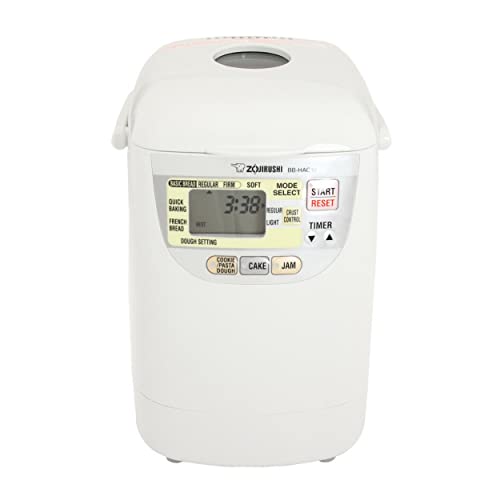
- Zojirushi Home Bakery Mini Breadmaker (BB-HAC10) — Check on Amazon
- Zojirushi Home Bakery Maestro Breadmaker (BB-SSC10) — Check on Amazon
Read the full guide ↓
Ask ten experienced home bakers for the top 5 best bread machines and a pattern emerges quickly: the same names recur, because bread machines reward consistency and punish gimmicks. This guide ranks the five that earn their places — the Breville Custom Loaf, two Zojirushi Virtuoso Plus variants, the Zojirushi Supreme and the Zojirushi Mini — and adds the Zojirushi Maestro as a sixth, bonus pick for households that fall between sizes.
The ranking weighs what owners live with over years: rise consistency, crust quality, pan durability, program usefulness and whether the machine’s size matches real households. Two near-identical Virtuoso Plus models both make the five, and the guide explains the one difference — pan coating — that decides between them.
Every pick carries a verified listing link, and the spec boxes print only what those listings state. If you bake weekly, at least one of these five will fit your kitchen; the job of this guide is to make sure it is the right one.
For a single-brand deep dive, the Best Zojirushi Bread Machines guide compares that whole range model by model.
Key Takeaways
- The Breville Custom Loaf takes first place for its collapsible paddle and custom program control.
- The two Virtuoso Plus variants split on one question: a PFAS-free pan or the established flagship listing.
- The Supreme is the versatility pick — loaves, dough, jam and cake from one machine.
- The Mini proves a top-five machine can be a 1 lb model, if your household is small.
- A bonus sixth pick, the Maestro, covers the middle ground the five leave open.
In this guide
Quick Picks
Six picks, six different reasons to buy. Scan the badges for the short answer, then read the detailed reviews for the honest trade-offs — every pick here has at least one.
| Pick | Badge | Standout points | Check it |
|---|---|---|---|
| Breville Custom Loaf Bread Maker (BBM800XL) | Best Overall | Finish: brushed stainless steel; Paddle: collapsible kneading paddle | Check on Amazon |
| Zojirushi Home Bakery Virtuoso Plus Breadmaker (BB-PPC20BA) | Best for Coating-Conscious Bakers | Coating: PFAS-free (listing headline); Model: BB-PPC20BA | Check on Amazon |
| Zojirushi Virtuoso Plus 2 Lb Breadmaker (BB-PDC20BA) | Best Flagship Alternative | Loaf size: 2 lb; Programs: gluten-free and whole-wheat programs listed | Check on Amazon |
| Zojirushi Home Bakery Supreme Breadmaker | Best Versatile Classic | Settings: cake, jam and dough settings listed; Timer: 13-hour timer | Check on Amazon |
| Zojirushi Home Bakery Mini Breadmaker (BB-HAC10) | Best for Small Households | Loaf size: 1 lb; Timer: 13-hour delay timer | Check on Amazon |
| Zojirushi Home Bakery Maestro Breadmaker (BB-SSC10) | Best Balanced Mid-Range | Finish: premium white; Model: BB-SSC10WZ | Check on Amazon |
How These Picks Were Chosen
Ranking five machines out of the hundreds on sale requires a filter, so this list was built from the brands and models that recur in owner communities and long-term reviews, cross-checked against the verified pool for this guide. Each machine had to earn its place on a distinct strength — a ranking of five near-identical machines would help nobody.
The criteria, in order: baking consistency across common recipes, hardware that affects the loaf (heaters, blades, paddle design), size honesty (does a real household size exist in the range), program usefulness rather than program count, and build quality as reflected in the listings and the models’ track records. No hands-on testing is claimed; this is research-led ranking, stated plainly.
The result is deliberately top-heavy with two brands. That reflects the market as experienced owners describe it: at the quality end, Breville and Zojirushi dominate the conversation, and a top-five list that pretended otherwise would be less honest than this one.
The ingredient half of the equation is covered in the Best Yeast For Bread Machines guide.
The Picks: top 5 best bread machines in detail

Breville Custom Loaf Bread Maker (BBM800XL)
Badge: Best Overall
Strengths
- Collapsible paddle folds flat before baking, leaving a much smaller hole in the loaf base
- Manual and custom program control for bakers who like to set their own times
- Brushed stainless body is the most premium-looking in this group
Trade-offs
- The collapsible paddle is a moving part that needs thorough cleaning
- More control means a longer learning curve than set-and-forget machines
- Large, heavy stainless body needs a permanent home on the counter
Key specs (from the verified listing)
- Finish: brushed stainless steel
- Paddle: collapsible kneading paddle
- Model: BBM800XL
- Line: Custom Loaf
The Breville Custom Loaf solves the oldest complaint in bread machines: the hole the kneading paddle tears in the bottom of the loaf. Its paddle collapses flat automatically before the bake phase, so the finished loaf has a small dent instead of a torn tunnel — a detail that matters every single time you slice. Around that trick sits the most control-oriented machine in this group, with custom program slots that let experienced bakers set their own knead, rise and bake times rather than accepting factory cycles.
The trade-off is involvement. This is a machine for people who enjoy dialling in a recipe, and the collapsible paddle’s hinge needs proper cleaning to keep folding freely. Beginners can absolutely use its automatic programs, but they are paying for control they may never touch. If you bake often and have opinions about your rise times, it earns its place at the top of a five-machine shortlist.
The Custom Loaf tops this ranking on the strength of one brilliant detail — the collapsible paddle — backed by the deepest manual control in the group. It is the enthusiast’s machine, and it earns first place for bakers who will use that control.
Living with the Custom Loaf means learning its manual mode in stages: run the automatic programs first, then adjust one stage of one recipe — a longer second rise for a favourite wholemeal, say — and save it as a custom program. That gradual approach turns the machine’s depth from a spec-sheet claim into a genuinely personal tool. The collapsible paddle’s hinge should be rinsed free of dough after every bake; dried dough in the mechanism is the one maintenance point owners of this design consistently flag.
Best for: enthusiast bakers who customise cycles and hate the paddle hole / Not suited for: beginners who want the simplest possible one-button loaf
Zojirushi Home Bakery Virtuoso Plus Breadmaker (BB-PPC20BA)
Badge: Best for Coating-Conscious Bakers
Strengths
- PFAS-free positioning answers the non-stick coating question many buyers now ask first
- Virtuoso Plus platform — the top of Zojirushi’s home range
- A current-generation model, so support and parts should run longest
Trade-offs
- Newest-model positioning usually means the premium tier of the range
- Coating-focused buyers should still confirm pan care instructions on the listing
- Full-size machine with the usual 2 lb-class footprint
Key specs (from the verified listing)
- Coating: PFAS-free (listing headline)
- Model: BB-PPC20BA
- Line: Home Bakery Virtuoso Plus
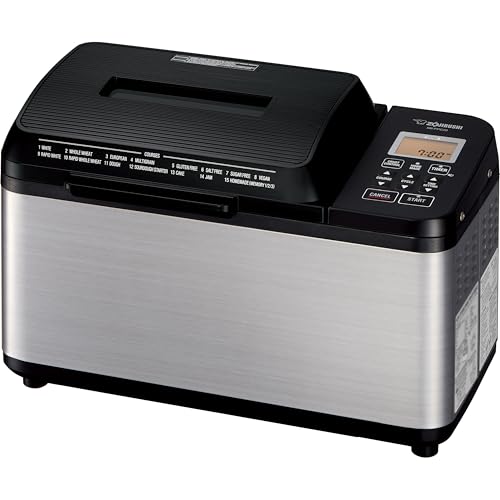
This Virtuoso Plus variant leads with a PFAS-free pan, which reflects a real shift in what buyers ask about bread machines: the non-stick coating on the pan and paddles is now a headline decision, not a footnote. Building that pan into the Virtuoso Plus platform means you are not choosing between the coating you want and the machine you want — the dual-heater, full-program flagship hardware carries over, aimed at the same 2 lb household baking as its sibling model elsewhere in this list.
Two near-identical Virtuoso Plus models in one shortlist is actually useful: it lets the coating question be the deciding factor, which for many households it now is. Confirm the current pan-care guidance on the listing — PFAS-free coatings reward gentle utensils and hand-washing — and otherwise expect the flagship experience: even crust, deep program list, and a machine built for daily service.
The PFAS-free Virtuoso Plus takes second as the flagship for buyers whose first question is now about pan coatings. It loses nothing in baking hardware to its sibling, which is what makes the coating question a clean deciding factor.
For coating-conscious buyers, the ownership routine matters as much as the coating choice: wooden or silicone tools in the pan, a soft sponge for washing, and no overnight soaking of the paddle shaft. Followed consistently, those habits protect any pan; on a PFAS-free pan they are simply the terms of the design. Otherwise, expect the flagship routine — timer-led overnight baking, an even crust from the dual heaters, and a program list deep enough that the manual earns a proper first read.
Best for: buyers who prioritise a PFAS-free pan in a flagship machine / Not suited for: anyone wanting the smallest or simplest breadmaker

Zojirushi Virtuoso Plus 2 Lb Breadmaker (BB-PDC20BA)
Badge: Best Flagship Alternative
Strengths
- Dual heaters bake the top of the loaf as well as the base, giving a more even crust colour than single-element machines
- Dedicated gluten-free and whole-wheat programs take the guesswork out of the two hardest dough types
- The 13-hour timer means ingredients can be loaded at night for a fresh loaf in the morning
Trade-offs
- A full-size 2 lb machine takes real counter and cupboard space
- Two heaters and a large pan make it one of the heavier home breadmakers to move around
- The program list is long enough that the first few bakes involve some manual-reading
Key specs (from the verified listing)
- Loaf size: 2 lb
- Programs: gluten-free and whole-wheat programs listed
- Heating: dual heaters
- Timer: 13-hour timer
- Finish: black
- Model: BB-PDC20BA
The Virtuoso Plus is Zojirushi’s flagship-style home machine, and its defining feature is the dual-heater layout: elements at the base and in the lid, so the loaf bakes from both directions instead of relying on rising heat alone. In practice that is the difference between a pale, soft top crust and a loaf that looks like it came from an oven. The gluten-free and whole-wheat programs matter just as much — both doughs fail in predictable ways on generic cycles (gluten-free batter needs different kneading and proofing, whole-wheat needs a longer, gentler rise), and having tuned programs for each removes most of the trial and error.
It is a big, committed appliance: a 2 lb pan, a wide footprint, and enough settings that you will spend the first week learning rather than improvising. That is the right trade for a household that will actually bake weekly. If bread is an occasional weekend project, the smaller machines further down this list will suit you better and cost you less cupboard.
The established Virtuoso Plus listing takes third — the same flagship platform, and the safer choice for buyers who prefer the longest-running version of the model. Second and third here are genuinely interchangeable for most kitchens.
Ownership details worth knowing: the pan and paddles are the parts to treat gently — hand-wash, no metal utensils — because the coating is doing real work in both kneading and release. The dual heaters also mean the lid gets genuinely hot during the bake, so the machine wants a little headroom and a moment’s care when you open it straight after the cycle. Schedule the timer so the loaf finishes when someone is home to take it out; a loaf left sitting in a warm, closed machine steams its own crust soft, which undoes exactly what the second heater achieved.
Best for: households baking full 2 lb loaves several times a week, including gluten-free and whole-wheat / Not suited for: solo bakers who mostly want small loaves, or very tight counters
Zojirushi Home Bakery Supreme Breadmaker
Badge: Best Versatile Classic
Strengths
- Cake, jam and dough settings stretch it well beyond loaf duty
- Quick-bake mode covers the days a standard cycle is too slow
- A long-running, well-documented model — recipes and advice for it are easy to find
Trade-offs
- An older design, so the control layout is less streamlined than the newest Virtuoso models
- No dual-heater lid, so top crust colour depends more on the standard bake
- The extra settings mean more menu scrolling for a plain white loaf
Key specs (from the verified listing)
- Settings: cake, jam and dough settings listed
- Timer: 13-hour timer
- Mode: quick-bake mode listed
- Line: Home Bakery Supreme
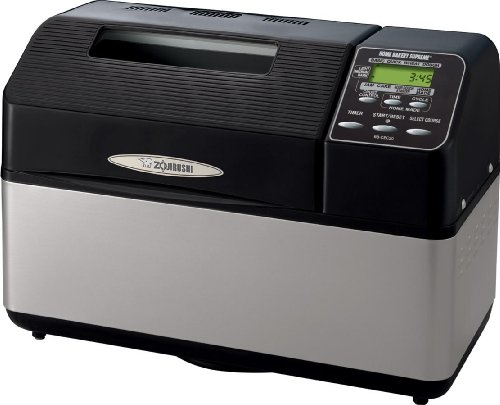
The Home Bakery Supreme is the machine that built Zojirushi’s reputation in home bread, and its appeal is breadth: alongside the standard loaf programs it carries cake, jam and dough settings, so the same appliance that turns out a sandwich loaf on Tuesday can make jam at the weekend and pizza dough on Friday night. The 13-hour timer supports the overnight routine, and the quick-bake mode is there for the days the standard cycle simply does not fit the schedule.
Because it has been sold for years, it is also one of the best-documented bread machines anywhere — community recipes, troubleshooting threads and replacement-part knowledge are all easy to find, which quietly matters over a decade of ownership. The compromises are age-related: the interface is functional rather than sleek, and without a lid heater the top crust can bake paler than on the dual-heater Virtuoso. If versatility and a proven track record top your list, this remains a very sound machine.
Fourth place goes to the Supreme on versatility: no other machine in the five covers loaves, dough, jam and cake with this track record. Households that will use those settings get more total value here than from a flagship loaf specialist.
A practical strength of a long-running model is the recipe ecosystem around it: the manual’s recipes are well tested, and years of owner experimentation mean that whatever loaf you want to try, someone has published machine-specific timings for this exact pan. The jam setting deserves a specific mention — it turns the machine into a small-batch jam maker that stirs and heats without a watched pot, and owners who discover it tend to use it far more than they expected when they bought a ‘bread’ machine.
Best for: bakers who want one machine for loaves, dough, jam and cake batters / Not suited for: buyers who want the newest interface or the most even top crust

Zojirushi Home Bakery Mini Breadmaker (BB-HAC10)
Badge: Best for Small Households
Strengths
- Bakes true 1 lb loaves, so small households stop wasting half a big loaf
- Compact footprint suits small kitchens, dorms and motorhomes
- The 13-hour delay timer still allows the wake-up-to-fresh-bread routine
Trade-offs
- One small loaf size only — no scaling up for guests or batch baking
- Fewer programs than the full-size Zojirushi machines
- Small loaves stale at the same rate, so it suits frequent small bakes, not stocking up
Key specs (from the verified listing)
- Loaf size: 1 lb
- Timer: 13-hour delay timer
- Finish: white
- Model: BB-HAC10
- Line: Home Bakery Mini
The Home Bakery Mini exists because the standard 2 lb loaf is simply too much bread for a one- or two-person household. It bakes a true 1 lb loaf, which means the bread gets eaten while it is still good instead of ageing on the counter, and the machine itself is small enough to live in kitchens where a full-size breadmaker would be a genuine imposition. Despite the size, it keeps the feature that makes bread machines magical in the first place: a 13-hour delay timer, so a small loaf can still be timed to finish as you wake up.
The limits follow directly from the concept. There is one loaf size, a shorter program list than the flagship machines, and no way to scale up when visitors arrive. Treat it as a specialist: if your household honestly eats a small loaf at a time and bakes often, the Mini will get used far more than a bigger machine that feels like a production run every time you switch it on.
The Mini’s fifth place is a statement about sizing: for one- and two-person households it will produce more eaten bread than any 2 lb machine, because it matches consumption. A top-five list that ignores small households would fail a large share of its readers.
Small loaves change the economics of home baking in your favour: ingredients per loaf are modest, a failed experiment costs little, and the short ingredient list for a 1 lb loaf makes it easy to keep the pantry stocked for spontaneous bakes. The Mini also suits kitchens where the machine must be lifted in and out of a cupboard — it is the only machine in this guide that treats that as a normal use case rather than a punishment. If your household might grow, though, remember it cannot scale up even once.
Best for: singles, couples and small kitchens that bake little and often / Not suited for: families, batch bakers or anyone who wants one machine for every loaf size

Zojirushi Home Bakery Maestro Breadmaker (BB-SSC10)
Badge: Best Balanced Mid-Range
Strengths
- Premium-finished mid-size machine that suits design-conscious kitchens
- Zojirushi program tuning and pan quality in a less imposing body than the flagships
- A good middle path between the tiny Mini and the full 2 lb machines
Trade-offs
- Sits between sizes, so it is neither the smallest nor the most capacious option
- Fewer headline features than the Virtuoso line — no dual-heater story here
- The white finish shows flour dust and scuffs more readily than dark finishes
Key specs (from the verified listing)
- Finish: premium white
- Model: BB-SSC10WZ
- Line: Home Bakery Maestro
The Maestro is the middle child of the Zojirushi range, and that is a compliment: it pairs the brand’s program tuning and build quality with a body that does not dominate the counter, finished in a premium white that looks more like a design object than a utility appliance. For households that bake a loaf every few days rather than daily, this size class is usually the sweet spot — big enough for a proper family loaf, small enough to stay out permanently, which is what actually drives regular use.
What you give up against the Virtuoso models is headline hardware: no dual-heater arrangement and a shorter list of specialist programs. What you keep is the thing owners consistently value in this brand — predictable rises, even kneading and loaves that come out of the pan cleanly. If your baking is steady rather than ambitious, the Maestro is arguably the most liveable Zojirushi of the six.
The Maestro is the bonus pick — sixth in a top-five guide — for households between the Mini and the flagships. If the five above leave you between sizes, this is your machine, included honestly as an extra rather than squeezed into the ranking.
The Maestro’s ownership experience is defined by what does not happen: it does not dominate the counter, it does not demand a recipe project every time, and it does not produce more bread than a mid-size household eats. Machines that fit the routine this quietly tend to be the ones still in weekly use years later. Keep the white finish wiped down after floury sessions — it shows dust honestly — and reseat the paddle firmly after washing, as with every machine here, so the knead starts cleanly.
Best for: regular bakers who want Zojirushi quality without flagship size / Not suited for: maximum-capacity baking or the deepest program list
Comparison Table
The table below puts the six top 5 best bread machines picks side by side on the attributes that decide daily satisfaction. It deliberately carries no prices and no ratings — both change too often to print honestly; use the links to check the current listing.
| Pick | Badge | Format | Key detail | Check it |
|---|---|---|---|---|
| Breville Custom Loaf Bread Maker (BBM800XL) | Best Overall | Finish: brushed stainless steel | Paddle: collapsible kneading paddle | Check on Amazon |
| Zojirushi Home Bakery Virtuoso Plus Breadmaker (BB-PPC20BA) | Best for Coating-Conscious Bakers | Coating: PFAS-free (listing headline) | Model: BB-PPC20BA | Check on Amazon |
| Zojirushi Virtuoso Plus 2 Lb Breadmaker (BB-PDC20BA) | Best Flagship Alternative | Loaf size: 2 lb | Programs: gluten-free and whole-wheat programs listed | Check on Amazon |
| Zojirushi Home Bakery Supreme Breadmaker | Best Versatile Classic | Settings: cake, jam and dough settings listed | Timer: 13-hour timer | Check on Amazon |
| Zojirushi Home Bakery Mini Breadmaker (BB-HAC10) | Best for Small Households | Loaf size: 1 lb | Timer: 13-hour delay timer | Check on Amazon |
| Zojirushi Home Bakery Maestro Breadmaker (BB-SSC10) | Best Balanced Mid-Range | Finish: premium white | Model: BB-SSC10WZ | Check on Amazon |
How to Choose the Right Option for Top 5 best bread machines
Start with loaf size, because it decides everything else and it is the one specification you cannot change later. A 1 lb machine suits one or two people who bake often; a 2 lb machine suits families and batch bakers but produces loaves that stale if they are not eaten. Count the mouths, be honest about how much bread your household actually gets through in two days, and buy the size that matches that number rather than the biggest pan on the shelf.
Next, look at heating and kneading hardware. A lid heater (dual heaters) gives an evenly coloured top crust; dual kneading blades handle heavy whole-grain doughs better than a single blade. Neither is essential for a basic white loaf, and both start to matter the moment your baking moves to whole-wheat, seeded or enriched doughs. Match the hardware to the bread you will actually bake in month three, not the bread you bake in week one.
Finally, weigh programs against routine. A 13-hour delay timer is the feature that turns a bread machine into a daily habit, because the loaf can be timed rather than attended. Specialist programs — gluten-free, sourdough starter, jam, cake — are worth having only if they match your real cooking. A shorter program list you use fully beats a long one you scroll past, and every pick in this guide was judged on that basis.
American-made alternatives are rounded up in the Best Us Made Bread Machines if domestic manufacturing matters to you.
How to Get a Reliable Loaf From Any Bread Machine
A bread machine removes most of the labour from baking, but it rewards a few habits. The method below works for every machine in this guide and fixes the majority of disappointing first loaves.
- Add ingredients in the order the manual specifies — usually liquids first, then flour, then yeast on top, kept dry and away from salt until the cycle starts. Order matters because the timer may hold the ingredients for hours before mixing.
- Measure flour by weight if you can, or spoon it into the cup and level it. Scooped flour packs down and is the single most common cause of dense, dry loaves.
- Use yeast that is in date and stored cool and dry, and keep it out of direct contact with salt and hot liquid, both of which weaken it before the rise begins.
- Check the dough five to ten minutes into kneading. It should form a smooth, soft ball that cleans the sides of the pan. Add water a teaspoon at a time if it looks ragged and dry, or flour a spoonful at a time if it is slack and sticky.
- Let the finished loaf rest in the pan briefly, then turn it out onto a rack. Cutting into a steaming loaf compresses the crumb, so give it at least half an hour — the flavour and texture both improve.
- Wipe the pan and paddles clean after every bake and make sure the paddle is fully seated on its shaft before the next load; a loose paddle is a common cause of poor kneading.
Troubleshooting
Problem: the loaf rose, then collapsed in the middle → what to do: too much liquid or yeast for the flour, or the lid was lifted during the rise — reduce liquid slightly next bake and leave the lid closed
Problem: the loaf is dense and small → what to do: check the yeast first (age and storage), then flour measurement — weighed flour and fresh yeast fix most dense loaves
Problem: flour sits unmixed in the corners of the pan → what to do: the dough was too dry to move freely — add a little more liquid, and check the dough ball early in the knead as described above
How the Ranking Was Decided: The Criteria in Plain Terms
Each machine was scored mentally against the same five questions. Does it bake a consistent loaf on ordinary recipes? Does its hardware do something real for the bread? Does it come in a size a real household can use up? Are its programs useful rather than numerous? And does the model have a track record long enough to trust? The order above is simply how those answers stacked up.
Notice what is absent: novelty features and headline program counts. Bread machines are bought for a decade of Tuesday loaves, and the ranking rewards the machines that make those loaves predictable. The two Virtuoso Plus variants tie on almost everything — the coating question breaks the tie, and readers who do not care about coatings should treat second and third as equals.
Whole-grain bakers should pair this ranking with the Best Whole Grain Bread Flour Mix For Bread Machines guide.
Which of the Five Fits Your Baking Style?
The customiser: Breville Custom Loaf — you adjust times, you hate the paddle hole, you bake by feel. The set-and-forget family baker: a Virtuoso Plus — load it at night, slice it in the morning. The all-rounder: the Supreme — bread is one of several jobs the machine will do. The small household: the Mini — little loaves, often. Most readers will recognise themselves in one of those four sketches.
If none of them fit — your household eats a medium amount of bread and wants no flagship features — that is exactly the gap the bonus Maestro fills, which is why it is included rather than leaving those readers unserved.
What the Delay Timer Really Changes
The delay timer is the feature that converts a bread machine from a gadget into a routine. Loading the pan in the evening and waking to a finished loaf removes the two frictions that kill home baking: finding a three-hour window, and being present for each stage. Every machine in this guide offers a long delay, and it is the first feature new owners say they underestimated.
Two rules make timers reliable: keep yeast dry and separated from liquid until the start (the standard ingredient order does this), and avoid perishable additions like fresh milk or egg on long delays in warm kitchens — use the recipes your manual marks as timer-safe.
Flour, Water and Ratios: The Numbers Behind the Loaf
Bread machine recipes are ratios wearing instructions. A dependable starting point for a standard loaf is flour at one hundred parts, water around sixty to sixty-five parts by weight, salt near two parts and yeast near one part — and the dough-ball check described in the how-to section is how you fine-tune the water for your flour and your kitchen’s humidity on the day. Weighing ingredients turns that adjustment from luck into a note you can repeat.
Whole-grain flours drink more water and rise more slowly, which is why dedicated programs and a slightly wetter dough ball suit them. Enriched doughs — milk, egg, butter — colour faster and prefer a lighter crust setting. None of this needs to be memorised: change one variable per bake, write the result on the recipe, and within a month your machine’s output will be calibrated to your household in a way no factory program can match.
Keeping a Bread Machine in Weekly Service for Years
The machines that last are the ones with boring routines: pan washed gently and dried, paddle reseated, chamber brushed free of crumbs, and the machine stored where using it is effortless. The pan’s coating and the paddle seal are the wear points on every model in this guide, and both are protected by the same habit — hand-washing and a soft sponge, never the dishwasher’s harshest cycle or a metal tool.
Yeast management is the other half of longevity, oddly: a machine blamed for bad loaves gets retired, and the cause is usually yeast that died in a warm cupboard. Store yeast sealed and cool, check dates before a bake, and your machine’s reputation — and its working life — will take care of themselves.
Bread Machine Versus Oven Baking: An Honest Comparison
A bread machine wins on effort and timing: five minutes of loading, no heating a whole oven, and a timer that works around your sleep and your job. For the daily sandwich loaf, that convenience is decisive, and it is why owners who buy the right size tend to keep baking for years rather than months.
An oven wins on shape and crust theatre — boules, baguettes and crackling artisan crusts are oven work. The sensible household answer is usually both: the machine for the weekly staple loaf and dough-making (it is an excellent dough kneader for oven-baked rolls and pizza), and the oven for the weekend project loaf.
Understanding Loaf Sizes and Pan Shapes
Loaf size is quoted by baked weight: a 1 lb loaf is a small household loaf, 1.5 lb is the middle ground, and 2 lb is a full family size. Pan shape matters for slicing — vertical pans produce tall loaves with smaller slices, horizontal pans produce the familiar sandwich profile. If the bread is mainly for sandwiches and toast, pan shape quietly matters as much as capacity.
Oversizing is the common error: a 2 lb loaf in a two-person household becomes stale bread and, eventually, a machine that stops being used. Undersizing is rarer and easier to forgive, because a small machine simply gets used twice.
Care, Cleaning and Making It Last
The pan is the part to protect. Its non-stick surface does the heavy lifting in kneading and release, so wash it by hand with a soft sponge, never metal utensils or abrasive pads, and dry it fully before storing. Check the paddle shaft seal occasionally: if the pan starts to leak into the machine, the seal, not the whole pan, is usually the service part.
Keep the heating chamber crumb-free — a soft brush or a slightly damp cloth after the machine has cooled keeps burnt-crumb smells out of future loaves. Store the machine with the lid ajar if it lives in a cupboard, and keep yeast, the ingredient the machine depends on, sealed, cool and dry, with the date checked before a bake rather than after a failure.
Footprint and machine weight are compared in the Best Weighted Bread Machines for tight counters.
Common Buying Mistakes
- Treating a top-five list as a single answer. rankings order general merit; your loaf size and baking style should reorder this list for your kitchen
- Buying flagship capacity for a small household. uneaten bread is the fastest route to an unused machine — the Mini exists for a reason
- Overvaluing program count. five programs you use beat twenty you scroll past; check the list against bread you actually eat
- Ignoring the paddle question. the hole in the loaf base bothers some bakers daily — if that is you, the collapsible paddle matters
- Skipping the manual’s first recipes. every machine here bakes best when its first loaves follow the maker’s own recipes while you learn its timing
- Storing the machine somewhere awkward. a bread machine in a deep cupboard is a bread machine in retirement — plan its home before it arrives
At a Glance: Who Each Pick Suits
If you have read this far and want the whole guide compressed into one screen, this map matches each pick to the buyer it serves and the buyer it would frustrate. It repeats the verdicts from the detailed reviews in shorthand — use it to confirm a choice, not to skip the trade-offs entirely.
- Best Overall — Breville Custom Loaf Bread Maker (BBM800XL): best for enthusiast bakers who customise cycles and hate the paddle hole; not suited for beginners who want the simplest possible one-button loaf.
- Best for Coating-Conscious Bakers — Zojirushi Home Bakery Virtuoso Plus Breadmaker (BB-PPC20BA): best for buyers who prioritise a PFAS-free pan in a flagship machine; not suited for anyone wanting the smallest or simplest breadmaker.
- Best Flagship Alternative — Zojirushi Virtuoso Plus 2 Lb Breadmaker (BB-PDC20BA): best for households baking full 2 lb loaves several times a week, including gluten-free and whole-wheat; not suited for solo bakers who mostly want small loaves, or very tight counters.
- Best Versatile Classic — Zojirushi Home Bakery Supreme Breadmaker: best for bakers who want one machine for loaves, dough, jam and cake batters; not suited for buyers who want the newest interface or the most even top crust.
- Best for Small Households — Zojirushi Home Bakery Mini Breadmaker (BB-HAC10): best for singles, couples and small kitchens that bake little and often; not suited for families, batch bakers or anyone who wants one machine for every loaf size.
- Best Balanced Mid-Range — Zojirushi Home Bakery Maestro Breadmaker (BB-SSC10): best for regular bakers who want Zojirushi quality without flagship size; not suited for maximum-capacity baking or the deepest program list.
Final Recommendation
If you want one answer: the Breville Custom Loaf is the best bread machine in this group for engaged bakers, and a Zojirushi Virtuoso Plus is the best for everyone else. Between those two sentences sits most of the home-baking market, and both machines will serve a household for years.
Pick the Supreme for versatility, the Mini for a small household done honestly, and the Maestro if you fall between the ranked five. What all six share is the quality that matters — predictable bread, week after week.
Rankings start conversations; your kitchen ends them. Match the machine to your eaters and your habits, and any pick here will justify itself loaf by loaf.
To revisit the top of the list: Breville Custom Loaf Bread Maker (BBM800XL) and Zojirushi Home Bakery Virtuoso Plus Breadmaker (BB-PPC20BA) — confirm the exact model and variant on the listing before ordering.
And the companion Best Yeast For Bread Making Machines discussion covers yeast choice for machine baking in more depth.
One under-discussed factor in any top-five list is noise and vibration. Kneading a stiff dough is physical work, and lighter machines can travel across the counter during the cycle. All six machines here are substantial enough to stay put on a normal surface, but if your counter is unusually smooth, a non-slip mat under the machine is a cheap and complete fix.
Think, too, about who else will use the machine. The best bread machine for a household is often the one a second person is willing to operate — clear controls and a forgiving basic program matter more than a flagship feature list when the goal is bread that gets baked even in your busiest weeks.
Frequently Asked Questions
Why are there six machines in a top 5 guide?
Five machines are ranked; the sixth, the Zojirushi Maestro, is included as a clearly labelled bonus pick for households whose size falls between the Mini and the 2 lb flagships. The ranking itself is five.
Which is better, Breville or Zojirushi?
They lead on different strengths: Breville on control and the collapsible paddle, Zojirushi on program tuning and rise consistency. Engaged bakers lean Breville; set-and-forget households lean Zojirushi.
Is the PFAS-free Virtuoso Plus different from the regular one?
The listing headlines a PFAS-free pan; the platform is the same Virtuoso Plus flagship. For most buyers the coating is the deciding factor between the two, and both are ranked in the top three here.
What size bread machine should a family buy?
A 2 lb machine suits most families of three to five. Smaller households genuinely bake more — and waste less — with a 1 lb machine like the Mini.
Can these machines make dough for oven baking?
Yes — dough programs are one of their best uses. The machine kneads and proves; you shape and bake in the oven for pizza, rolls and artisan shapes the pan cannot form.
Do bread machines save money?
They can, against bought loaves of comparable quality, but the honest reason to buy one is freshness, ingredients control and the timer routine. Households that bake weekly come out ahead on every measure.