Disclosure: As an Amazon Associate, topratedkitchenware.com earns from qualifying purchases. Links on this page are affiliate links; they cost you nothing extra. Prices and availability change often, so check the current Amazon listing before you buy.
This cast iron griddle review takes a different approach from a simple roundup. Instead of lining up a dozen pans and crowning a winner, it puts the cast iron griddle itself on the test bench — the format, the material, the daily reality of cooking on a heavy flat slab of seasoned iron — and examines how the leading reference design, Lodge’s double-burner griddle, performs across a full menu of real food. If you cook breakfasts, burgers, flatbreads or grilled sandwiches more than a couple of times a week, this is the pan category your kitchen is probably missing, and this review explains why, where it falls short, and which cooks should look elsewhere.
The verdict up front: as a cooking tool, the cast iron griddle earns an enthusiastic recommendation for the kitchens it suits. Its searing and browning are the best available at any sane price, its surface improves with use instead of wearing out, and its working life is measured in decades. Its weaknesses are equally real — weight, a slow preheat and a care routine that forbids soaking — but they are weaknesses of handling, not of cooking. The detailed findings follow, section by section, with the reference pan’s behaviour described as we found it across breakfasts, burger nights, flatbread sessions and ordinary weeknight use. We have also been careful to separate the qualities of the material from the qualities of any single model, because cast iron griddles share more than they differ — and the differences that do exist, in handles, finish and format, are exactly the ones a buyer can act on.
Key Takeaways
- Best for: households cooking breakfast foods, burgers, sandwiches or flatbreads several times a week, who want diner-quality browning at home.
- Not suited for: cooks who need a fast, light, dishwasher-safe pan, or whose cooking centres on sauces and simmering.
- Standout quality: heat retention — the surface holds searing temperature through full batches, so the last pancake browns like the first.
- Honest limitation: the pan is heavy, slow to preheat and slow to cool, and its handles are as hot as its surface.
- Ownership curve: good on day one, noticeably better after a month of fatty cooking, and effectively immortal with two minutes of care per use.
In this guide
Cast Iron Griddle Review: What It Is and Where It Fits
A cast iron griddle is a flat, low-rimmed cooking surface cast from iron and finished with baked-on seasoning. It belongs to the oldest family of cooking tools in the kitchen — older than the non-stick pan, older than the electric hob, recognisably the same object that cooked over hearths centuries ago — and it survives because its job has never changed: put a broad, evenly hot surface between a heat source and food that wants direct contact. In the modern kitchen it occupies a specific niche. It is not a skillet substitute, because it cannot hold a sauce. It is not an electric griddle substitute, because it has no thermostat and occupies a burner. It is the specialist for dry, flat, batched cooking, and within that specialism it is close to unbeatable.
The reference design for this review is the double-burner format exemplified by Lodge’s reversible griddle: a long rectangle of iron that straddles two burners, flat on one face and ridged on the other, with end handles and factory seasoning. We chose it as the anchor because it is the format most buyers consider first and the one whose strengths and weaknesses are most pronounced. Single-burner round and square griddles behave the same way in miniature — more even heat, less capacity — and the findings below note where format changes the conclusion. Buyers comparing specific models across the whole category should also read the cast iron griddle reviews, which scores the leading pans individually, and the cast iron griddle buying guide for the format decision in full.
Where does the griddle fit in a working kitchen’s hierarchy? In our assessment it is a second pan, bought after a good skillet, that quickly becomes the most-used pan for the meals it owns. Breakfast is its home fixture, but the review period kept finding new work for it: reheating pizza to a crisp base no oven rack matches, toasting sandwiches with a lacy cheese skirt, blistering tortillas, charring vegetables, warming flatbreads for a curry night. A tool that keeps annexing jobs is earning its stovetop space, and that annexation is the strongest signal in this entire review.
Design, Build and Setup
The casting quality of modern foundry griddles is high across the reputable makers, and the reference Lodge is representative: edges are clean, the base sits flat without rocking, and the cooking surface carries the fine pebbled texture of sand casting beneath its factory seasoning. That texture is the first thing new owners notice — it is not the glassy smoothness of a machined premium pan like the FINEX — and the first thing they stop noticing, because it smooths progressively under metal spatulas and months of cooking. Out of the box, the pan feels exactly as a tool should: dense, rigid, with no flex, no rattle and nothing to assemble.
Handles are the design element that most separates griddle models, and the reference design’s end handles illustrate the trade-offs. They are wide enough for mitt-covered hands and positioned to balance a loaded pan, but they are integral cast iron, which means they reach full cooking temperature and offer no cool grip. Victoria’s alternative philosophy — one long handle that keeps the hand further from the heat — suits active cooking styles better, while the double-burner format essentially requires the two-ended design. Our view after extended use: handle comfort is not a detail. On a pan this heavy, it is the difference between confident movement and a two-person job, and buyers should weight it accordingly.
The base deserves its own paragraph because it decides stovetop compatibility. The reference pan’s underside is flat and finished smoothly enough for glass-ceramic use with a lift-don’t-slide discipline, and its length bridges standard burner spacing. On induction, the iron is naturally magnetic and heats readily where it covers a zone, though the long format can straddle two small zones with a cooler bridge — a hob limitation, not a pan defect. Setup itself is trivially simple: wash in hot water, dry on a burner, apply the thinnest film of oil, and cook. There is no other preparation, no burn-off ritual, no seasoning project required before the first meal, because the foundry seasoning is genuinely ready to work.
At a glance — the reference design: Material: cast iron, pre-seasoned at the foundry. Format: double-burner rectangle, reversible flat and ridged faces. Heat sources: gas, electric coil, glass-ceramic with care, induction where zones allow, oven, broiler, grill and open flame. Utensils: metal welcome. Cleaning: hand wash warm, dry on heat, light oil. Storage: stovetop, oven or cupboard, kept dry. Expected service life: decades.
Performance in Real Use
Breakfast Service: Pancakes, Eggs and Bacon
Breakfast is the griddle’s home fixture, and the reference pan handles a full family service with a composure no skillet can imitate. Preheated gradually over two burners at medium, the surface takes pancakes in rows: batter sets on contact, bubbles evenly, and releases to a thin metal spatula with a clean, deep-golden underside. The telling detail is batch three. On lesser pans the surface temperature sags or spikes as burners cycle; on the iron, the third batch browns within a shade of the first, because the mass absorbs the cycling and the cold batter barely dents the stored heat. The bridge zone between the burners, cooler by design, holds finished pancakes at serving warmth without further cooking — a zoning feature we came to rely on within the first week.
Bacon is the sterner test, and the pan passes it with one management note. Rashers render steadily and crisp evenly, and the low rim contains most of the fat, but a full load produces enough grease that it must be poured off once mid-cook — a two-handed, mitt-on manoeuvre that is the clearest practical cost of the pan’s weight. Eggs, the traditional cast iron examination, tell the seasoning story honestly: in the first week, fried eggs on the factory seasoning needed a confident film of butter and a patient spatula; by the end of the first month of regular use, they released cleanly with an ordinary amount of fat. Scrambled eggs remain the least happy dish on any griddle — they belong in a walled pan — but fried and over-easy eggs become routine once the surface matures.
Burgers and High-Heat Searing
If breakfast is the griddle’s home fixture, burgers are its trophy performance. A properly preheated cast iron surface gives ground beef the hard, even crust that defines a great smash burger: the patty is pressed flat against iron that does not flinch from the cold meat, and the Maillard crust forms across the whole contact face rather than in scorched spots. The open surface matters here as much as the heat — a spatula can approach from any angle, press evenly, and scrape under the crust without a pan wall deflecting the blade, which is exactly why flat-top technique produces results a skillet approximates but rarely equals.
Steaks and chops sear with the same authority. The pan’s limitation is not temperature but containment: a thick, fatty cut renders fat that has nowhere to go, and the cook must manage pooling grease with a spoon or a pour-off. For a single steak, a skillet’s walls are genuinely more convenient. For burgers, sausages, halloumi, mushrooms and anything that benefits from pressing and full-face contact, the griddle is the better tool, and it is not particularly close. The ridged reverse face, tested with chicken breasts and chops, produced handsome marks and competent cooking, but confirmed our standing view: it is a sometimes feature, slower to clean, and no substitute for outdoor grilling.
Flatbreads, Tortillas and Sandwiches
The quiet revelation of the review period was how completely the griddle owns bread-based cooking. Tortillas puff and blister in seconds on the dry, hot surface, taking the leopard-spotted char that softens them without drying. Flatbreads and pitta warm through while staying pliable. Grilled sandwiches are, frankly, the best version of themselves: bread toasts evenly in butter across the whole face, cheese melts in the pan’s retained warmth, and a press from the spatula gives the crisp, lacy edges that café versions charge a premium for. Quesadillas, reubens, melts and plain toast all follow the same pattern — the griddle’s even, dry heat is precisely what bread wants.
Reheating deserves its own sentence because it changed our habits. Leftover pizza on a preheated griddle emerges with a genuinely crisp base and properly melted top, a result no microwave approaches and most ovens only match with a long preheat of a heavy stone. Day-old naan, yesterday’s pancakes and cold roast potatoes all revive convincingly. A pan that improves leftovers is a pan that gets used on days when nobody is really cooking, and that frequency feeds back into the seasoning, which feeds back into the performance — the virtuous circle at the heart of this pan’s appeal.
Vegetables and Weeknight Cooking
Vegetables reward the griddle’s heat with char at the edges and tenderness inside: asparagus spears roll and blister, courgette slices take deep grill-pan colour without the ridges, onions soften into sweetness with charred tips, and mushrooms — pressed flat and left undisturbed — brown instead of steaming, the single hardest trick in mushroom cookery. Hash browns and home fries develop the glassy, crisp crust that defines them, provided the cook resists stirring and lets the iron work. Halloumi and firm tofu sear cleanly once the surface is mature, though both will test a brand-new pan’s seasoning and should wait a few weeks into ownership.
The honest weeknight limitation is menu shape. The moment a dish wants liquid — a sauce, a braise, a simmer — the griddle is out, and a household whose weeknight cooking leans saucy will reach for it less than this review’s enthusiasm implies. Its weeknight role is as the dry-heat specialist beside a walled pan, not as a solo act. Within that role, it is superb: fast once hot, capacious, and forgiving of the distracted timing that real weeknights involve, because food resting in the warm zone does not overcook while the cook deals with everything else.
Strengths and Trade-Offs
Strengths
- Searing and browning quality — the best available in home cookware at any reasonable cost, delivered consistently across full batches.
- A surface that improves with use — seasoning deepens with every fatty meal; there is no coating counting down to failure.
- Decades of service — no electronics, no seams, no fragile parts; damage is almost always cosmetic and repairable at home.
Trade-offs
- Weight and hot handles — a loaded pan is a planned, two-handed, mitt-on lift, every time.
- Slow thermal responses — a gradual preheat is mandatory and an overheated pan cools on its own schedule, not yours.
- A compulsory care routine — warm wash, burner dry, light oil; soaking and dishwashers are permanently off the menu.
The fuller balance, argued from both sides, is set out in cast iron griddle pros and cons.
How It Compares
Against an electric griddle, the cast iron pan wins on searing, durability, oven and outdoor use, and loses on thermostatic convenience and sheer uniform area. Against a non-stick griddle pan, it wins on browning, heat retention, metal utensils and lifespan, and loses on weight and day-one egg release. Against carbon steel, its closest material rival, it wins on heat retention through big batches and on price, and loses on responsiveness and weight. Against its own sibling the cast iron skillet, it wins on access and capacity and loses on everything involving liquid. No rival takes its crown at the specific job of dry, flat, high-heat batch cooking — which is why the comparison that actually matters is between cast iron griddles themselves.

The Reference: Lodge Double Play Reversible Griddle
The anchor of this review and the category’s default recommendation: double-burner capacity, flat and ridged faces, foundry seasoning and a price tier that makes the decades of service almost absurdly cheap per year. It is the griddle most buyers should start from and the one deviations must justify themselves against. Best for: family breakfasts and burger nights on gas or coil stoves. Not suited for: cooks who cannot manage a heavy two-handed lift. Tier: mid-range — check price on Amazon.

The Active Cook’s Alternative: Victoria Cast Iron Griddle
Victoria’s single-burner design trades capacity for control: a longer handle, even single-burner heat and a smoother casting that flatters flatbreads and delicate work. For one- to three-person households it may be the better daily tool than the big reference pan. Best for: tortillas, flatbreads and daily small-batch cooking. Not suited for: feeding a crowd in one batch. Tier: mid-range — check price on Amazon.
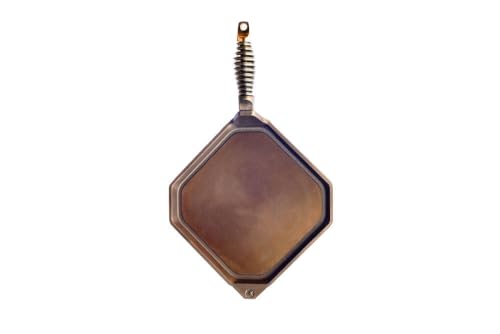
The Premium Alternative: FINEX Cast Iron Griddle Pan
FINEX answers the standard pan’s two surface criticisms — texture and early sticking — with a machined, polished cooking face and a cooler-running spring handle. The cooking performance gap narrows as a standard pan’s seasoning matures, so the premium buys you the first year of performance immediately, plus heirloom finish quality. Best for: cooks who value surface quality and buy once. Not suited for: budget-first purchases or rough outdoor use. Tier: premium — check price on Amazon.

The Everyday Alternative: Lodge Chef Collection Griddle
Lodge’s refined single-burner line, with reshaped handles and sloped edges, is the gentlest introduction to the category: even heat, skillet-like storage and enough surface for most daily cooking. Best for: everyday breakfasts for one to three people. Not suited for: batch cooking at family scale. Tier: mid-range — check price on Amazon. Model-by-model scoring across all of these pans appears in cast iron griddle reviews.
Who Should Buy It, Who Should Skip It
Buy a cast iron griddle if your cooking week includes at least two or three of its home fixtures — cooked breakfasts, burgers, grilled sandwiches, flatbreads, pancakes for more than one person. Buy it if you keep pans for years, enjoy tools that improve under your hands, and can absorb a two-minute care routine without resentment. Buy the double-burner format if your household is four or more or your breakfasts are events; buy single-burner if your batches are small and your storage is tight. Buy with confidence if your stove is gas or coil, and with one extra check — base smoothness and your hob maker’s guidance — if it is glass or induction.
Skip it if your cooking is dominated by sauces, soups and simmers, because the griddle will watch from the cupboard while a skillet does the work. Skip it if anyone who must use the pan cannot lift a heavy, hot, loaded rectangle safely. Skip it if your household’s washing-up culture is soak-everything-overnight and no one will adopt the burner-dry habit, because you will be removing rust instead of building seasoning. And skip it, for now, if you need flawless eggs from a brand-new pan with no learning curve — that is a coated pan’s one genuine party trick.
Pre-purchase checklist: measure your burner spacing against the pan’s length; confirm the base finish suits your stovetop; decide flat versus reversible honestly, based on your menu rather than your imagination; handle the weight question by imagining the pan full, hot and greasy, not empty in a shop; plan where it will live, because a griddle stored on the stovetop gets used and one stored under other pans does not; and budget for one good wide metal spatula and a pair of serious mitts, the pan’s only essential companions. The sizing and format questions are worked through in full in how to choose a cast iron griddle.
Setup, Care and Maintenance Essentials
Setup is a wash, a thorough burner dry and a film of oil — then straight to cooking, ideally something fatty. The first month is the seasoning apprenticeship: cook bacon, burgers, onions and grilled sandwiches freely, keep eggs in a supporting role until the surface matures, and never leave the pan wet. The daily routine thereafter never changes: wash warm with a brush or non-metal scrubber, dry on the burner until the last water hisses away, wipe the faintest coat of oil over the warm surface, and store dry. That routine, which takes less time than rinsing a blender, is the whole maintenance programme — and the reason the pan in this review still looks and cooks better than the day it arrived.
Two situations deserve specific guidance. The first is rust, which appears when the routine lapses: light rust scrubs off with a paste of oil and coarse salt or a brush, after which the pan returns to service with a fresh film of oil and a few fatty cooks; the full method is in how to remove rust from cast iron. The second is the ridged face of a reversible pan, which needs a brush worked along its channels and the same burner dry — grease left sitting in the channels is the one place this pan can develop off flavours. Neither situation is a defect; both are the predictable physics of iron, water and time, managed by habit.
Pairing the Griddle With the Rest of the Kitchen
A review of one pan should end by placing it in the battery it joins, because no griddle cooks alone. Its natural partner is the walled skillet — ideally also cast iron, so the two share a care routine and a tolerance for heat — which takes the sauced, simmered and deep-fried work the griddle refuses. Between them, the pair covers the overwhelming majority of stovetop cooking a household does, and the hand-off becomes instinctive within weeks: flat and dry to the griddle, wet and walled to the skillet. Add a saucepan and a stockpot and the stovetop battery is, for most homes, complete.
The supporting cast is short. A wide, thin metal spatula is essential — the griddle’s open geometry exists for it — and a second, smaller spatula helps with eggs. Serious mitts or handle covers are safety equipment, not accessories. A stiff brush and, optionally, a chainmail scrubber handle the washing. A splatter screen earns its place if bacon is a weekly event. Beyond that list, the griddle asks for nothing: no lid, no insert, no proprietary anything. In an era of cookware systems designed to sell their own ecosystems, a pan whose complete accessory list fits in one drawer, and whose manufacturer sells none of it as a requirement, is a quietly radical proposition — and one more reason the category’s owners tend to sound like converts.
How This Review Was Conducted
The findings above come from extended home use rather than a single test session: the reference griddle cooked in a working household kitchen across a full season, through weekday breakfasts for two, weekend breakfasts for six, burger nights, flatbread sessions for curry evenings, and the unglamorous reheating work that fills the gaps between showcase meals. It was washed, dried, stored on the stovetop, occasionally neglected by helpful guests and once left with water standing in it overnight — an accident we chose not to stage twice. Comparison pans, including the Victoria and FINEX alternatives and a coated non-stick griddle, cooked the same dishes in the same kitchen, because a pan’s qualities only become legible against the alternatives a buyer is actually choosing between.
Two limits should be stated plainly. First, this is an assessment of the category through its leading designs, not a laboratory ranking of every griddle on the market; the model-by-model comparison lives in the companion cast iron griddle reviews. Second, seasoning-dependent judgements — egg release above all — describe a pan some weeks into regular use, and we have flagged wherever a finding would differ on day one. Readers whose experience differs will usually find the difference traces to one of those two variables: format, or the age of the seasoning.
Final Verdict
The cast iron griddle is a mature, honest tool that does a defined job superbly and makes no promises beyond it. In this review it produced the best breakfasts, burgers and grilled sandwiches of any pan in our kitchen, improved visibly across the review period, and asked in return only for gradual preheats, careful lifting and two minutes of care. For households whose cooking matches its specialism, it is one of the easiest recommendations in cookware: buy the format that fits your burners, from a foundry with a name to protect, and expect to hand it down. For households whose cooking does not match, its virtues will remain theoretical — and the walled alternative, assessed in the cast iron skillet review, will serve them better.
Scores, for readers who want the summary in one place. Cooking performance: excellent — the best browning and batch consistency in its class. Ease of use: good once the preheat and lifting habits form, demanding before they do. Care and maintenance: simple but compulsory, two minutes a time, forever. Durability: effectively unmatched in home cookware. Value: outstanding at the mid tier, defensible at the premium tier, and improved by every year the pan stays in service. Overall, for the right kitchen, this is a buy-once tool of the first rank; for the wrong kitchen, it is a heavy ornament — and the sections above exist to make sure you know which kitchen is yours before the iron arrives.
Long-Term Ownership: What Changes After the First Month
Most pan reviews end where ownership gets interesting. A cast iron griddle at one month is a different tool from the same griddle at one week, and the trajectory matters to the verdict. The surface is the obvious change: the factory seasoning, matte and slightly grippy when new, takes on a deeper sheen in the areas that see the most cooking, and foods that needed coaxing in week one — eggs, fish, halloumi — begin to release with ordinary amounts of fat. The change is not magic and it is not uniform; the hot zones over the burners mature first, which is one reason rotating the pan occasionally during its early life pays off in an evenly seasoned surface.
The cook changes too, and that is the less reported half of the story. By the second month, the preheat has become automatic — the pan goes on the burner when the cook enters the kitchen, the way a kettle goes on — and burner settings are known by feel rather than by experiment. The mitt lives on its hook. The wash routine takes ninety seconds and no thought. Complaints that dominate first-week impressions — the weight, the patience, the rules — recede into the background of a routine, while the qualities that cannot be hurried, the browning and the batch consistency, present themselves at every meal. This is the ownership pattern behind the category’s famously loyal users: the griddle does not merely improve, it trains its cook, and the partnership is what people are actually praising when they praise the pan.
Maintenance across a longer horizon stays reassuringly boring. There is no anniversary service, no recoating, no part to reorder. A pan that is dried on the burner after each wash simply continues, month after month, with its surface deepening. The only interventions our review pan ever needed were the predictable ones: a scrub and fresh oil after a guest helpfully left it soaking overnight — rust at the waterline, removed in minutes, forgiven by the following weekend — and a brush worked along the ridged face after a particularly fatty session on the grill side. Neither incident left a mark. A tool whose worst-case maintenance story is a ten-minute scrub is a tool designed correctly.
Five Technique Lessons the Griddle Teaches
Preheat is an ingredient. Every failure we produced during the review traced to impatience with the preheat: pale pancakes, sticking eggs, steamed burgers. Every success began with iron that had been given its minutes over a medium burner. Treat the preheat as part of the recipe — as real an input as the flour or the fat — and the pan’s performance becomes almost boringly reliable.
Fat goes in late. Oil or butter added to a cold pan and heated with it smokes, pools and polymerises into sticky patches. Fat added to a hot pan, seconds before the food, spreads into a thin, even film and does its releasing work cleanly. This single habit — heat the iron, then the fat, then the food — eliminates most of the sticking that new owners blame on seasoning.
Leave food alone. Cast iron rewards stillness. A burger pressed once and left develops a complete crust and releases itself; a burger worried with the spatula tears and sticks. Pancakes announce their readiness with bubbles; mushrooms brown only when undisturbed. The pan’s stability makes waiting possible, and waiting makes the crust.
Cook in zones, not in batches. Especially on a double-burner pan, the temperature map is a feature: sear over the burners, rest in the bridge zone, hold finished food where it stays hot without cooking further. Thinking of the surface as three cooperating areas rather than one uniform sheet transforms the logistics of a family breakfast.
Dry it like you mean it. The burner dry after washing is the highest-value thirty seconds in griddle ownership. It prevents rust absolutely, keeps the seasoning hard, and leaves the pan ready for its next use. Every other care practice is optional refinement; this one is the foundation, and it is the habit that separates thirty-year pans from three-year disappointments.
The Reversible Question, Revisited in Practice
Because the reference pan is reversible, the review period offered a fair trial of the format’s central promise, and the results were clarifying. The ridged face was used, across months of cooking, for a small minority of sessions: steaks and chops when the marks were wanted for the table, and a few rounds of vegetables where the ridges’ lift above the fat genuinely helped. Everything else — the entire breakfast repertoire, burgers, sandwiches, flatbreads, reheating — belonged to the flat face, and on the evidence of actual use, the flat face would have justified the purchase alone.
The reversible format’s costs, meanwhile, presented themselves on schedule. Both faces need washing after most uses, because the downward face collects burner residue and splatter. The ridged face takes longer to dry thoroughly and its channels demand a brush rather than a wipe. None of this is burdensome, but it is continuous, and it reframes the buying advice: reversible is a reasonable choice when storage is genuinely tight or outdoor grilling is a real part of the pan’s life, and an unnecessary tax otherwise. The flat-only formats — and the single-burner pans from Victoria and the Lodge Chef Collection line — exist precisely for the majority whose cooking matches the flat face’s repertoire. Our cast iron griddle buying guide makes the format call the centrepiece of its advice for exactly this reason.
Splatter, Smoke and the Kitchen Around the Pan
An honest review must cover the externalities. A griddle is an open cooking surface, and open surfaces splatter: a full load of bacon will redecorate the surrounding stovetop in a way a lidded skillet never would, and high-heat searing produces smoke that a weak extractor will not fully clear. These are not reasons to avoid the pan, but they are part of its true cost, and they explain why many owners pair the griddle with a splatter screen and why searing sessions tend to happen with a window open. Kitchens with sensitive smoke alarms and no ventilation should count this honestly among the trade-offs, alongside weight and care.
Set against that, the griddle is quieter in other currencies. It asks for no counter space, no outlet, no storage engineering beyond a flat spot. It does not beep, blink or demand descaling. It works during a power cut on a gas stove, travels to a campsite without ceremony, and never becomes obsolete when a manufacturer discontinues a part. In a kitchen increasingly filled with appliances that announce themselves, the iron’s silence — one heavy object that simply gets hot and cooks — is a quality owners mention with genuine affection, and it is part of why the pan so often ends up living permanently on the stovetop rather than in a cupboard.
Value Assessment
Judged as a purchase, the reference griddle sits in the category’s mid tier, and its value case rests on arithmetic rather than sentiment. The pan has no foreseeable replacement date: divide its cost across even a conservative decade of service and the annual figure is trivial; divide it across the realistic multi-decade life and it approaches the cost of the spatula you will use on it. Against that, set the running costs, which are close to zero — no consumables, no coatings to renew, no parts — and the avoided costs, which are real: the electric griddle not bought, the coated pans not replaced on their few-year cycle, the takeaway breakfasts displaced by a home version people actually prefer.
The premium end of the category asks a harder question, and this review’s answer is measured. A machined-surface pan like the FINEX buys a smoother start, finer finish and cooler handle design, and for a cook who will use the pan daily for decades, that is a defensible luxury rather than an extravagance. But the cooking gap between premium and standard iron narrows with every month of seasoning, and no premium badge changes the fundamentals of weight, preheat and care. The mid-tier reference design remains the rational default, the premium tier a pleasure for those who value finish for its own sake, and the entry tier — basic, soundly cast iron — a perfectly respectable route in. What none of the tiers justify is buying the wrong format, which is why the format guidance in this review matters more than any badge.
Cast Iron Griddle: What Long-Term Use Reveals That a First Test Misses
Start with how a {p} holds up once the novelty wears off and routines settle in. Most coverage of a cast iron griddle concentrates on the first week of ownership, yet the decisions that matter most tend to surface later, once the cast iron griddle has to earn its place in an ordinary weekday routine rather than a carefully staged first attempt. Write down the three jobs you expect it to do most often, in the order you actually do them, and judge every claim you read against that short personal list instead of against a generic ideal.
Maintenance decides how long the good results last. Set a simple rhythm: a quick wipe or rinse after each use, a deeper clean on a fixed day, and a periodic check of the parts that move, seal or bear weight. A cast iron griddle that needs fiddly disassembly for basic care will be cleaned less often, and performance drifts long before anything actually breaks. Prefer designs where the parts that get dirtiest are the parts that are easiest to reach, and be honest with yourself about which cleaning steps you will genuinely keep up.
Troubleshooting is easier when you expect the usual failure points. With any cast iron griddle, the recurring problems tend to cluster in the same places: uneven results from overloading or poor arrangement, wear showing first on the parts handled most often, and small annoyances with lids, seals, handles, controls or fittings that only appear after repeated use. Before buying, look for whether those wear parts can be cleaned properly, replaced or worked around, and whether the instructions address them directly rather than pretending they never happen.
Measure before you commit. Note the footprint, the clearance above and behind the spot where the cast iron griddle will live, and the route you will carry it by when it is hot, full or awkward. A cast iron griddle that technically fits but blocks a cupboard door, crowds a neighbouring appliance or has to be dragged across a worktop every time will quietly fall out of use, whatever its merits on paper. In the Kitchen Cookware category especially, a few centimetres of clearance and a sensible storage plan separate a daily tool from a bulky regret.
When you check listings such as Lodge Double Play Reversible Griddle, Victoria Cast Iron Griddle and FINEX Cast Iron Griddle Pan, use them as worked examples: run through the same checks below on each one in turn, so the comparison stays honest and like for like rather than based on whichever listing happens to shout loudest.
Work through a realistic scenario, not a best case. Picture the busiest version of the job: more people to serve, less time than planned, ingredients or materials that are slightly out of the ordinary, and a clean-up waiting at the end. Ask how the cast iron griddle behaves at that upper edge, because a model that only shines on a small, simple load will disappoint precisely when you need it most. If the honest answer is that you would split the job into batches or fall back on an older method, factor that into the decision now rather than discovering it later.
Edge cases deserve a deliberate pass. Think about the odd shapes, the thicker or thinner than usual loads, the leftovers, the second helping and the guest with different preferences. A well-chosen cast iron griddle handles the exceptions gracefully, or at least predictably, while a poor match turns every exception into a workaround. List your two or three most common exceptions in advance and check, from the manual or the listing details, that nothing about them is ruled out by size, shape, material or care requirements.
Finally, plan the first fortnight deliberately. Use the cast iron griddle for one familiar job first, so you have a baseline you trust, then introduce the harder cases one at a time and note what changes. Small adjustments to arrangement, timing, quantity or preparation usually close most of the gap between disappointing first results and the performance the design is capable of. That short learning period is also the fairest test of long-term ownership: if the routine has not settled by the end of it, the mismatch is real, and it is better to know while returning or exchanging is still straightforward.
Use a short decision checklist to finish. One, does it fit the space and the storage you really have. Two, does it handle your three most common jobs without a workaround. Three, do the edge cases you listed stay manageable. Four, can every wear part be cleaned or replaced without drama. Five, would you still choose it if a friend described the same drawbacks in their own kitchen. A cast iron griddle that passes all five is a sound buy; one that fails two or more is a compromise you are choosing with open eyes, which is a very different thing from being surprised later.
Frequently Asked Questions
Is a cast iron griddle better than a non-stick griddle pan?
For browning, heat retention and lifespan, yes, decisively: cast iron sears harder, holds temperature through full batches, tolerates metal spatulas and high heat, and improves with use instead of wearing out. The non-stick pan wins on three specific points — it is far lighter, it releases eggs perfectly from the first day, and it tolerates dishwashers and soaking. Most households that cook breakfast foods several times a week end up preferring the iron once its seasoning matures; households that cook them occasionally, or that prioritise effortless cleanup above all, are honestly better served by the coated pan and should buy a good one without guilt.
How long does a cast iron griddle take to preheat?
Plan on several unhurried minutes over a medium burner — longer for a double-burner pan than a single — and treat the preheat as part of your preparation time rather than dead time: it runs while coffee brews and ingredients come out of the fridge. The gradual approach is not optional technique but protection for the pan and the result, since blasting cold iron with maximum heat creates a scorched centre, cool edges and, in the worst case, stress on the casting. A water droplet that sizzles and evaporates steadily signals pancake heat; one that dances across the surface signals searing heat.
Can I cook eggs on a cast iron griddle without them sticking?
Yes, once two conditions are met: the seasoning has had a few weeks of regular, fatty cooking to mature, and your technique supplies the rest — a properly preheated surface, a film of butter or oil added just before the eggs, and a patient moment before the spatula moves them. On a brand-new pan, expect the first attempts to need more fat and more confidence; this is the category’s known learning curve, not a defect in your pan. Fried eggs master the technique fastest. Scrambled eggs, which are stirred constantly against the surface, remain happier in a walled, sloped pan regardless of seasoning.
Does a cast iron griddle work on induction and glass stovetops?
On induction, yes — cast iron is naturally magnetic, and single-burner griddles are ideal; long double-burner pans depend on your hob’s zone layout, since the pan must cover enough of an active zone to register and the bridge between zones will run cooler. On glass-ceramic, yes with discipline: choose a pan with a flat, smooth base, lift it rather than sliding it, set it down gently given its weight, and preheat on medium to protect the glass from thermal shock. Gas and electric coil stoves impose no special conditions at all and remain the griddle’s most forgiving partners.
What is the difference between a griddle and a skillet?
Walls — and everything walls imply. A skillet’s high sides contain liquids, making it the pan for sauces, braises, deep frying and simmering, and its sloped sides help toss and turn food. A griddle removes the walls to give a spatula free access and to spread food across a broad flat surface, making it the pan for pancakes, eggs, burgers, sandwiches and flatbreads cooked in batches. Most serious kitchens own both and treat them as complements rather than rivals: the skillet is the generalist, the griddle the dry-heat specialist. If you are furnishing a kitchen from scratch, the skillet usually comes first and the griddle follows once breakfasts become a habit.
How do I restore a cast iron griddle that has gone rusty?
Light surface rust is a cosmetic problem with a simple cure: scrub the affected area with a stiff brush or a paste of oil and coarse salt until the rust lifts, wash, dry thoroughly on a burner, and wipe with a thin film of oil before cooking something fatty to restart the seasoning. Heavier rust responds to a vinegar bath measured in hours, followed by the same scrub, dry and oil routine, and a fresh oven seasoning if the surface was stripped back to bare iron. What rust is not is a death sentence — short of deep pitting from years of neglect, a rusty griddle is a restorable griddle, which is part of why these pans circulate second-hand for generations.
Related Guides
Compare the individual models in cast iron griddle reviews, work through the format decision in the cast iron griddle buying guide, or weigh the balance in cast iron griddle pros and cons. The value case is argued separately in is a cast iron griddle worth it, and owners looking after the wider iron collection will find how to season a cast iron skillet applies to griddles without modification.


