Disclosure: topratedkitchenware.com is reader-supported. When you buy through links on our site, we may earn an affiliate commission from Amazon and other retailers, at no extra cost to you.
Where to buy
The six products below are the verified picks for this guide to is a duvet insert worth it. Each linked name leads to its Amazon listing, where you can check the latest price on Amazon, confirm the current configuration, and read the newest owner feedback before you decide. Picks shown without a link are covered honestly in prose only, for the reason stated in their review.
- Bedsure Comforter Duvet Insert, Queen
- DOWNCOOL Duvet Insert, Queen
- Amazon Basics Down Alternative Comforter and Duvet Insert
- Utopia Bedding Duvet Insert, Queen
- CozyLux Queen Duvet Insert, 300GSM
- Maple&Stone Feather Down Comforter, Queen
Read the full guide ↓ for the detailed reviews, the honest limitations of every pick, and the checks that matter more than any headline claim.
A duvet insert is the part of the bed nobody sees, which is exactly why people ask whether it is worth spending on at all: is a duvet insert worth it when the cover does the visual work and a plain comforter looks the same from the doorway? The difference shows up at 3 a.m., not in the showroom. A good insert distributes its fill evenly, stays mapped to the corners of its cover, and delivers the same warmth in month twelve as in week one. A poor one bunches, shifts and leaves cold channels down the middle of the bed. This guide answers is a duvet insert worth it by reviewing six verified inserts — five down-alternative models and one real feather-down option — with their sizes, tab counts and constructions on the table.
The insert-plus-cover system has a practical logic that a bare comforter cannot match: the cover takes the weekly washing, the skin contact and the style changes, while the insert is washed rarely and lasts for years. That division of labour is the core of the worth-it case. The counter-case is equally real — the system only works if the insert actually stays put inside the cover, which is why corner tabs and loops feature so heavily in the picks below. Every insert here is queen size, all-season and machine washable where the listing states it, so the comparison isolates the variables that matter: fill type, weight, anchoring and shell.
Key Takeaways
- A duvet insert is worth it if you use a duvet cover: the cover takes the washing and wear, the insert provides years of even warmth.
- Corner tabs or loops are non-negotiable — the Bedsure, DOWNCOOL, CozyLux and Maple&Stone picks all include them, most with eight anchor points.
- Down-alternative fills dominate for a reason: machine washable, hypoallergenic in positioning, and consistent in warmth.
- The one real down pick, Maple&Stone, offers a 100% cotton shell and natural fill for sleepers who prefer down’s drape and breathability.
- Weight is a stated spec worth checking: the CozyLux insert lists 300GSM, a solid all-season benchmark for heated homes.
In this guide
Quick Picks
| Pick | Badge | Why it is here | Link |
|---|---|---|---|
| Bedsure Comforter Duvet Insert, Queen | Best Overall | The default recommendation for a queen bed with a cover: this is the insert for the reader who wants the system to simply work, night after night, without thinking about it. | Check on Amazon |
| DOWNCOOL Duvet Insert, Queen | Best Lightweight Insert | Choose the DOWNCOOL if previous duvets have felt like too much — you want the evenness and made-bed look of an insert at the lowest thermal commitment in this guide. | Check on Amazon |
| Amazon Basics Down Alternative Comforter and Duvet Insert | Best Simple Value | This is the spare-room and first-apartment insert: entirely adequate warmth, correct anchoring, no premium charged for loft or branding. | Check on Amazon |
| Utopia Bedding Duvet Insert, Queen | Best for Families | Pick the Utopia for busy family beds where bedding is washed often, handled roughly and expected to suit everyone from parents to teenagers without fuss. | Check on Amazon |
| CozyLux Queen Duvet Insert, 300GSM | Best Stated Warmth | For the buyer who comparison-shops by specification, this is the insert: the declared fill weight lets you know what warmth you are buying instead of guessing from marketing language. | Check on Amazon |
| Maple&Stone Feather Down Comforter, Queen | Best Real Down | This is the insert for the sleeper who has tried down alternative and misses down: the way it settles into the body’s contours rather than puffing above them, and the way a cotton shell breathes. | Check on Amazon |
How These Picks Were Chosen
The six inserts below come from the verified pool for this category and were checked against their listings for size, fill, shell material, anchoring hardware and care. Only confirmed specifications appear in the spec boxes — where a listing does not state a fill weight, none is invented. Five picks are down alternative and one is feather down, which lets the guide compare the two fill philosophies honestly rather than pretending they are identical. This is research-led guidance; no hands-on testing is claimed, and no prices are printed because they move — use the check-price links on each linked pick to run the worth-it maths at today’s figure.
Two filters were applied to every candidate. First, specification honesty: a pick had to publish the facts this guide prints — dimensions, construction and certifications — in its own listing, so that nothing in the spec boxes rests on inference. Second, role clarity: each of the six picks had to answer a distinct buyer’s situation, whether that is the balanced default, the value route, the specialist need or, where a pick is prose-only, the honest alternative. Products that duplicated another pick’s role without adding a decision were left out, which is why each line-up reads as six answers to six versions of the same question rather than six versions of one answer.
Is a Duvet Insert Worth It? The 6 Picks Reviewed in Detail
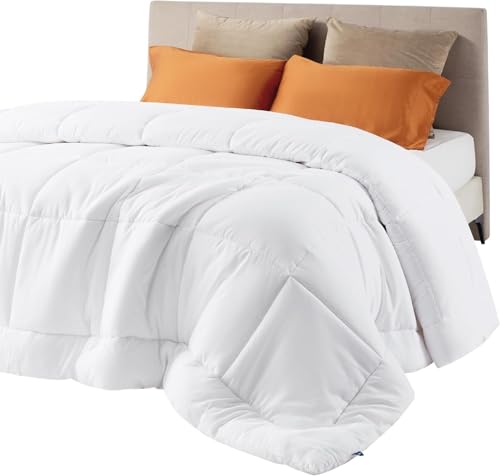
Bedsure Comforter Duvet Insert, Queen
Badge: Best Overall
Strengths
- Eight corner tabs anchor it properly inside any tie-equipped cover
- Quilted construction keeps down-alternative fill evenly distributed
- Standard 88 x 88 in sizing matches the widest range of queen covers
Trade-offs
- Plain white shell is designed to be covered, not displayed
- All-season weight may run warm for hot sleepers in summer
- No stated GSM, so warmth must be judged by its all-season positioning
Key specifications (from the verified listing)
- Size: Queen, 88 x 88 in
- Fill: down alternative
- Construction: quilted, 8 corner tabs
- Care: machine washable
- Certification: OEKO-TEX
The default recommendation for a queen bed with a cover: this is the insert for the reader who wants the system to simply work, night after night, without thinking about it.
The combination that matters — quilted fill that stays in its boxes plus eight anchor points — is exactly what separates a settled duvet from a nightly wrestling match. Fastened at corners and midpoints, it stays mapped to the cover, so warmth stays spread across both sleepers.
It is unapologetically plain: without a cover it looks like what it is, the hidden half of a system.
Ownership of the Bedsure Comforter Duvet Insert, Queen settles into a routine quickly: the details that dominate the first week — Size: Queen, 88 x 88 in — become background, and what remains is whether it does its one job without asking for attention. In this category that is the real test, and it is why the specification above leads with the practical facts rather than the decorative ones.
Living with the Bedsure Comforter Duvet Insert, Queen also means living with its format: Fill: down alternative. None of that is hidden cost — it is the ordinary care any duvet insert in this class asks for — but it should be counted when you weigh this pick against a rival whose format suits your household better.
Care in brief: keep the Bedsure Comforter Duvet Insert, Queen in service with the routine its format asks for — follow the listing’s care guidance first, protect it from the spills and strains its construction cannot forgive, and revisit the fit or setup after the first month, when most duvet insert problems announce themselves as small adjustments rather than faults.
Best for: Cover users who want the balanced, standard choice / Not suited for: Anyone wanting a decorative bare comforter

DOWNCOOL Duvet Insert, Queen
Badge: Best Lightweight Insert
Strengths
- Lightweight build suits warm sleepers and heated homes
- Slightly longer 88 x 92 in cut keeps the foot of the bed covered
- Hotel-style positioning: crisp, even, unfussy
Trade-offs
- Lightweight means less authority in a cold room in midwinter
- Corner tabs only, rather than the eight-point anchoring of some rivals
- White shell needs a cover for a finished look
Key specifications (from the verified listing)
- Size: Queen, 88 x 92 in
- Fill: down alternative, lightweight
- Positioning: all-season hotel comforter
- Anchoring: corner tabs
Choose the DOWNCOOL if previous duvets have felt like too much — you want the evenness and made-bed look of an insert at the lowest thermal commitment in this guide.
The extra four inches of length are quietly useful: the duvet stays over the foot of the mattress instead of creeping upward during the night. Its lightweight down-alternative fill distributes evenly and washes without drama, fitting the low-maintenance ownership pattern the insert system promises.
In a cold bedroom it will need a blanket layered over or under it in the deepest weeks of winter.
Living with the DOWNCOOL Duvet Insert, Queen also means living with its format: Fill: down alternative, lightweight. None of that is hidden cost — it is the ordinary care any duvet insert in this class asks for — but it should be counted when you weigh this pick against a rival whose format suits your household better.
A final practical note on the DOWNCOOL Duvet Insert, Queen: check the listing’s current configuration before ordering, because duvet insert listings in this category are periodically revised with updated fabrics, fill blends or hardware. The specification summarised here — Size: Queen, 88 x 92 in — is the version verified for this guide on the check date recorded in the sources file.
Care in brief: keep the DOWNCOOL Duvet Insert, Queen in service with the routine its format asks for — follow the listing’s care guidance first, protect it from the spills and strains its construction cannot forgive, and revisit the fit or setup after the first month, when most duvet insert problems announce themselves as small adjustments rather than faults.
Best for: Warm sleepers and warm, well-heated homes / Not suited for: Cold rooms needing one layer to do everything
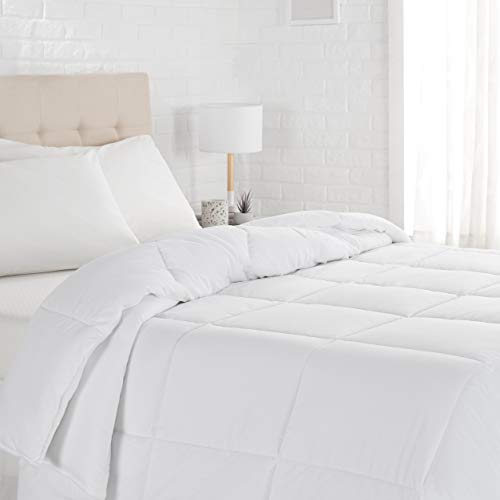
Amazon Basics Down Alternative Comforter and Duvet Insert
Badge: Best Simple Value
Strengths
- Straightforward specification at the accessible end of the category
- Full/Queen sizing serves a full bed exactly and a queen bed well
- Corner tabs included — the essential system hardware is not stripped out
Trade-offs
- Light warmth level is the least winter-capable here
- Basic shell and finish compared with the plusher picks
- Compromise sizing is nobody’s perfect fit on a deep queen with a large cover
Key specifications (from the verified listing)
- Size: Full/Queen
- Fill: down alternative, light warmth level
- Anchoring: corner tabs
- Care: machine washable
This is the spare-room and first-apartment insert: entirely adequate warmth, correct anchoring, no premium charged for loft or branding.
It does the system’s core job — even, washable warmth that stays in its cover via the corner tabs — without embellishment. For a guest bed made a few nights a month, or a full-size bed in a mild climate, the difference between this and the premium picks is hard to detect in use.
Cold sleepers in cold rooms will find its light warmth level insufficient as a sole winter layer.
A final practical note on the Amazon Basics Down Alternative Comforter and Duvet Insert: check the listing’s current configuration before ordering, because duvet insert listings in this category are periodically revised with updated fabrics, fill blends or hardware. The specification summarised here — Size: Full/Queen — is the version verified for this guide on the check date recorded in the sources file.
Ownership of the Amazon Basics Down Alternative Comforter and Duvet Insert settles into a routine quickly: the details that dominate the first week — Size: Full/Queen — become background, and what remains is whether it does its one job without asking for attention. In this category that is the real test, and it is why the specification above leads with the practical facts rather than the decorative ones.
Care in brief: keep the Amazon Basics Down Alternative Comforter and Duvet Insert in service with the routine its format asks for — follow the listing’s care guidance first, protect it from the spills and strains its construction cannot forgive, and revisit the fit or setup after the first month, when most duvet insert problems announce themselves as small adjustments rather than faults.
Best for: Guest beds, full beds and first apartments / Not suited for: Cold sleepers wanting maximum winter warmth

Utopia Bedding Duvet Insert, Queen
Badge: Best for Families
Strengths
- Soft microfibre shell feels pleasant even during cover changes
- All-season fill positioned for the whole household, adults and children alike
- Machine washable throughout — family-proof care
Trade-offs
- Microfibre shell breathes less freely than cotton shells
- No anchor count is stated in the listing, so check your cover’s ties against what arrives
- All-season generality means it is nobody’s specialist
Key specifications (from the verified listing)
- Size: Queen, 88 x 88 in
- Fill: down alternative
- Shell: soft microfibre
- Care: machine washable
- Positioning: all-season, for adults and kids
Pick the Utopia for busy family beds where bedding is washed often, handled roughly and expected to suit everyone from parents to teenagers without fuss.
Its soft microfibre shell and evenly distributed down-alternative fill deliver the comfortable middle of this category: warm enough for winter over a sheet, manageable in summer, and forgiving of frequent machine washing, which is the real family requirement.
Hot sleepers may find the microfibre shell warmer to the touch than a cotton shell would be.
Ownership of the Utopia Bedding Duvet Insert, Queen settles into a routine quickly: the details that dominate the first week — Size: Queen, 88 x 88 in — become background, and what remains is whether it does its one job without asking for attention. In this category that is the real test, and it is why the specification above leads with the practical facts rather than the decorative ones.
Living with the Utopia Bedding Duvet Insert, Queen also means living with its format: Fill: down alternative. None of that is hidden cost — it is the ordinary care any duvet insert in this class asks for — but it should be counted when you weigh this pick against a rival whose format suits your household better.
Care in brief: keep the Utopia Bedding Duvet Insert, Queen in service with the routine its format asks for — follow the listing’s care guidance first, protect it from the spills and strains its construction cannot forgive, and revisit the fit or setup after the first month, when most duvet insert problems announce themselves as small adjustments rather than faults.
Best for: Family beds and frequent washers / Not suited for: Hot sleepers who prioritise a cool-touch shell

CozyLux Queen Duvet Insert, 300GSM
Badge: Best Stated Warmth
Strengths
- Stated 300GSM fill weight — a rare, comparable warmth specification
- Box-stitch quilting locks fill in place against migration
- Eight tabs for full anchoring inside the cover
Trade-offs
- 300GSM is a genuine midweight — too much for very hot sleepers in summer
- Single comforter pack; the cover is a separate purchase, as with all inserts
- White shell is functional rather than decorative
Key specifications (from the verified listing)
- Size: Queen, 88 x 88 in
- Fill: down alternative, 300GSM
- Construction: box-stitch quilting, 8 tabs
- Certification: OEKO-TEX certified
For the buyer who comparison-shops by specification, this is the insert: the declared fill weight lets you know what warmth you are buying instead of guessing from marketing language.
Box stitching divides the fill into locked compartments, the construction most resistant to the corner-clumping that ends inserts’ useful lives. Combined with eight tabs and a midweight 300GSM fill, it is the most completely specified all-season insert in this line-up.
Specification honesty cuts both ways: 300GSM tells you plainly that very warm sleepers should look at the lighter DOWNCOOL instead.
Living with the CozyLux Queen Duvet Insert, 300GSM also means living with its format: Fill: down alternative, 300GSM. None of that is hidden cost — it is the ordinary care any duvet insert in this class asks for — but it should be counted when you weigh this pick against a rival whose format suits your household better.
A final practical note on the CozyLux Queen Duvet Insert, 300GSM: check the listing’s current configuration before ordering, because duvet insert listings in this category are periodically revised with updated fabrics, fill blends or hardware. The specification summarised here — Size: Queen, 88 x 88 in — is the version verified for this guide on the check date recorded in the sources file.
Care in brief: keep the CozyLux Queen Duvet Insert, 300GSM in service with the routine its format asks for — follow the listing’s care guidance first, protect it from the spills and strains its construction cannot forgive, and revisit the fit or setup after the first month, when most duvet insert problems announce themselves as small adjustments rather than faults.
Best for: Spec-led buyers and cold-to-average sleepers / Not suited for: Very hot sleepers in warm climates

Maple&Stone Feather Down Comforter, Queen
Badge: Best Real Down
Strengths
- Real feather-down fill with down’s characteristic close drape and breathability
- 100% cotton shell — the natural-fibre option in this guide
- Box stitching and eight loops give natural fill proper structure and anchoring
Trade-offs
- Down needs gentler, less frequent washing than down alternative
- Wrong choice for anyone sensitive to down
- Premium natural materials sit at the top tier of this category
Key specifications (from the verified listing)
- Size: Queen, 90 x 90 in
- Fill: feather down
- Shell: 100% cotton
- Construction: box stitch, 8 loops
- Positioning: all-season duvet insert
This is the insert for the sleeper who has tried down alternative and misses down: the way it settles into the body’s contours rather than puffing above them, and the way a cotton shell breathes.
At 90 by 90 inches it is also the most generous queen cut here, and the box stitching keeps the natural fill distributed instead of drifting. Inside a cover, fastened at eight loops, it delivers the classic duvet experience the whole system was invented around.
Care is the price of admission: wash it rarely, gently and dry it thoroughly, or choose a down-alternative pick instead.
A final practical note on the Maple&Stone Feather Down Comforter, Queen: check the listing’s current configuration before ordering, because duvet insert listings in this category are periodically revised with updated fabrics, fill blends or hardware. The specification summarised here — Size: Queen, 90 x 90 in — is the version verified for this guide on the check date recorded in the sources file.
Ownership of the Maple&Stone Feather Down Comforter, Queen settles into a routine quickly: the details that dominate the first week — Size: Queen, 90 x 90 in — become background, and what remains is whether it does its one job without asking for attention. In this category that is the real test, and it is why the specification above leads with the practical facts rather than the decorative ones.
Care in brief: keep the Maple&Stone Feather Down Comforter, Queen in service with the routine its format asks for — follow the listing’s care guidance first, protect it from the spills and strains its construction cannot forgive, and revisit the fit or setup after the first month, when most duvet insert problems announce themselves as small adjustments rather than faults.
Best for: Down devotees and natural-fibre households / Not suited for: Down-sensitive sleepers and frequent washers
Comparison Table
| Pick | Badge | Headline specification | Best for | Link |
|---|---|---|---|---|
| Bedsure Comforter Duvet Insert, Queen | Best Overall | Size: Queen, 88 x 88 in; Fill: down alternative | Cover users who want the balanced, standard choice | Check on Amazon |
| DOWNCOOL Duvet Insert, Queen | Best Lightweight Insert | Size: Queen, 88 x 92 in; Fill: down alternative, lightweight | Warm sleepers and warm, well-heated homes | Check on Amazon |
| Amazon Basics Down Alternative Comforter and Duvet Insert | Best Simple Value | Size: Full/Queen; Fill: down alternative, light warmth level | Guest beds, full beds and first apartments | Check on Amazon |
| Utopia Bedding Duvet Insert, Queen | Best for Families | Size: Queen, 88 x 88 in; Fill: down alternative | Family beds and frequent washers | Check on Amazon |
| CozyLux Queen Duvet Insert, 300GSM | Best Stated Warmth | Size: Queen, 88 x 88 in; Fill: down alternative, 300GSM | Spec-led buyers and cold-to-average sleepers | Check on Amazon |
| Maple&Stone Feather Down Comforter, Queen | Best Real Down | Size: Queen, 90 x 90 in; Fill: feather down | Down devotees and natural-fibre households | Check on Amazon |
How to Choose a Duvet Insert That Earns Its Place Inside the Cover
Fill: down alternative versus real down
Down alternative — polyester microfibre engineered to mimic down’s loft — is machine washable, consistent from batch to batch and the default in five of these six picks. Real feather down, as in the Maple&Stone insert, drapes closer to the body, breathes beautifully and can last longer with care, but it demands gentler washing and suits households without down sensitivities. Neither is objectively superior; the worth-it answer follows your laundry habits and your skin. If the insert will be washed at home several times a year, down alternative is the pragmatic spend. If it will live inside a cover and be washed rarely and carefully, down’s longevity enters the calculation.
Anchoring: tabs and loops decide whether the system works
An insert without anchor points will migrate inside its cover no matter how good its fill is. The standard is four corner tabs; the better picks here — Bedsure, CozyLux and Maple&Stone — provide eight tabs or loops, adding midpoints that stop the long edges from sagging and twisting. Count the anchor points before you count anything else, and check your cover has internal ties to match. An eight-tab insert inside a tie-less cover still bunches, so treat insert and cover as one system purchase even if you buy them months apart.
Size and drape: read the inches, not the label
Queen inserts in this guide run from 88 by 88 inches (Bedsure, Utopia, CozyLux) to 88 by 92 (DOWNCOOL) and 90 by 90 (Maple&Stone). Those few inches decide how the duvet falls at the foot and sides of a 60 by 80 inch queen mattress, and whether the insert fills its cover without leaving empty corners. Buy the insert to match your cover’s internal dimensions first and your mattress second — an insert smaller than its cover will always feel skimpy, however good the fill. The Amazon Basics pick is sized Full/Queen, a compromise that suits full beds exactly and queen beds adequately.
Weight and season: one insert or two?
A single all-season insert is the value play for heated homes: the CozyLux states 300GSM, a middleweight fill that works over a sheet in winter and alone in summer. Households in cold climates or unheated rooms sometimes do better with the two-insert system — a light summer insert and a warm winter one, clipped or used in the same cover — but that doubles the purchase and the storage. For most readers of a worth-it guide, one honest all-season insert, chosen at a stated weight where possible, is the spend that makes sense.
How to Fit, Wash and Store a Duvet Insert
- Shake the insert out and let it rest for a few hours after unpacking; compressed fills recover loft gradually, and judging warmth in the first ten minutes misleads everyone.
- Lay the duvet cover inside-out on the bed, lay the insert on top aligned corner to corner, and fasten every tab or loop to the cover’s internal ties — all eight where fitted, not just the corners.
- Roll cover and insert together from head to foot, then unroll them back up the bed inside the cover; shake from the foot end to settle the fill evenly.
- Wash the cover weekly with the sheets and the insert only as needed — a few times a year for most households — on a gentle cycle in the largest machine available.
- Dry the insert completely on low heat, pausing to break up clumps; residual damp is the main cause of musty fill and lost loft.
- Store off-season loosely in a breathable bag. Avoid months of hard vacuum compression, which fatigues both down-alternative fibres and natural down clusters.
- Problem: the insert bunches at the foot of the cover → one or more midpoint ties are unfastened, or the insert is smaller than the cover; refasten all anchor points and check dimensions before blaming the fill.
- Problem: cold channels down the middle → the fill has migrated; redistribute by shaking from the edges inward and tumble on air-fluff. Box-stitch constructions, as on the CozyLux and Maple&Stone, resist this longest.
- Problem: the duvet sleeps too hot in summer → use the insert without the top sheet trapping extra air, or swap to your lightest layer for the season rather than abandoning the system.
Living With Your Choice: The First Year
The first month with a new duvet insert is a calibration period, and it helps to know that in advance. Feel, fit and habit all shift: you learn the product’s actual behaviour in your room, with your routines, rather than the behaviour the listing described. Judge the purchase at the end of that month, not at the end of the first evening — nearly every pick in this guide reads differently once the household has adapted to it, and the returns windows on the linked listings exist partly to allow exactly that settling period. Keep the packaging until the verdict is in, and keep notes if a couple is deciding together; two sleepers’ impressions of the same duvet insert can differ for a fortnight before they converge.
Across the first year, the duvet insert that was worth it shows a particular pattern: it disappears. It stops being a purchase you evaluate and becomes part of the room’s background — used daily, maintained occasionally, thought about rarely. The duvet insert that was not worth it announces itself the other way, in small recurring frictions: a nightly adjustment, a weekly workaround, a corner of the room given over to storing or fighting it. When you read the detailed reviews below, weigh each pick against that standard. The best duvet insert for you is the one most likely to disappear into your routine, and that is a property of the match between product and household as much as of the product itself.
Insert and Cover Versus a Bare Comforter: The Ownership Maths
The system’s economics rest on washing. A bare comforter must be washed whole — a bulky, slow-drying load that wears the fill and shell every time. An insert inside a cover is washed rarely, because the cover is the washable skin; over five years the insert endures a fraction of the wash cycles, which is precisely why inserts outlast comforters of similar fill quality. The cover, meanwhile, is cheap to replace and doubles as the style layer, so a bedroom refresh costs a cover, not a whole new warm layer. Set against that: the upfront cost of insert plus cover exceeds a single comforter, and the system frustrates anyone who will not fasten the ties. If that is honestly you, a comforter is the better purchase, and our companion guide explores that side in Best Duvet Insert Under $400 comparisons alongside insert pricing tiers.
There is also a hygiene argument that matters for allergy-conscious households: the cover can be washed hot and often, while the insert stays protected from the dust and moisture that degrade fill. Guest rooms benefit most of all — a fresh cover makes the bed new for each guest while the insert underneath stays constant, a pattern discussed in Best Duvet Insert For Guest Rooms Under $400. For apartments where laundry is a shared, scheduled resource, washing a thin cover weekly instead of a bulky comforter is a logistical win as well, as noted in Best Duvet Insert For Apartments Under $400.
When the Answer Is No: Inserts That Are Not Worth It
Three situations flip the verdict. First, the insert with no tabs inside a cover with no ties: the system fails nightly and the owner concludes, wrongly, that duvets are a scam — the fix is anchoring, not abandonment. Second, the oversized spend on premium fill for a bed that is made once a week in a spare room; a straightforward all-season insert like the Utopia or Amazon Basics picks serves that bed identically. Third, the too-warm insert bought for a hot sleeper, which spends its life folded at the bed’s foot. In each case the product category is fine and the match is wrong, which is why this guide spends as long on choosing as on reviewing. Small bedrooms add a storage wrinkle — a spare seasonal insert needs a home — covered in Best Duvet Insert For Small Bedrooms Under $400.
It is also worth saying plainly that an insert is not worth it as a bare bed layer for most people: without a cover, the plain white shells in this guide look unfinished and must be washed whole, surrendering the system’s entire advantage. If you do not want a cover, buy a comforter designed to be seen. The insert earns its money specifically as the hidden half of a two-part system — judged on that job, with tabs fastened and weight matched to your home, it is one of the best-value components in the bedroom. The premium tier makes the same point from the other direction in Best Duvet Insert Under $700.
Covers, Climate and Getting the System Right
Because an insert is only half a system, the cover deserves a paragraph of its own. Buy the cover for the washing machine you have: a cover that needs special care will be washed less, and the system’s hygiene advantage evaporates. Cotton and cotton-blend covers wash hot and often; linen covers soften beautifully but wrinkle; microfibre covers dry fastest, which matters in apartments without dryers. Match the cover’s internal ties to your insert’s tabs — eight-point inserts like the Bedsure, CozyLux and Maple&Stone deserve eight-tie covers — and match dimensions to the inch, because an insert swimming in an oversized cover feels thin no matter how good its fill is. Many owners buy two covers per insert, which turns laundry day into a five-minute swap instead of a race against bedtime.
Climate decides the second half of the system’s success. In a home heated to a steady temperature, one all-season insert genuinely serves the year, and the 300GSM CozyLux specification is the benchmark to compare others against. In a home with real seasons and variable heating, the honest options are a lighter insert plus a blanket in winter, or two inserts — light and warm — sharing one cover wardrobe. What does not work is buying the warmest insert available and spending half the year sleeping on top of it. The DOWNCOOL’s lightweight positioning exists for warm homes; the Maple&Stone’s natural down breathes across the widest comfort range for variable ones.
There is also a guest-room dividend to the system that hosts notice quickly: a fresh cover makes the whole bed feel newly laundered for each guest while the insert underneath stays constant and protected, and a spare cover costs a fraction of a spare comforter. For households that host often, that arithmetic alone can carry the worth-it verdict. The insert is the engine; the covers are the tyres — budget for both, maintain both, and the system outlasts any single-piece alternative at the same tier.
One last system detail is worth stating plainly: the insert you buy today will likely outlast two or three covers, so choose it for the sleeper rather than the season’s decor. Covers are fashion; the insert is infrastructure. That is the deepest sense in which a duvet insert is worth it — it converts bedding from a single wearing-out object into a maintained system whose visible layer can change while its working layer endures. Buy the infrastructure once, properly anchored and properly weighted, and the annual cost of a well-made bed falls to the price of the occasional new cover.
Common Buying Mistakes
- Buying an insert with no tabs, or never fastening them, then blaming the duvet system for nightly bunching.
- Mismatching insert and cover dimensions — an 88-inch insert rattling inside a 92-inch cover always feels thin and shifts constantly.
- Washing the insert as often as the cover, wearing out fill that the cover exists to protect.
- Storing the insert vacuum-compressed for a whole off-season and permanently reducing its loft.
- Choosing fill by marketing words instead of stated weight and construction, ending with an insert too hot or too cold for the house.
- Buying real down for a household with down sensitivities, or down alternative for a sleeper who specifically loves down’s drape — the fill decision is personal, not hierarchical.
Final Recommendation
Is a duvet insert worth it? Yes — if you use a cover and fasten the tabs, it is the most economical way to keep a bed evenly warm for years. Start with the Bedsure queen insert for the balanced all-round case: eight tabs, quilted down-alternative fill, standard sizing. Choose the CozyLux if a stated 300GSM weight matters to you, the Maple&Stone if you specifically want real down in a cotton shell, and the Amazon Basics if the bed is a full or a spare and simple adequacy is the goal. The system only fails when the anchoring is skipped — buy the tabs, use them, and the insert quietly earns its keep. For the next tier up, see Best Duvet Insert For Apartments Under $700 and Best Duvet Insert For Guest Rooms Under $700.
Start with the top recommendations: Check on Amazon — Bedsure Comforter Duvet Insert, Queen · Check on Amazon — DOWNCOOL Duvet Insert, Queen · Check on Amazon — Amazon Basics Down Alternative Comforter and Duvet Insert.
Related guides
- Is A Full Mattress Worth It
- Is A Hybrid Mattress Worth It
- Duvet Insert Pros And Cons
- Is A Comforter Worth It
Frequently Asked Questions
What is the difference between a duvet insert and a comforter?
Functionally they are the same warm layer; the distinction is intent. An insert is a plain, usually white layer designed to live inside a protective cover, with tabs or loops for anchoring. A comforter is finished to be used and seen bare. Many products, including several here, are sold as both.
How many tabs should a duvet insert have?
Four corner tabs are the minimum for a stable fit; eight — corners plus midpoints — are better, especially on queen and king sizes where the long edges can sag and twist. The Bedsure, CozyLux and Maple&Stone picks in this guide all provide eight anchor points.
Is down or down alternative better in an insert?
Down alternative is machine washable, consistent and suits most households and budgets. Real down drapes closer, breathes well and can last longer with careful washing, but costs more care and is wrong for down-sensitive sleepers. Choose by laundry habits and preference, not by prestige.
How often should a duvet insert be washed?
A few times a year is typical when a cover is used and washed weekly. The cover is the hygiene layer; over-washing the insert is the most common way owners shorten its life. Always dry it completely before returning it to the cover or to storage.
What size insert fits a queen duvet cover?
Match the insert to the cover’s internal dimensions, not just the size name. Queen inserts here run 88 x 88 to 90 x 90 inches; an insert a few inches smaller than its cover will shift and feel thin, while an exact or slightly fuller fit stays smooth.
Can a duvet insert be used without a cover?
It can, but it gives up the system’s advantages: the plain shell looks unfinished and must be washed whole, like a comforter. If you prefer sleeping under a bare layer, a comforter designed for display is usually the better purchase.