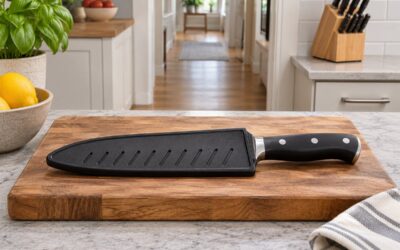
The right knife set contains the blades you will actually use, in a steel and handle style you like, with storage that suits your kitchen. A set with fewer, better-matched knives usually beats a large block full of pieces you never touch.
Decision Criteria
| Factor | Why it matters | What to check |
|---|---|---|
| Included knives | Determines daily usefulness | Chef knife, paring knife and a bread knife cover most needs |
| Steel type | Affects edge hold and care | Stainless is easier; carbon steel needs more care |
| Construction | Affects weight and balance | Forged or stamped, full tang or not |
| Handle | Comfort and grip | Size, material and shape in your hand |
| Storage | Protects edges and counters | Block, drawer tray or magnetic strip |
| Care | Determines longevity | Hand wash or dishwasher guidance |
Build Your Short List of Needs
- Write down the tasks you do most: slicing vegetables, trimming meat, cutting bread, peeling or paring.
- Match each task to a knife: a chef knife for general work, a paring knife for small jobs, a toothed bread knife for loaves and soft items, and a utility knife for in-between sizes.
- Decide whether you need steak knives, shears or a honing rod in the same set.
- Count pieces that duplicate each other, since extra sizes add weight to the block without adding use.
Set or Individual Knives
A set gives matching looks and a built-in storage solution. Buying separately lets you choose the best chef knife for you and add pieces over time. If you are new to cooking, a small set with three or four knives is plenty. If you cook for a crowd or enjoy varied cuisines, consider extras like a boning knife or cleaver.
Try Before You Commit When You Can
- Hold the chef knife and check that your knuckles clear the board.
- Look at the balance point, whether the knife feels blade-heavy or handle-heavy.
- Check the handle for rough seams or gaps.
- Consider your hand size and any grip limits.
- Read the maker’s care guide for hand washing and sharpening advice.
Treat knives with respect: store them away from children, cut on a suitable board and keep the edges maintained.
Watch for fillers. Some sets pad out the count with items that are not knives at all, or with several near-identical steak knives. Count the knives you will actually use, then ask whether you could buy those separately with better results. Also check how the block fits on your counter and whether it holds the knives upright or on their sides.
Forged and Stamped Blades Explained
Knife listings often split blades into forged and stamped. A forged knife is shaped from a heated piece of steel, often with a thicker spine and a bolster where blade meets handle. Forged knives tend to feel weightier and may feel more balanced to some cooks. A stamped knife is cut from a flat sheet of steel and then ground and finished. Stamped knives are usually lighter and can be very capable when well made.
The label alone does not tell you quality. Heat treatment, steel grade, edge grind and finishing are just as important. A well-made stamped knife may outperform a poorly made forged one. What you can judge at home is how the knife feels. Do you prefer the heft of a forged blade, or the agility of a lighter one? Is the transition from blade to handle smooth?
Also look at the tang, the metal that extends into the handle. A full tang runs the entire length of the handle and is often a sign of sturdy construction, but partial tangs are common on lighter knives and can be perfectly adequate. The maker’s description should tell you how the knife is built. If it does not, consider that a hint to look more carefully.
Edge Types and Blade Shapes in a Set
Most sets include a mix of straight-edge and serrated knives. Straight edges slice cleanly and can be sharpened at home. Serrated blades grip crusty bread and tomato skins, and tend to stay useful longer between sharpenings, though they are harder to sharpen. Hollow-ground or scalloped edges may be included on slicers and are meant to reduce sticking.
Look at blade shape, too. A chef knife with a rounded belly rocks on the board and suits chopping. A flatter profile suits push cuts. A santoku-style blade has a flat edge and a rounded tip for fine slicing. A paring knife has a short blade for peeling and detail work. A utility knife fills the middle ground.
- Check that the chef knife is long enough for your board and hand.
- Choose a bread knife long enough for your loaves.
- Look for a paring knife you can control with your fingertips.
- Treat steak knives as optional extras if you already own some.
Think about the way you cut and pick a set that supports it.
Handle Materials, Seams and Hygiene
Handles take the most contact, and different materials suit different people. Plastic and composite handles are light, resist moisture and tend to be easy to clean. Wood handles feel warm and traditional but need hand washing and drying to avoid cracking or swelling. Metal handles are durable and easy to wipe, though they can feel slippery when wet. Rubberized handles add grip but may degrade over time.
Seams deserve attention. A gap between the handle and the blade can trap food and moisture, which is a hygiene concern. Look for smooth, flush joins with no visible gaps. Rivets should sit level with the handle surface. If you see sharp edges or gaps in a showroom, avoid that model.
Handle size and shape matter more than looks. A handle that suits large hands may feel awkward in small ones and vice versa. Notice where your fingers rest and whether the handle presses on any bone. Comfortable handles let you cut longer without fatigue, which also makes cutting safer.
Block, Drawer Tray, Magnet or Roll: Choosing Storage
Storage protects both the knives and you. A countertop block keeps knives within reach and displays them, but takes counter space and can harbor moisture if knives go in wet. A drawer tray protects the edges and clears the counter, though it needs a drawer with enough depth and length. A magnetic strip mounts on a wall and keeps blades visible, but it needs secure fixing and careful placement away from children.
A knife roll or sheaths suit cooks who travel or have limited space. Blade guards protect edges inside a drawer, but they must be dry and clean. Whichever you choose, make sure each knife has its own slot or guard, and that blades do not touch each other.
Think about which storage fits the layout of your kitchen. If counters are small, a drawer tray or wall strip is better. If you have deep counters and like a tidy set, a block is fine. When buying a set with a block, check that the slots fit the knives properly and that you can add more knives later if needed.
Growing Your Collection Over Time
A starter set does not have to be final. Many cooks begin with a small group and add specialized knives as their cooking changes. A boning knife helps if you break down chicken regularly. A slicing knife suits roasts. A cleaver or heavy knife handles squash and bones. Kitchen shears are useful for herbs and poultry.
Before adding a knife, ask what task is frustrating you now. If you struggle with bread, a better bread knife may help. If peeling is awkward, try a different paring knife. Buying knives to fix real problems prevents drawers full of unused blades.
Look at compatibility with your storage too. A new knife that does not fit the block or tray ends up in a drawer unprotected. Also think about maintenance: more knives mean more sharpening. A maintenance habit of honing regularly and sharpening occasionally keeps a small collection performing well. Budget tiers vary qualitatively, from basic sets with simple finishes to higher-end collections with finer steel and finishing. Choose the tier that matches how often you cook and how much care you will give.
FAQ
Is a bigger block always better value?
Not if you will not use most pieces. A smaller selection of well-made knives can serve you better.
Do I need a sharpener in the set?
A honing rod helps maintain edges. Some sets include one, and you can add a sharpener later.
What is the difference between forged and stamped knives?
Forged knives are shaped from heated steel and are often heavier, while stamped knives are cut from sheet steel and are usually lighter. Quality depends on more than the label.
What does full tang mean?
The metal of the blade runs the full length of the handle. It often indicates sturdy construction, but partial tangs can also work well on lighter knives.
Are serrated knives hard to sharpen?
Yes, they usually need special tools or professional sharpening. They also tend to stay useful for longer between sharpenings.
Is a knife block sanitary?
A block is fine if you keep knives clean and dry before inserting them. Clean the slots occasionally according to the maker's guidance.
How many knives do I really need?
Many cooks do well with a chef knife, a paring knife and a bread knife. Add others only when a specific task calls for them.
Should I buy a set or separate knives?
A set gives convenience and matching storage, while separate knives let you choose each piece. It depends on your budget and experience.
Can I put knives in the dishwasher?
Most makers advise hand washing to protect edges and handles. Check the care guide for the set you are considering.
The Short Version
Choose by the knives you will use, comfort in your hand, steel and care needs and storage. Piece count matters far less than fit.