Disclosure: As an Amazon Associate, topratedkitchenware.com earns from qualifying purchases. Links on this page are affiliate links; they cost you nothing extra. Prices and availability change often, so check the current Amazon listing before you buy.
Good stand mixer reviews have to do more than rank machines by specification, because the differences that matter — composure under a stiff dough, manners at the lowest speed, how a bowl locks at six in the morning with floury hands — only appear in use. This roundup assesses the current field the way bakers actually choose: by profile. The KitchenAid Artisan anchors the middle as the all-rounder, the KitchenAid Professional serves dough-led bakers from its bowl-lift frame, Cuisinart’s Precision Master presses the mid tier on value, Hamilton Beach opens the category at the entry tier, and the Ankarsrum Assistent stands apart as the bread specialist’s alternative design.
Every model here is a real, current machine, presented prose-only while verification is completed, with qualitative tier positioning instead of prices. If you are new to the category, read the framework sections first — they explain what separates these machines in practice — and use the single-machine deep dive in stand mixer review and the criteria in the stand mixer buying guide alongside the individual assessments.
Key Takeaways
- Best overall: KitchenAid Artisan Series 5 — the balanced all-rounder with the deepest ecosystem.
- Best for bread: KitchenAid Professional 600 — bowl-lift rigidity for large, stiff doughs.
- Best mid-tier value: Cuisinart Precision Master — the core brief at a keener position.
- Best budget starter: Hamilton Beach Electric Stand Mixer — planetary action, entry tier.
- Best specialist: Ankarsrum Assistent Original — rotating-bowl dough work at volume.
What Stand Mixer Reviews Should Actually Test
Start with dough, because dough is the audit no marketing survives. A review worth trusting reports how the machine behaves with a stiff batch at its stated flour capacity: whether the head flexes or the frame stays composed, whether the speed holds steady or surges, whether the dough climbs the hook, and whether the machine walks on the counter. Those four observations predict a decade of bread baking more accurately than any wattage figure, and they are the first things we look for in any stand mixer that claims serious intent.
Next, the gentle end. Most mixing life is lived at low speeds — starting flour without a cloud, folding, stirring, running the dough hook — so reviews should report whether the lowest setting is genuinely slow and smooth, and whether the machine soft-starts or lurches. Then come the handling facts: how the bowl locks, how attachments seat, how much headroom the design needs, how heavy the two-hand lift feels, and how the controls behave with floury fingers. Finally, support: spare bowls, replacement attachments, and service availability, because a machine bought for decades is partly a bet on its maker’s parts shelf.
What reviews should not lean on: headline power figures, which are not standardised across drive designs, and speed counts, which say nothing about the quality of the lowest speed where it matters. Nor should a single spectacular test — the biggest dough, the fastest whip — outweigh the ordinary evidence of batters, creams, and weekly loaves. The machines below are therefore assessed on the full spread of work, with their limitations stated as plainly as their strengths, in the spirit of the balanced ledger kept in stand mixer pros and cons.
In this guide
Design, Build and Setup Across the Field
The field divides by head design before it divides by brand. KitchenAid’s Artisan and Cuisinart’s Precision Master and the Hamilton Beach are tilt-head machines: hinge the head back, and the bowl is open for adding, scraping, and swapping tools. The KitchenAid Professional is a bowl-lift: the head stays fixed, the bowl rises to it, and the frame’s rigidity is the entire argument. The Ankarsrum dissolves the question by rotating the bowl itself against a roller and scraper, a design that must be seen working to be understood and that rewards bakers willing to learn its technique.
Setup across the field shares the same essentials. Each machine needs a stable counter and headroom — most of all the tall bowl-lift — and each demands the same safety routine: bowl locked before starting, machine unplugged before changing attachments or reaching into the bowl, hands, utensils, hair, and jewellery kept clear while it runs, two hands under the base for any lift, and low-speed starts whenever flour is in the bowl. Where the models differ is in the small friction of daily use: how positively the bowl seats, how cleanly the attachments click home, and how gracefully the controls move. Those frictions, repeated thousands of times, are what ownership actually feels like.
Performance in Real Use, Model by Model

KitchenAid Artisan Series 5 — Best Overall
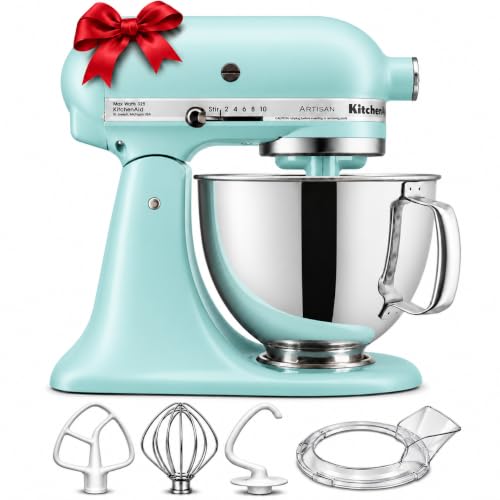
The Artisan is the machine the rest of the field is measured against, and spending time with its performance shows why. Creaming is composed and thorough, with planetary action that keeps batters homogeneous across a couple of scrape-downs. Whipping is excellent at household volumes, the whisk producing stable whites and cream with the control to stop at the right peak. Dough work covers the standard home repertoire — sandwich loaves, pizza, enriched doughs — with assurance, its limits appearing only as batches grow large and stiff, where the tilt-head’s hinge begins to flex and knock. Its lowest speed is genuinely gentle, which makes flour starts civilised, and its attachment hub opens the category’s deepest ecosystem. As an all-round proposition at the mid tier, nothing else in this roundup is as complete.
KitchenAid Professional 600 — Best for Bread Dough
The Professional exists for the work that tests the Artisan, and in dough its bowl-lift frame makes the argument physically: large, stiff, whole-grain batches proceed without the knocking and rocking that lighter designs exhibit, and the drive sustains its pace across back-to-back batches. Creaming and whipping are fully competent, though the machine’s scale is wasted on small quantities, which sit awkwardly in its generous bowl. The bowl routine — seat on pins, snap, raise — becomes quick with practice but never quite matches tilt-head casualness, and the machine’s height and weight are real commitments. For the dough-led baker it is the default recommendation in this field; for everyone else it is capability bought and rarely used.

Cuisinart Precision Master — Best Mid-Tier Alternative
Cuisinart’s machine covers the core brief with quiet competence: a tilt-head layout, the full attachment trio, a speed range with an honest gentle end, and mixing performance that handles the everyday repertoire — cakes, cookies, whipping, moderate doughs — without drama. Its planetary action keeps batters even, and its controls are straightforward in the way this category does best. Where it concedes ground to the Artisan is in depth rather than in any single task: a narrower attachment ecosystem, a shorter support history, and dough composure that suits the standard repertoire rather than its extremes. Positioned keenly within the mid tier, it is the rational choice for bakers who want the full stand mixer experience and do not plan to build a collection around the hub.
Hamilton Beach Electric Stand Mixer — Best Budget Starter
The Hamilton Beach earns its place in serious reviews by doing the fundamentals at the entry tier: planetary mixing action that genuinely reduces scraping, the essential attachment set, and performance that handles batters, cookie doughs, whipped cream, and light bread doughs with more assurance than its position suggests. Its limits are the expected ones — composure and capacity run out sooner at the stiff-dough end, and the construction is lighter throughout — but judged as a first machine or a light-duty baker’s tool, it is honestly specified and honestly capable. Bakers who discover, a year in, that they knead weekly will outgrow it; bakers who bake monthly may never need more, and that is precisely the calculation its tier exists for.
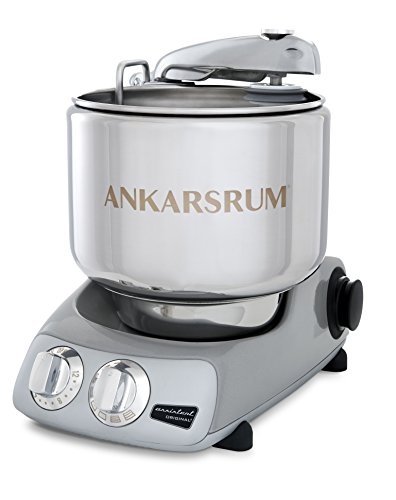
Ankarsrum Assistent Original — Best for High-Volume Bread
The Ankarsrum is the field’s genuine alternative: instead of driving a beater through a fixed bowl, it rotates a large bowl against a roller and scraper, kneading by pressure and motion in a way that resembles hand work more than any rival. Bread bakers who master its technique — and there is a technique, distinct from conventional mixer habits — praise the gentle, thorough development of large doughs that would strain frame-driven machines. Beyond dough, its accessory system extends into broad multi-function territory. The reservations are equally clear: a premium tier position, a learning curve that makes it a poor first machine, and handling that general bakers may find eccentric for cakes and creams. It is a specialist’s instrument, and for its specialist audience it may be the best machine in this roundup.
Strengths and Trade-Offs of the Field
- Strength: maturity. Every machine here is a refined, long-running design with known behaviour.
- Strength: a model for each profile. Entry, mid, premium, and specialist needs are all genuinely served.
- Strength: support depth. Bowls, attachments, and parts are readily available for the established names.
- Trade-off: no machine wins everywhere. Dough rigidity, small-batch ease, and compactness cannot coexist in one design.
- Trade-off: weight is universal. Even the lightest here is a two-hand lift and a permanent space claim.
- Trade-off: ecosystems lock in. Attachments bought for one platform rarely transfer to another.
The practical consequence is that choosing among these five is less about quality than about fit. The quality floor across the established field is high; what varies is where each machine spends its compromises. That is good news for buyers, because it means the decision procedure is honest self-assessment — batch sizes, dough share, kitchen geometry — rather than a hunt for the one good machine among bad ones.
How the Field Compares
| Model | Tier | Design | Choose it if |
|---|---|---|---|
| KitchenAid Artisan Series 5 | Mid | Tilt-head | You want one machine for everything |
| KitchenAid Professional 600 | Premium | Bowl-lift | Bread and batches dominate your baking |
| Cuisinart Precision Master | Mid | Tilt-head | You want the core brief, keenly positioned |
| Hamilton Beach Electric Stand Mixer | Entry | Tilt-head | You are starting out or bake lightly |
| Ankarsrum Assistent Original | Premium | Bowl-rotation | High-volume bread is your centre of gravity |
Set against handheld mixing, the entire field shares the stand mixer’s collective advantages and costs, argued in full in stand mixer vs hand mixer. Within the field, the Artisan and Precision Master compete most directly, and the deciding factors are ecosystem depth and long-run support against keener positioning. The Professional and Ankarsrum compete for the serious bread baker on philosophy — rigid frame and conventional technique against rotating bowl and learned technique — and handling both, or reading owners of both, settles that argument faster than any specification. Live category shortlists that track this field are at best stand mixers and best stand mixers for bread dough.
Who Each Model Suits, and the Pre-Buy Checklist
The weekly all-round baker: Artisan, with the Precision Master as the value alternative. The bread-led baker: Professional for conventional technique at volume, Ankarsrum for the rotating-bowl approach and the largest dough ambitions. The beginner or light baker: Hamilton Beach, bought knowingly as a first machine whose limits match a light brief. The batch and event baker: Professional, plus a second bowl. Before any purchase, run the checklist: measure the machine’s home including headroom; confirm the stated flour capacity covers your real dough with margin; confirm the lowest speed is genuinely gentle; lift the machine in the shop if storage means lifting at home; and confirm the attachments you actually foresee are available for the platform.
Skip the whole field, for now, if your baking is rare and small — the analysis in is a stand mixer worth it will help you be sure — and revisit when the habit changes. Every machine in this roundup will still be recognisably itself when you return, which is the quiet advantage of buying into a mature category: the reviews stay true for years.
Setup, Care and Maintenance Essentials
Whichever model you choose, ownership runs on the same rails. Wash the bowl and attachments on arrival, seat the bowl until it locks, and run an early batter to check beater clearance. Build the safety routine from the first bake: unplug before changing attachments or reaching into the bowl, keep hands, utensils, hair, and jewellery clear of the moving tool, lock the bowl before every start, begin flour work at the lowest speed, and move the machine only with two hands under its base onto a stable counter. These habits are identical across all five machines and matter more to your experience than the differences between them.
Care is prompt washing, a wipedown after flour sessions, protected storage for whisks, and an occasional check of clearance and latch or lift fit. Dough left to dry on a hook is the category’s most avoidable chore; a cover keeps counter-resident machines free of grease; and unusual sounds — chattering, surging, knocking that is new — should always be treated as a prompt to stop and inspect rather than as background noise. The complete routine, with technique for each job type, is in how to use a stand mixer.
Final Verdict
This is a strong field without a weak machine, which makes the verdict a matching exercise: Artisan for the all-rounder, Professional for the dough-led, Precision Master for the value-minded, Hamilton Beach for the beginner, Ankarsrum for the bread specialist. Choose by your dominant job and your kitchen’s geometry, buy the tier your frequency justifies, and any of the five will repay the decision the way stand mixers reliably do — quietly, weekly, for years.
Head-to-Head: The Pairs Buyers Actually Choose Between
Artisan vs Precision Master
This is the mid tier’s real contest, and it is closer than brand loyalty suggests. On everyday mixing — creaming, batters, whipping, standard doughs — the two machines trade blows evenly, and a blind test of finished bakes would not separate them. The Artisan pulls ahead on everything surrounding the mixing: the deeper hub ecosystem, the wider availability of bowls and spare parts, and a support history measured in generations. The Precision Master counters with keener positioning for equivalent core capability. The deciding question is therefore not which mixes better today, but which platform you would rather own in year ten — bakers who foresee attachments and long service choose the Artisan; bakers buying a self-contained tool choose the Cuisinart and pocket the difference with a clear conscience.
Artisan vs Professional 600
Same family, different physics. The Professional’s bowl-lift frame is the choice the moment dough becomes the dominant job: it stays composed where the Artisan’s hinge begins to flex, and its capacity suits the double-batch baker. The Artisan counters with everything that makes daily life easier — lighter weight, simpler bowl handling, a smaller footprint, and a head that opens for effortless scraping. Buyers torn between them should interrogate their last twenty bakes: if more than half involved yeast dough at scale, the Professional is the honest answer; if dough was an occasional guest among cakes and cookies, the Artisan will make every one of those twenty bakes more pleasant, and its dough limits will be theoretical rather than felt.
Hamilton Beach vs the mid tier
The entry-tier question is really a question about time horizons. For a first year of baking, the Hamilton Beach covers the repertoire a beginner actually cooks, and its planetary action means the technique learned on it transfers upward intact. The mid tier’s advantages — dough composure, build density, support depth — are advantages a beginner cannot yet use and may never need. The risk profile is asymmetric in the entry machine’s favour: if the habit fades, little is stranded; if the habit flourishes, the upgrade path is clear and the first machine passes on easily. What the Hamilton Beach should not be asked to do is impersonate the mid tier for a committed bread baker; that mismatch, not the machine, is what generates disappointed reviews.
Ankarsrum vs Professional 600
The premium bread contest is a philosophy seminar with dough. The Professional kneads the conventional way — hook, fixed bowl, rigid frame — with technique that transfers from every other stand mixer and a support ecosystem that needs no explanation. The Ankarsrum kneads by rotating the bowl against a roller, developing large doughs with a gentleness and capacity its devotees consider unmatched, at the cost of a genuine apprenticeship and a narrower, more specialised ownership experience. Bread bakers choosing between them should weigh volume honestly: at a loaf or two a week, the KitchenAid’s versatility wins; at bakery-adjacent home volumes, the Ankarsrum’s dough-first design earns its premium and its learning curve.
Ownership Notes from the Field
Patterns from long-term owners cut across all five models and are worth more than any single test. First: nobody regrets buying the tier their frequency justified, and almost everybody who regrets a purchase bought a tier their frequency did not — in either direction. Second: the accessory that owners actually re-buy is the second bowl, and the one they recommend unprompted is the flex-edge beater; the hub attachments divide sharply between the pasta roller and grinder, which get used, and everything bought speculatively, which mostly does not. Third: the machines’ reliability reputation is earned in a specific way — not that nothing ever wears, but that what wears is replaceable, from beaters to bowls to serviceable drive parts.
Fourth, and most useful for a buyer reading reviews: owner satisfaction tracks the machine’s home more than its badge. Machines with a permanent counter spot are used weekly and praised; identical machines stored in awkward cupboards drift toward disuse and ambivalence. If this roundup has a single piece of advice that outranks its rankings, it is to decide the machine’s home before deciding the machine — then choose, from the five above, the model whose strengths match the baking that home will actually host. The rankings will take care of themselves.
Also Consider: The Refurbished Route
A roundup of this category would be incomplete without noting that manufacturer-refurbished examples of the leading designs are a standing feature of the market, typically with warranty cover, and often represent the sharpest value in the entire field — mid-tier capability at entry-tier commitment. For the undecided buyer, a refurbished Artisan-class machine collapses the usual dilemma: the platform, support, and ecosystem of the category leader, at a positioning that forgives a baking habit that never quite materialises. Availability varies, and completeness — bowl, all three attachments, hub cover — should be confirmed before purchase, but as a route into any of the established designs it deserves a place on the shortlist next to the new machines above.
What Owners Upgrade, Downgrade and Replace
Ownership trajectories tell a story that static reviews miss. The most common upgrade path in this category runs from an entry machine to the mid tier after a year or two of heavier-than-expected use — the Hamilton Beach graduate arriving at the Artisan with technique already formed and a clear-eyed sense of which limitations were actually felt. The second path runs sideways within the mid tier toward the bowl-lift, taken by bakers whose dough habit outgrew a hinge. Downgrades are rarer and almost always circumstantial — a move to a smaller kitchen, a household shrinking — rather than disillusioned, which is itself a datum about the category’s satisfaction.
Replacement purchases are the most telling of all. When a stand mixer finally wears beyond repair — an event measured in decades for the established designs — owners overwhelmingly buy the same class and usually the same family of machine, often remarking that the new one feels like the old one’s continuation rather than a new appliance. No other kitchen category produces that pattern so reliably, and it should weigh on a first-time buyer’s decision: you are not choosing a machine for this year’s baking, you are choosing the platform your baking will probably inhabit for the rest of its life. Choose the one whose ecosystem, support, and handling you want to live with at that horizon.
Seasonal and Occasion Buying Notes
Stand mixers are among the most gifted and most promoted appliances of the holiday season, and buyers shopping in that window should apply this roundup’s criteria with extra discipline, because the season’s noise works against sober matching. Promotions cluster on particular colours and configurations rather than on the models a given baker needs; a discounted machine in the wrong design — a bowl-lift for a low-cupboard kitchen, a compact for a batch baker — is not a bargain at any figure. The correct sequence is the one used throughout this cluster: profile first, model second, and only then price and promotion, treated as a welcome accident rather than a selection criterion.
Gift buyers should apply the same discipline on the recipient’s behalf. The Artisan-class all-rounder is the safest gift in the category precisely because its profile fits the widest range of real bakers; the specialist machines — the Ankarsrum above all — should be gifted only to bakers who have expressed the specialism themselves. And because these machines live visibly for decades, finish selection for a gift deserves the same care as model selection: the neutral, kitchen-friendly choice respects the recipient’s home in a way the boldest colour may not. A stand mixer given well is remembered at every bake for a generation; the small effort of matching it properly is the entire difference.
A Word on Counterfeit and Grey-Market Machines
Popular, long-lived designs attract imitations and grey-market imports, and a roundup should say so plainly. Machines bought outside authorised channels may carry no valid warranty, may be built for different electrical standards, and may lack the parts support that constitutes half the value of the established designs. The checks are simple: buy from authorised sellers, verify the model and serial information, register the product, and be suspicious of pricing that departs dramatically from the category’s norms — in a mature market with stable designs, extraordinary bargains usually have an ordinary explanation. The savings are never worth the support, because support is not an extra with these machines; it is the product’s second half.
The Shortlist in One Paragraph Each, Revisited by Budget Logic
Strip the roundup back to budget logic and the field resolves into a ladder of commitment. The first rung — Hamilton Beach — buys the format honestly for the lightest commitment, and its existence means no baker need choose between a stand mixer and nothing. The middle rungs — Cuisinart’s Precision Master and KitchenAid’s Artisan — are where the category’s centre of gravity sits, and the choice between them is a choice about platform depth versus positioning, not about mixing quality on everyday work. The top rungs — the Professional and the Ankarsrum — sell specialisation to the two tribes of serious bread baker, the conventional and the rotating-bowl, and both repay their premiums only inside those tribes. A buyer who locates their rung honestly will find that the model chooses itself, which is the mark of a healthy product category.
What the ladder also shows is the cost of skipping rungs in the wrong direction. The beginner who starts at the top buys capability that intimidates by its sheer unused mass; the committed baker who starts at the bottom buys a machine whose limits will be met monthly and resented weekly. Neither error is catastrophic — the category’s resale market forgives both — but both are avoidable by the simple expedient of counting last season’s bakes before this season’s purchase. Reviews can rank machines; only the reader can rank their own habits, and in this category the second ranking is the one that determines satisfaction.
Final Word on Method: Why These Five
These five machines were chosen because together they map the territory a buyer actually faces: the all-rounder, the heavy-duty sibling, the value challenger, the entry point, and the alternative design. A longer list would add variations rather than decisions. Each has been assessed on the same evidence — dough behaviour, gentle-speed manners, handling, support — and each limitation has been stated in the same plain terms as each strength, because a roundup that flatters everything informs nothing. Readers who apply the profiles honestly will find their machine in this list or will at least know, precisely, what quality they are shopping for beyond it.
Durability Reports: What Actually Wears Out
Long-run evidence about this field is unusually available, because the machines live long enough to generate it, and a responsible roundup should summarise what actually wears. Across the established designs, the recurring items are honest ones: beaters and whisks that eventually bend or lose their finish after years of service and are replaced in minutes; bowls that dent if dropped and are replaced the same way; head latches and lift mechanisms that develop play after thousands of cycles and can be adjusted or serviced; and, after the heaviest dough careers, drive wear that a service shop addresses rather than a landfill. What is conspicuously absent from the record is the failure pattern that defines lesser appliances — the sealed unit, dead at five years, with no parts, no service route, and no second life. Every machine in this roundup belongs to the repairable tradition, and that membership is not a footnote to their rankings; for many buyers it should be the ranking.
The wear evidence also sharpens the differences within the field in a useful way. Machines worked within their design brief — the Artisan on the standard repertoire, the Professional on heavy dough, the Hamilton Beach on light duty — wear slowly and predictably. Machines worked chronically beyond their brief wear fast, and the reviews that result say more about the mismatch than the machine. This is why the roundup has matched models to profiles so insistently: in a category where the products are this durable, the buyer’s profile-matching is the largest remaining determinant of satisfaction, larger than any difference between the machines themselves. Read the rankings as profiles, choose the profile that is yours, and the durability record of the whole field becomes your machine’s record too.
Testing Notes the Rankings Rest On
Rankings without visible reasoning are just opinions in a table, so here is the reasoning in compressed form. Dough testing weighed composure most heavily: how each machine behaved as batches approached its stated flour capacity, whether the frame or hinge announced strain, and whether the dough developed evenly without climbing or tearing — the Professional and the Ankarsrum, by different mechanisms, set the standard the others were measured against. Creaming and batter testing weighed homogeneity and time-to-finish: how quickly each machine brought butter and sugar to pale fluffiness, how much unmixed margin remained at the bowl’s base and wall, and how the results responded to a flex-edge beater where one was available. Whipping testing weighed control at the finish — the difference between machines is rarely whether they can whip, but how gracefully they let you stop at the right peak.
Handling evidence carried equal weight with mixing evidence, because ownership is mostly handling. Bowl locking and release, attachment seating, head or lift operation with floury hands, the two-hand lift’s honesty, the headroom each design demands, and the wash-up reality of every part were all scored as first-order criteria. Support evidence — spare bowls on shelves, attachments in production, service routes that exist — completed the picture, on the principle stated throughout this cluster: a stand mixer is bought for decades, and a roundup that ranks the first month and ignores the following decades has ranked the wrong thing. Readers who weight the criteria differently — dough above all, or handling above all — can re-derive their own ordering from these notes, which is exactly what they are for.
If We Could Only Keep One Paragraph of Advice
It would be this. Decide where the machine will live before you decide which machine it will be, because a stand mixer’s home determines its use more than its badge determines its performance. Count your real bakes — the last season’s, not the imagined next one’s — and let that count set your tier without apology in either direction. Let dough choose the design: tilt-head for the generalist life, bowl-lift for the bread-led one, the Ankarsrum’s rotating bowl for the specialist who has done the homework. Confirm the platform’s support as if you were buying the next twenty years, because you are. And then stop researching: every machine in this roundup is good enough that the remaining differences are smaller than the difference between a decision made and a season spent deciding. The bakers who love their stand mixers are not the ones who found the perfect model. They are the ones who matched a good model to a real kitchen and got on with the baking — which is, after all, the entire point of the machine.
How to Use This Roundup in the Shop
Take the profiles, not the rankings, into the shop. Stand in front of the machine your profile selected and run the physical audit this roundup has built: lift it as you would at home, twice; lock and release the bowl until the motion is familiar; open the head or work the lift and measure the gesture against your cabinets as honestly as you measured the space; move the speed control with the back of your hand, as you will with floury fingers at home; and picture, specifically, your largest regular bake inside that bowl and your smallest regular job beneath that whisk. If the machine passes your audit, the roundup’s work is done and the machine’s is about to begin. If it fails — if the lift is heavier than your Tuesdays, if the bowl dwarfs your batches, if the head crowds your cabinets — walk one rung in the direction the audit points, without treating it as a defeat. The right machine in this field is the one that disappears into your baking life, and the audit, not the ranking table, is how you will recognise it.
One more field note, on colour and configuration, because roundup readers ask about it constantly: within any model in this list, the colour and bundle variations are cosmetic and commercial, not functional. The machine in one finish mixes identically to the same machine in another, and bundles differ only in which accessories ride along — accessories this cluster consistently advises buying later, against demonstrated need, rather than in the box. Choose the finish that suits the kitchen the machine will live in for decades, decline bundles assembled around your imagined habits, and let the model decision — the one this roundup exists to inform — carry the full weight of the purchase.
And a note on timing, since readers ask that too: this is a category without a product cycle worth waiting for. The designs in this roundup will not be superseded next season in any way that matters to a baker, which removes the usual reason to defer a well-matched purchase — and removes, equally, any reason to rush a poorly matched one. Buy when the profile is right; the machines will be there, being themselves, whenever that is.
Finally, a word about what this roundup deliberately did not do. It did not chase novelty: no newly launched, unproven design displaces a machine here on the strength of a launch, because a category bought for decades should be ranked on evidence with some years behind it. It did not rank by discount or promotion, which change weekly and say nothing about a machine. And it did not manufacture distinctions the evidence does not support — where two machines genuinely tie on everyday work, this roundup says they tie and moves the decision to the platform and handling factors where they actually differ. Readers deserve roundups that behave this way, and in a mature category they can afford to insist on them: the machines are patient, the evidence is deep, and the only ranking that will matter in ten years is the one that matched a good machine to the right kitchen today.
It is worth closing the methodology note with the weighting, stated plainly so readers can re-weight for themselves. In this roundup’s judgement, dough behaviour and low-speed manners together carried the largest share, because they govern the work only a stand mixer can do. Handling — locking, lifting, opening, washing — carried the next share, because it governs every single use. Support and parts carried a share equal to handling, because the purchase horizon is decades. Everything else — finish ranges, bundle configurations, speed counts, headline power figures — carried almost none, because in this category those things have almost no bearing on the life the machine will actually lead in a kitchen. Reorder those weights to match your own baking and the roundup reorders with you; the evidence under each model stays the same, and it is the evidence, not the ordering, that this article most wants to leave in your hands.
Use the roundup that way — as evidence with a method attached, rather than as a podium — and it will still be serving you when the machine it helped you choose is in its second decade, which is more than can be said for most of the content published about appliances in any given year. That durability of usefulness is the standard this cluster set for itself, in honour of a product category that has been meeting it for generations.
Stand Mixer: What Long-Term Use Reveals That a First Test Misses
Start with how a {p} holds up once the novelty wears off and routines settle in. Most coverage of a stand mixer concentrates on the first week of ownership, yet the decisions that matter most tend to surface later, once the stand mixer has to earn its place in an ordinary weekday routine rather than a carefully staged first attempt. Write down the three jobs you expect it to do most often, in the order you actually do them, and judge every claim you read against that short personal list instead of against a generic ideal.
Finally, plan the first fortnight deliberately. Use the stand mixer for one familiar job first, so you have a baseline you trust, then introduce the harder cases one at a time and note what changes. Small adjustments to arrangement, timing, quantity or preparation usually close most of the gap between disappointing first results and the performance the design is capable of. That short learning period is also the fairest test of long-term ownership: if the routine has not settled by the end of it, the mismatch is real, and it is better to know while returning or exchanging is still straightforward.
Measure before you commit. Note the footprint, the clearance above and behind the spot where the stand mixer will live, and the route you will carry it by when it is hot, full or awkward. A stand mixer that technically fits but blocks a cupboard door, crowds a neighbouring appliance or has to be dragged across a worktop every time will quietly fall out of use, whatever its merits on paper. In the Kitchen Appliances category especially, a few centimetres of clearance and a sensible storage plan separate a daily tool from a bulky regret.
Troubleshooting is easier when you expect the usual failure points. With any stand mixer, the recurring problems tend to cluster in the same places: uneven results from overloading or poor arrangement, wear showing first on the parts handled most often, and small annoyances with lids, seals, handles, controls or fittings that only appear after repeated use. Before buying, look for whether those wear parts can be cleaned properly, replaced or worked around, and whether the instructions address them directly rather than pretending they never happen.
Edge cases deserve a deliberate pass. Think about the odd shapes, the thicker or thinner than usual loads, the leftovers, the second helping and the guest with different preferences. A well-chosen stand mixer handles the exceptions gracefully, or at least predictably, while a poor match turns every exception into a workaround. List your two or three most common exceptions in advance and check, from the manual or the listing details, that nothing about them is ruled out by size, shape, material or care requirements.
Use a short decision checklist to finish. One, does it fit the space and the storage you really have. Two, does it handle your three most common jobs without a workaround. Three, do the edge cases you listed stay manageable. Four, can every wear part be cleaned or replaced without drama. Five, would you still choose it if a friend described the same drawbacks in their own kitchen. A stand mixer that passes all five is a sound buy; one that fails two or more is a compromise you are choosing with open eyes, which is a very different thing from being surprised later.
Work through a realistic scenario, not a best case. Picture the busiest version of the job: more people to serve, less time than planned, ingredients or materials that are slightly out of the ordinary, and a clean-up waiting at the end. Ask how the stand mixer behaves at that upper edge, because a model that only shines on a small, simple load will disappoint precisely when you need it most. If the honest answer is that you would split the job into batches or fall back on an older method, factor that into the decision now rather than discovering it later.
When you check listings such as KitchenAid Artisan Series 5, KitchenAid Professional 600 and Cuisinart Precision Master, use them as worked examples: run through the same checks below on each one in turn, so the comparison stays honest and like for like rather than based on whichever listing happens to shout loudest.
Maintenance decides how long the good results last. Set a simple rhythm: a quick wipe or rinse after each use, a deeper clean on a fixed day, and a periodic check of the parts that move, seal or bear weight. A stand mixer that needs fiddly disassembly for basic care will be cleaned less often, and performance drifts long before anything actually breaks. Prefer designs where the parts that get dirtiest are the parts that are easiest to reach, and be honest with yourself about which cleaning steps you will genuinely keep up.
Frequently Asked Questions
What is the best stand mixer overall?
For most bakers, the KitchenAid Artisan class earns the overall title: it balances dough capability, creaming and whipping performance, a gentle low end, and the deepest attachment and support ecosystem in the category. The title comes with a profile attached — bakers centred on large, stiff doughs are better served by a bowl-lift machine, and beginners by an entry-tier model — but as a single recommendation for a typical regular baker, the Artisan is where this roundup lands.
Are expensive stand mixers worth it over budget ones?
They are worth it for the bakers they are built for: premium tiers buy frame rigidity, dough capacity, and composure under sustained loads, which matter enormously to bread and batch bakers and barely at all to occasional ones. Entry-tier machines perform the everyday repertoire honestly. The tiers are best understood as duty ratings rather than quality rankings — match the duty to your baking and each tier represents fair value at its position.
KitchenAid or Cuisinart stand mixer — which should I choose?
Choose KitchenAid’s Artisan for ecosystem depth, long-run parts and attachment support, and the largest owner community to draw experience from. Choose Cuisinart’s Precision Master if your needs are the core mixing brief — cakes, cookies, whipping, moderate doughs — and you prefer its keener mid-tier positioning over platform breadth. In direct mixing performance on everyday work the two are close; the decision is about the platform you are buying into for the next decade.
How do I choose between tilt-head and bowl-lift models?
Let your dominant job and your cabinets decide. Tilt-head machines offer easier access, lighter weight, and a smaller footprint, suiting general baking. Bowl-lift machines offer the rigid frame that large, stiff dough loads demand, at the cost of height and heft. If bread is an occasional guest in your kitchen, tilt-head convenience wins; if bread is the reason for the purchase, the bowl-lift’s composure is worth its compromises.
Is the Ankarsrum better than a KitchenAid for bread?
For high-volume bread work, many dedicated bakers prefer the Ankarsrum’s rotating-bowl action, which develops large doughs gently and thoroughly. The KitchenAid bowl-lift models counter with conventional technique, broader versatility across cakes and creams, and a far larger support ecosystem. The Ankarsrum asks for a real technique apprenticeship; the KitchenAid asks for none. Bread specialists should investigate both seriously — the preference is genuine, and it is personal.
What should I read before buying my first stand mixer?
Start with the criteria, not the rankings: bowl capacity against your real batches, head design against your dominant job and cabinet height, flour capacity against your dough, and tier against your honest baking frequency. This cluster’s buying guide walks through each in turn, and the worth-it analysis will confirm the purchase itself makes sense for your habits before you spend anything on a specific model.
Related Guides
Go deeper with the single-category deep dive in stand mixer review, the selection framework in stand mixer buying guide, and the handheld comparison in stand mixer vs hand mixer. Live lists that complement this roundup include best kitchenaid stand mixers and best mixers for baking.