Disclosure: topratedkitchenware.com is reader-supported. When you buy through links on our site, we may earn an affiliate commission from Amazon and other retailers, at no extra cost to you.
Where to buy
Every pick in this guide to the best low cost hand mixers is sold on Amazon, and the fastest way to compare them is to open the listings below side by side. Prices and stock at this end of the market move often, so check the latest price on Amazon for the model you like rather than trusting any number printed in a guide, including this one. Each name and button below goes straight to that product’s own listing.
- Best Overall: Cuisinart 9-Speed Hand Mixer with Storage Case, HM-90BCS — Check on Amazon
- Best Budget Pick: Proctor Silex Easy Mix 5-Speed Hand Mixer — Check on Amazon
- Best Step-Up Stand Mixer: Cuisinart SM-50 Stand Mixer, White Linen — Check on Amazon
- Best Dark Finish: Cuisinart SM-50 Stand Mixer, Onyx — Check on Amazon
- Best Colour-Pop Finish: Cuisinart SM-50 Stand Mixer, Periwinkle Blue — Check on Amazon
- Best Statement Finish: Cuisinart SM-50 Stand Mixer, Ruby Red — Check on Amazon
Read the full guide ↓
Shopping for the best low cost hand mixers sounds simple until you open a search page and find dozens of near-identical plastic bodies, speed counts that mean less than they appear to, and wattage figures measured in ways that make cheap motors look stronger than they are. A low cost hand mixer is one of the few kitchen tools where spending very little can still buy you years of reliable service, because the jobs most people ask of it — cake batter, cookie dough, whipped cream, mashed potatoes, frosting — are not especially demanding. The trick is knowing which corners a manufacturer can cut safely and which cuts show up the first time you cream cold butter. This guide is built around that distinction. Two of the six picks are true hand mixers that cover almost every home baker honestly and cheaply. The other four are finishes of a single Cuisinart stand mixer platform, included deliberately and labelled clearly, because a large share of people who search for a cheap hand mixer are really asking a different question: is there an affordable machine that will take mixing work off my hands entirely? If that is you, the stand mixer sections explain what stepping up actually buys. If it is not, the first two picks and the buying guide will get you sorted without overspending.
One clarification before the picks, because the word mixer causes real confusion online. This guide covers electric kitchen mixers for baking and cooking. It does not cover drink mixers that go into a glass, and it does not cover audio mixing boards. Readers who landed here while hunting for something to stir into a cocktail may want our coverage of Best Low Sugar Mixers and Best Low Sugar Mixers For Vodka instead, while musicians are in a different category altogether. Everyone else — bakers, parents making birthday cakes, students in a first apartment, anyone whose arm gives out halfway through a batch of dough — is in exactly the right place.
Key Takeaways
- The Cuisinart HM-90BCS is the strongest all-round low cost hand mixer here: nine speeds, a slow-start feature that keeps flour in the bowl, and a snap-on case that stores the mixer and its attachments together.
- The Proctor Silex Easy Mix is the honest minimum: five speeds, a bowl-rest lip, and a light body. It handles batters, whipped cream and soft doughs well and asks almost nothing of your storage space or your wallet.
- Speed count matters less than the lowest speed. A gentle first speed prevents the flour cloud and splatter that make cheap mixers feel cheap; top speed is rarely the limiting factor.
- Wattage figures for hand mixers are often quoted as peak power, which describes a momentary maximum rather than sustained strength. Judge a low cost mixer by its low-speed control, its attachments and its weight in your hand, not by the biggest number on the box.
- The four Cuisinart SM-50 listings in this guide are the same twelve-speed, 5.5-quart stand mixer in different finishes. Choose between them on colour and availability only; the machine underneath does not change.
- A hand mixer is the right tool for most kitchens. Step up to a stand mixer when you bake weekly, work with stiff bread dough, or want to walk away while the machine mixes.
In this guide
Quick Picks
The table below is the whole guide in miniature. The first two rows are hand mixers, which is what most readers came for. The last four rows are one stand mixer in four finishes, listed separately because each finish has its own listing; the badge on each stand mixer row tells you the honest reason to pick that listing over its siblings.
| Badge | Pick | Type | Why it earns its place | Link |
|---|---|---|---|---|
| Best Overall | Cuisinart 9-Speed Hand Mixer, HM-90BCS | Hand mixer | Nine speeds with SmoothStart, a six-piece set, and a storage case that keeps every attachment in one place. | Check on Amazon |
| Best Budget Pick | Proctor Silex Easy Mix 5-Speed Hand Mixer | Hand mixer | The simplest credible hand mixer in the group: light, compact, with a bowl rest for pausing mid-recipe. | Check on Amazon |
| Best Step-Up Stand Mixer | Cuisinart SM-50 Stand Mixer, White Linen | Stand mixer | Twelve speeds and a 5.5-quart stainless steel bowl with whisk, paddle and dough hook for hands-free mixing. | Check on Amazon |
| Best Dark Finish | Cuisinart SM-50 Stand Mixer, Onyx | Stand mixer | The same SM-50 platform in a black finish that hides flour dust and suits darker kitchens. | Check on Amazon |
| Best Colour-Pop Finish | Cuisinart SM-50 Stand Mixer, Periwinkle Blue | Stand mixer | The same SM-50 platform in a soft blue finish for kitchens that lean light and bright. | Check on Amazon |
| Best Statement Finish | Cuisinart SM-50 Stand Mixer, Ruby Red | Stand mixer | The same SM-50 platform in a deep red finish, and the version most often bought as a gift. | Check on Amazon |
How These Picks Were Chosen
This is a research-led guide, not a lab report, and it is worth saying plainly what that means. The picks were chosen by comparing manufacturer specifications, listing details and the recurring themes in owner feedback for low cost mixers: which models keep working after years of occasional use, which ones struggle with cold butter or stiff dough, which attachments owners actually reach for, and which small design details — a storage case, a bowl rest, a slow start — separate a mixer that gets used from one that gathers dust. No hands-on testing programme stands behind these recommendations, and no pick earned its place through a payment or a free sample. Where owner feedback disagrees, this guide sides with the more cautious reading and says so in the trade-offs under each pick.
The shortlist was built for the way people actually shop at this tier. First, every pick had to be a current, mainstream model from a brand with a real presence in small kitchen appliances, because replacement beaters and warranty support matter more on a budget tool than on a premium one. Second, each pick had to do the core hand mixer jobs — or, in the stand mixer’s case, the core stand mixer jobs — without requiring extra purchases before the first bake. Third, the group as a whole had to cover the real spread of buyers: the baker who wants the best cheap hand mixer and nothing else, the buyer who wants the cheapest credible option, and the buyer who suspects a stand mixer is the smarter long-term spend. That third group is why the SM-50 appears here at all. It appears four times because it is sold in four finishes as four separate listings, and pretending those listings are four different machines would be dishonest. They are reviewed separately below so that each listing’s link, image and finish are clear, and each review states openly that the platform is shared.
Two common shortlist habits were deliberately avoided. The first is chasing the highest speed count or wattage number, which rewards marketing rather than mixing. The second is filling a low cost guide with models that are only cheap because they are obscure, unsupported or bundled with accessories nobody asked for. A low cost hand mixer should be boring in the best sense: a known design, attachments that are easy to replace, and a shape that has been sold long enough for its weaknesses to be well documented. Both hand mixers here meet that test easily, and the stand mixer platform has been on the market long enough to meet it too.
The 6 Best Low Cost Hand Mixers and Step-Up Picks
A note on ordering: the hand mixers come first because they answer the search directly. The stand mixer finishes follow, in the order a shopper comparing listings would meet them. Read the badge and the verdict line under each pick if you are short on time; read the full review if you are deciding between two of them.

Cuisinart 9-Speed Hand Mixer with Storage Case, HM-90BCS
Badge: Best Overall
Strengths
- Nine speeds give genuinely fine control, from folding in flour to whipping cream, without the jumpiness of cheaper five-speed dials.
- SmoothStart anti-splatter technology eases the beaters up to speed, which keeps dry ingredients in the bowl at the start of a mix.
- The snap-on storage case holds the mixer and its attachments together, so beaters stop disappearing into the back of a drawer.
Trade-offs
- It is the heaviest and most fully featured hand mixer here, which some buyers will feel during a long session of holding it over a bowl.
- Nine speeds are more than many recipes need; casual bakers may use three of them and ignore the rest.
- The brushed chrome finish shows fingerprints and needs a wipe to look its best.
Mini spec box: Type: electric hand mixer. Speeds: 9. Motor: 220 W. Feature: SmoothStart anti-splatter technology. Set: six-piece set with snap-on storage case. Finish: brushed chrome. Model: HM-90BCS.
If you only read one hand mixer review in this guide, read this one, because the HM-90BCS is the model that shows what a low cost hand mixer can be when the money goes into control rather than decoration. The headline feature is the speed range, and unusually for this tier, the low end is where it earns its keep. Starting a bowl of flour and cocoa on a gentle speed, then stepping up as the mixture comes together, is the difference between a clean counter and a dusting of powder across the whole kitchen. The SmoothStart system supports exactly that habit by bringing the beaters in gradually instead of lurching. At the top end there is enough pace for egg whites and cream, and the middle speeds handle the everyday work — creaming butter and sugar, beating cake batter, mashing soft potatoes — without the motor sounding strained.
The six-piece set and storage case sound like packaging details until you have owned a hand mixer without them. Attachments that live in a case clipped to the mixer get used; attachments loose in a drawer get lost, bent or forgotten, and a hand mixer with only its standard beaters is a much less useful tool. With the case, the whole kit goes into a cupboard as one object and comes out as one object, which matters in the small kitchens where hand mixers make the most sense. Who does it suit? The regular home baker who mixes weekly, the parent who wants one mixer that will cover school bakes and holiday cooking alike, and anyone replacing a flimsy mixer and determined not to buy twice. Its honest limitation is weight and complexity relative to the cheapest picks: if you mix twice a year, this is more mixer than you need, and the Proctor Silex below will serve you for less fuss.
Best for: regular home bakers who want fine speed control and tidy storage / Not suited for: buyers who want the lightest, simplest possible mixer

Proctor Silex Easy Mix 5-Speed Hand Mixer
Badge: Best Budget Pick
Strengths
- Compact, lightweight body that is easy to hold, easy to store and easy to hand to a younger helper in the kitchen.
- A bowl-rest feature lets you set the mixer on the edge of the bowl during a pause instead of laying it on the counter.
- Five speeds cover the core jobs — batter, frosting, whipped cream, soft dough — without settings nobody uses.
Trade-offs
- No storage case is listed, so attachments need a drawer or a hook of their own.
- Stiff, cold mixtures are its limit; dense bread dough belongs to a stand mixer, not to this class of tool.
- The control set is basic, with no slow-start system, so dry ingredients need a gentle hand at the start.
Mini spec box: Type: electric hand mixer. Speeds: 5. Power: 215 watts of peak power. Feature: bowl rest. Design: compact and lightweight. Colour: black. Model: 62511.
The Proctor Silex Easy Mix is the pick for anyone who believes, usually correctly, that a hand mixer should be a simple tool bought once and used without ceremony. Everything about it is scaled to the occasional baker: the body is small enough for a shallow drawer, light enough that holding it over a bowl of mashed potatoes never becomes a chore, and the five speeds map neatly onto the jobs a home kitchen actually presents. The bowl rest is the detail owners mention most, because real baking is full of pauses — answering the door, measuring the next ingredient, scraping down the bowl — and being able to perch the mixer on the bowl’s rim instead of balancing it on a floury counter is a small mercy repeated every session.
Choosing it means accepting its class limits with open eyes. The power figure is quoted as peak power, a momentary maximum, so the honest way to judge this mixer is by task rather than by number: batters, frostings, whipped toppings and soft cookie doughs are home turf; a tight, cold bread dough will make it labour, and forcing the issue shortens any cheap mixer’s life. Start dry ingredients on the lowest speed and add them gradually, and the lack of a slow-start system stops mattering. Who does it suit? Students, first-apartment cooks, grandparents who bake occasionally, and anyone buying a second mixer for a holiday home or a caravan kitchen. Its honest limitation is headroom: if your baking ambitions grow, you will outgrow it, and the Cuisinart above is the natural next step. As the entry point to the best low cost hand mixers, though, it makes very few wrong moves.
Best for: occasional bakers, small kitchens and buyers who want the simplest credible hand mixer / Not suited for: frequent bakers working with stiff doughs

Cuisinart SM-50 Stand Mixer, White Linen
Badge: Best Step-Up Stand Mixer
Strengths
- Twelve speeds and a 5.5-quart stainless steel bowl handle bigger batches than any hand mixer here, with room for family-size bakes.
- Three core attachments are included — chef’s whisk, mixing paddle and dough hook — covering whipping, creaming and kneading from day one.
- A splash guard with a pour spout lets you add ingredients while mixing without stopping or showering the counter.
Trade-offs
- It is a countertop appliance, not a drawer tool: it needs permanent space or a cupboard shelf of its own.
- For a single small batch of frosting, a hand mixer is faster to set up, use and wash.
- As the step-up option in a low cost guide, it asks for a bigger commitment than either hand mixer above.
Mini spec box: Type: stand mixer. Speeds: 12. Bowl: 5.5-quart stainless steel. Attachments: chef’s whisk, mixing paddle, dough hook. Accessory: splash guard with pour spout. Finish: White Linen. Model: SM-50NAS.
This is the review where this guide answers the step-up question directly. A stand mixer changes the experience of baking rather than merely speeding it up: you load the bowl, start the machine, and your hands are free to measure, line a tin, or tidy as you go, while the paddle or hook does work that a hand mixer leaves to your arm and your patience. The SM-50’s specification is well judged for that role. The 5.5-quart bowl is big enough for a double batch of cookies or a family loaf without being so large that small mixtures get lost under the paddle, the twelve speeds run from a gentle fold to a brisk whip, and the three included attachments cover the three jobs that justify owning the machine at all. The splash guard with its pour spout is more useful than it sounds, because adding flour or sugar mid-mix is exactly when stand mixers usually redecorate the kitchen.
The White Linen finish is the neutral choice among the four listings here: it suits pale, traditional and rental kitchens, and it is the finish to pick if the mixer will be a wedding or housewarming gift for someone whose kitchen you have not seen. Be clear-eyed about the trade-offs, though. A stand mixer earns its counter space only if you bake often enough to use it; bought for twice-yearly cakes, it becomes an expensive ornament, and one of the hand mixers above is the smarter low cost answer. It is also worth stating again that the next three reviews describe this same machine in other finishes — the motor, bowl and attachments do not change, so if White Linen is out of stock, nothing about the baking changes with another colour. Who does it suit? Weekly bakers, bread makers, and hand mixer owners whose arms have voted for retirement.
Best for: frequent bakers ready to move from a hand mixer to hands-free mixing / Not suited for: occasional bakers or kitchens with no spare counter or cupboard space
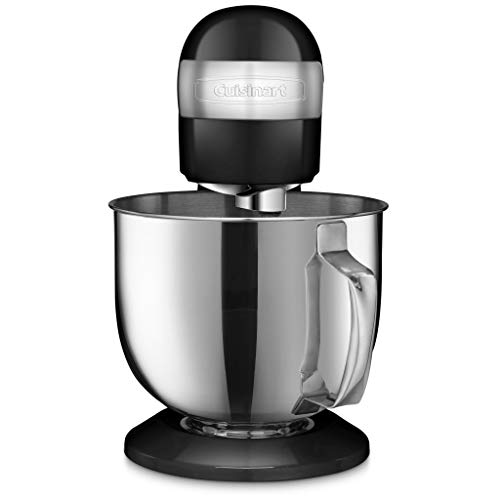
Cuisinart SM-50 Stand Mixer, Onyx
Badge: Best Dark Finish
Strengths
- The full SM-50 platform — twelve speeds, 5.5-quart stainless steel bowl, whisk, paddle and dough hook — in a black finish.
- The dark body hides the flour dust and faint scuffs that show quickly on pale appliances left out on the counter.
- Pairs naturally with black and stainless kitchens, where a white appliance can look like an afterthought.
Trade-offs
- Mechanically identical to the other SM-50 finishes in this guide; the colour is the only difference.
- Dark finishes show grease marks and dried splashes in bright light, so it still needs a regular wipe.
- Like every stand mixer here, it needs dedicated counter or cupboard space and suits frequent bakers best.
Mini spec box: Type: stand mixer. Speeds: 12. Bowl: 5.5-quart stainless steel. Attachments: chef’s whisk, mixing paddle, dough hook. Accessory: splash guard with pour spout. Finish: Onyx. Model: SM-50BK.
There is a temptation, in a guide with six slots, to invent differences between colour variants. This review will not do that. The Onyx SM-50 mixes, whips and kneads exactly like the White Linen model above, because it is the same twelve-speed machine with the same bowl and the same three attachments, and any guide that tells you otherwise is filling space. What the finish genuinely changes is how the mixer lives in your kitchen between bakes. A stand mixer is one of the few appliances many owners leave out permanently, which makes it closer to furniture than to a gadget. In a kitchen built around dark cabinets, black appliances or stainless steel, the Onyx version settles in quietly instead of announcing itself, and its dark surface is forgiving of the fine flour film that settles on anything left near a baking session.
So the decision here is aesthetic and practical in a narrow, honest sense. Choose Onyx if your kitchen runs dark, if the mixer will live on the counter in full view, or if you simply prefer appliances that recede rather than stand out. Choose any other finish if you prefer the opposite; the baking will be identical, down to the splash guard with its pour spout and the way the dough hook handles a weekly loaf. Who does it suit? The frequent baker with a modern, darker kitchen who has already decided the SM-50 platform is right and is now choosing the listing that fits the room. Its honest limitation is the platform’s, not the colour’s: it is a commitment of space and money that only regular baking justifies, and for occasional use the hand mixers at the top of this guide remain the better low cost buy.
Best for: frequent bakers with dark or stainless kitchens who will leave the mixer on display / Not suited for: buyers expecting any performance difference from the other SM-50 finishes
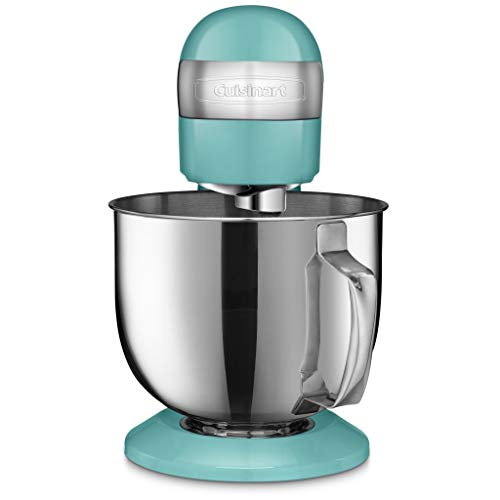
Cuisinart SM-50 Stand Mixer, Periwinkle Blue
Badge: Best Colour-Pop Finish
Strengths
- The complete SM-50 package — twelve speeds, 5.5-quart stainless steel bowl, whisk, paddle and dough hook — in a soft blue finish.
- The pale colour brightens a countertop and suits light, coastal or cottage-style kitchens better than black or chrome.
- A splash guard with pour spout is included, as with every SM-50 finish, for cleaner mid-mix additions.
Trade-offs
- Identical in function to the other SM-50 listings here; you are choosing a colour, not an upgrade.
- A distinctive colour is a longer commitment than a neutral one if your kitchen decor changes.
- It carries the stand mixer platform’s usual needs: space, regular use, and a bigger washing-up load than a hand mixer for small jobs.
Mini spec box: Type: stand mixer. Speeds: 12. Bowl: 5.5-quart stainless steel. Attachments: chef’s whisk, mixing paddle, dough hook. Accessory: splash guard with pour spout. Finish: Periwinkle Blue. Model: SM-50TQNAS.
Periwinkle Blue is the finish for the baker who treats the stand mixer as the cheerful centre of the kitchen rather than a tool to be hidden. Underneath the colour sits the same SM-50 platform described twice already: twelve speeds that run from folding to whipping, a 5.5-quart stainless steel bowl sized for family batches, and the whisk, paddle and dough hook set that covers the machine’s three core jobs. That sameness is worth repeating rather than disguising, because it makes the choice refreshingly simple. If you have decided a stand mixer belongs in your kitchen and this soft blue belongs in it too, there is no performance penalty and no hidden compromise attached to choosing the listing with personality.
Think about two practical points before you commit to a colour-led appliance. The first is longevity of taste: a stand mixer is a long-lived purchase, and a distinctive finish delights for years if you genuinely love it, but dates faster than white or black if your kitchen gets redecorated around it. The second is gifting. A coloured mixer is a memorable present for a keen baker whose kitchen colours you know well, and a risky one when you do not; the neutral finishes above are the safer gift listings. Who does it suit? Frequent bakers with light, bright kitchens, and anyone who wants the machine on the counter to earn its place visually as well as functionally. Its honest limitation mirrors the platform’s: for small, occasional jobs a hand mixer is quicker and cheaper, and no finish, however charming, changes that arithmetic.
Best for: frequent bakers with light kitchens who want a stand mixer that doubles as a cheerful focal point / Not suited for: buyers who redecorate often or need a neutral gift
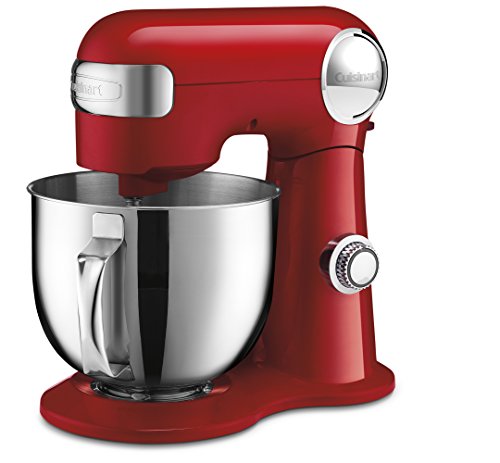
Cuisinart SM-50 Stand Mixer, Ruby Red
Badge: Best Statement Finish
Strengths
- The full SM-50 specification — twelve speeds, 5.5-quart stainless steel bowl, whisk, paddle and dough hook — in a deep red finish.
- The bold colour makes it the natural gift listing among the four finishes, and a focal point in neutral kitchens.
- The included splash guard with pour spout keeps flour and sugar additions tidy during longer mixing sessions.
Trade-offs
- Functionally identical to the White Linen, Onyx and Periwinkle Blue listings; the finish is the whole story.
- A strong colour dominates a small counter, which not every kitchen or baker wants.
- As a stand mixer it suits regular bakers; occasional bakers get better value from the hand mixers in this guide.
Mini spec box: Type: stand mixer. Speeds: 12. Bowl: 5.5-quart stainless steel. Attachments: chef’s whisk, mixing paddle, dough hook. Accessory: splash guard with pour spout. Finish: Ruby Red. Model: SM-50R.
Ruby Red closes the stand mixer set, and by now the platform needs no fresh superlatives: twelve speeds, a 5.5-quart stainless steel bowl, and the chef’s whisk, mixing paddle and dough hook that together handle whipping, creaming and kneading without extra purchases. What this listing adds is presence. Red has a long history as the statement colour for stand mixers, and in a white or grey kitchen the SM-50 in this finish becomes the one appliance the eye lands on. That is either the point or the problem, depending on your taste, and it is the only real question this review needs to answer. If a bold, traditional baking red makes you want to bake more often — and for some owners it genuinely does — then this is the right listing, with no performance asterisk attached.
Two buyer types choose this finish most often. The first is the committed home baker furnishing a neutral kitchen who wants one strong accent that will not clash with future decor changes elsewhere in the room. The second is the gift buyer, because a red stand mixer reads as an occasion present in a way that a white one does not, provided the recipient bakes regularly and has the counter space to honour it. That proviso matters: a stand mixer given to an occasional baker becomes a burden dressed as a treat, and one of the hand mixers above — particularly the cased Cuisinart, which presents well and stores anywhere — is the kinder gift. Who does Ruby Red suit? Frequent bakers who like classic kitchen colour, and confident gift buyers. Its honest limitation is shared with its three sibling finishes: it is the same machine, so never pay a large premium for the colour alone without checking the other listings first.
Best for: frequent bakers who want a classic statement appliance, and gift buyers whose recipient bakes regularly / Not suited for: small counters, occasional bakers, or anyone expecting a different machine from the other finishes
Comparison Table
Use this table to see the group’s real dividing lines at a glance: hand mixer versus stand mixer, speed range, what is in the box, and how each pick is stored. Finishes are listed because they are the only difference between the four stand mixer rows.
| Pick | Type | Speeds | Key included items | Storage story | Link |
|---|---|---|---|---|---|
| Cuisinart HM-90BCS | Hand mixer | 9 | Six-piece set, SmoothStart | Snap-on storage case | Check on Amazon |
| Proctor Silex Easy Mix | Hand mixer | 5 | Bowl rest, compact body | Drawer-friendly, no case listed | Check on Amazon |
| Cuisinart SM-50, White Linen | Stand mixer | 12 | 5.5-quart bowl, whisk, paddle, dough hook, splash guard | Counter or cupboard | Check on Amazon |
| Cuisinart SM-50, Onyx | Stand mixer | 12 | 5.5-quart bowl, whisk, paddle, dough hook, splash guard | Counter or cupboard | Check on Amazon |
| Cuisinart SM-50, Periwinkle Blue | Stand mixer | 12 | 5.5-quart bowl, whisk, paddle, dough hook, splash guard | Counter or cupboard | Check on Amazon |
| Cuisinart SM-50, Ruby Red | Stand mixer | 12 | 5.5-quart bowl, whisk, paddle, dough hook, splash guard | Counter or cupboard | Check on Amazon |
How to Choose the Right Low Cost Mixer
Start with the only question that decides most purchases: how often, and how heavily, do you actually mix? Be honest about the last three months rather than the baker you plan to become. If mixing means a boxed cake, a batch of cookies at the holidays and the occasional bowl of frosting, a hand mixer covers your life completely, and the choice narrows to control versus simplicity. Pick the Cuisinart HM-90BCS if you value a gentle start and tidy storage, or the Proctor Silex if you value the lightest tool and the smallest footprint. If mixing means weekly bread, double batches, or long creaming sessions that leave your arm aching, the stand mixer platform is the honest answer, and the only remaining choice is a finish.
Next, judge speed the right way round. Shoppers compare top speeds and total speed counts, but daily satisfaction with a mixer is decided at the bottom of the dial. A first speed that starts gently lets you combine flour without a dust cloud, fold without deflating, and begin a frosting without wearing it. When you read a listing, look for evidence of low-speed control — a named slow-start feature, a wide speed range — before you look at the maximum. Then check the attachments against your real recipes. Standard beaters handle most batters; a whisk matters if you whip cream or egg whites often; dough hooks matter only if you genuinely make dough, and even then, a hand mixer’s hooks suit soft doughs rather than stiff loaves. A storage case, a bowl rest and a cord that behaves itself sound trivial in a listing and turn out to be the details that decide whether the mixer gets used weekly or annually.
Finally, treat headline power figures with calm suspicion. Hand mixer wattage is frequently quoted as peak power, the highest momentary draw, rather than the sustained output that does the mixing, so two mixers with very different numbers on the box can feel similar over a bowl of batter, and a modestly numbered mixer with good low-speed gearing can out-mix a louder rival on real food. Weight deserves the same practical test: you hold a hand mixer for the whole job, so a lighter body is a feature, not a compromise, for anyone mixing large bowls of potatoes or frosting. For stand mixers, run the space check before the feature check — measure the counter or cupboard spot, including the height with the head tilted or lifted, because a mixer that does not fit where you planned to keep it will not be kept out, and a mixer that is not kept out gets used half as often.
How to Use, Clean and Look After a Hand Mixer
Good technique makes a low cost mixer perform like a dearer one. Work through these habits in order and most of the complaints people leave about cheap mixers never happen in your kitchen.
- Set up before you switch on. Put the bowl on a damp cloth so it does not wander, bring butter and eggs to a workable temperature, and fit the beaters until they click, with the mixer unplugged or switched firmly off.
- Start low, always. Begin on the lowest speed until dry ingredients are dampened, then step up one speed at a time. This single habit prevents flour clouds, splashed batter and most motor strain.
- Move the mixer, not just the mixture. Guide the beaters slowly around the bowl, tilting to reach the edges, and stop to scrape down the sides with a spatula rather than grinding the beaters against the bowl.
- Match the speed to the stage. Cream and whip at higher speeds, combine batters in the middle, and fold delicate additions at the lowest speed or by hand.
- Rest the mixer properly. Use the bowl rest or heel rest during pauses, and never leave a running hand mixer unattended in a bowl.
- Eject and wash promptly. Remove attachments with the eject control over the sink, wash them in warm soapy water or as the manual directs, dry them fully, and wipe the body with a damp cloth — never immerse the motor body.
- Store the kit together. Keep attachments with the mixer, in its case if it has one, with the cord loosely coiled rather than wrapped tightly around the body.
Troubleshooting, in the pattern that covers most home problems. Problem: the mixer throws flour or batter out of the bowl → start on the lowest speed, add dry ingredients in two or three additions, and use a deeper bowl. Problem: the motor smells hot or slows on a stiff mixture → stop, let the dough rest, finish kneading by hand or split the batch; sustained overload, not a single hard minute, is what shortens a budget mixer’s life. Problem: beaters will not stay in or will not eject → check that each beater is in the correct socket and fully clicked home, and clean dried batter out of the sockets before blaming the mechanism.
Hand Mixer or Stand Mixer: Where the Extra Commitment Actually Goes
Because this guide contains both types, it owes you a straight account of what the step up buys. A stand mixer buys three things: power delivered without your arm, capacity for larger batches, and freedom to do something else while mixing happens. It does not buy better cake. A hand mixer in skilled hands produces batters, frostings and whipped cream indistinguishable from a stand mixer’s, because those mixtures depend on ingredients and timing more than on the machine. The step up also buys costs that listings underplay: counter space surrendered permanently or cupboard space given over, a bowl and attachments that take longer to wash than a pair of beaters, and a machine heavy enough that nobody carries it to a holiday house or a neighbour’s kitchen. The low cost way to think about it is cost per use. A hand mixer used fifty times a year is a bargain at almost any price in this guide; a stand mixer used four times a year is an expensive ornament at any price. Let your calendar, not your aspirations, make this call.
One Word, Three Shopping Trips: Getting the Right Kind of Mixer
Search engines are blunt instruments, and few words prove it like mixer. The same search box sends bakers to hand mixers, hosts to drink mixers and musicians to audio desks, often on the same results page. If your project is actually the drinks cabinet, the guides filed under Best Mai Tai Mixers and Best Makers Mark Mixers cover that shelf of the store, and they are the right detour before a party rather than after one. If your project is recording or live sound, you want an entirely different department — the territory of Best Mackie Audio Mixers and Best Mackie Mixers — where channels and inputs matter and beaters do not. None of those tools will cream butter, and nothing in this guide will sweeten a cocktail or balance a microphone. Checking which kind of mixer a listing describes, in the first line of its title, is the cheapest mistake-avoidance in this whole category: kitchen mixers name speeds, bowls and attachments, and if a listing talks about any of those, you are in the baking aisle, whatever search term brought you there.
Common Buying Mistakes
- Buying on the biggest wattage number. Peak power is a momentary figure; low-speed control and the right attachments change your results far more.
- Paying for speeds you will never use, or settling for a mixer whose first speed is too aggressive and redecorates the kitchen with flour.
- Forcing a hand mixer through stiff bread dough batch after batch, then blaming the tool. Soft doughs are its limit; stiff dough is stand mixer or hand-kneading territory.
- Ignoring storage. Attachments without a case or a dedicated drawer spot get lost, and a mixer missing its beaters is no bargain.
- Buying a stand mixer for occasional baking, surrendering counter space to an appliance that a drawer-friendly hand mixer would have out-served.
- Paying a large premium for a stand mixer finish without checking the other finishes of the same platform first — the machine is identical.
- Skipping the manual’s cleaning rules and immersing a motor body, which ends more budget mixers than mixing ever does.
Final Recommendation
For most readers, the answer to the best low cost hand mixers is the Cuisinart HM-90BCS: it starts gently, covers every everyday job with speeds to spare, and stores itself and its attachments as one tidy kit. Buy the Proctor Silex Easy Mix instead if you bake occasionally, cook in a small kitchen, or simply want the lightest and simplest credible mixer and would rather keep the difference for ingredients. Step up to the Cuisinart SM-50 platform only if you bake weekly or knead regularly — and then choose White Linen for neutrality, Onyx for a dark kitchen, Periwinkle Blue for a bright one, or Ruby Red for presence and gifting, knowing the machine beneath the colour never changes. Whichever you choose, start every bowl on the lowest speed, and the low cost end of this market will treat you far better than its reputation suggests.
Related guides
- Best Rewiews For Hand Held Mixers
- Best Mixers With Hennessy
- Best Mixers With Jager
- Best Mixers With Jameson
Frequently Asked Questions
Is a low cost hand mixer powerful enough for cookie dough?
Yes, for standard cookie doughs, which are the workload this class of mixer is built around. Cream the butter and sugar first, add flour gradually and mix at low to medium speed, and both hand mixers in this guide handle the job comfortably. Very stiff, cold or doubled batches are where a hand mixer reaches its limit; at that point, mix in two batches or treat it as the sign that a stand mixer would suit your baking better.
How many speeds do I really need on a hand mixer?
Most recipes use three zones: a gentle speed for starting and folding, a middle range for batters and creaming, and a high speed for whipping. A five-speed mixer covers those zones adequately, which is why the Proctor Silex works as well as it does. A wider range, like the nine speeds on the Cuisinart HM-90BCS, buys smoother steps between zones and finer control at the gentle end, which confident bakers appreciate and beginners grow into.
Can a hand mixer knead bread dough?
Soft, enriched doughs, in modest quantities, with patience — yes, especially if the mixer comes with dough hooks and you keep the speed low. Stiff loaves are a different matter: the resistance strains a small motor and your wrist at the same time. If bread is a weekly habit rather than an experiment, the dough hook on a stand mixer such as the SM-50 platform is the right tool, and your hand mixer can retire to the jobs it does best.
What is the difference between peak power and regular wattage on a mixer listing?
Peak power is the highest momentary draw a motor can reach, usually under sudden load, while a plain wattage figure may describe the motor’s nominal rating. Neither number, on its own, tells you how a mixer feels over a real bowl of batter, which is why this guide never ranks picks by wattage. Judge by speed control, attachments, weight and the tasks a model is designed for, and treat a very large power number on a very light mixer as marketing rather than information.
Hand mixer or stand mixer — which is better value for a small kitchen?
For a small kitchen, the hand mixer wins on value almost every time. It stores in a drawer or a case, washes up in a minute, travels to other kitchens, and covers the full range of everyday baking. A stand mixer earns its footprint only when it is used weekly or more, because its advantages — hands-free work and dough capacity — are worth nothing in a week when nobody bakes. Measure your space, count your baking days honestly, and let those two facts decide.
How do I stop my hand mixer splattering ingredients everywhere?
Almost all splatter happens in the first ten seconds. Use a bowl deeper than you think you need, set the beaters in the mixture before switching on, start on the lowest speed, and add flour, cocoa or icing sugar in two or three additions rather than all at once. A slow-start feature, like the SmoothStart system on the Cuisinart HM-90BCS, automates the gentle beginning; without one, your thumb on the speed control does the same job.
Are the four Cuisinart stand mixers in this guide really the same machine?
Yes. The White Linen, Onyx, Periwinkle Blue and Ruby Red listings are separate Amazon listings for the same SM-50 platform: twelve speeds, a 5.5-quart stainless steel bowl, and the same whisk, paddle, dough hook and splash guard in the box. They are reviewed separately in this guide so that each listing’s link, image and finish are unambiguous, but there is no performance reason to choose one over another — pick on colour, availability and which listing you prefer, and never assume a higher-priced finish mixes better.


