A paring knife is a small knife with a blade of about three to four inches, made for work you do in your hand, such as peeling, trimming and coring. Choose one that feels balanced and gives you control. A comfortable handle matters as much as the blade.
What a Paring Knife Is For
Use it for hulling strawberries, peeling apples, removing seeds from peppers, deveining shrimp and cutting small garnishes. It is not meant for heavy chopping, since the blade is short and thin. A chef’s knife handles big tasks better, so the two work as a pair.
Blade Shapes Compared
| Shape | Best for | Notes |
|---|---|---|
| Spear point | All-round trimming and slicing | The most common shape |
| Sheep’s foot | Flat cutting on a board | Has a straight edge and a blunt tip |
| Bird’s beak | Peeling round fruit and decorative curves | Curved blade that follows the shape of the food |
| Short toothed edge | Soft, slippery skins such as tomatoes | Harder to sharpen at home |
Handle, Weight and Grip
- A handle that fills your palm gives better control than a very thin one.
- Check the balance. A light, nimble knife is often better for fine work.
- Plastic and composite handles resist moisture; wood feels warm but needs more care.
- If you can, hold a few in a shop and mimic a peeling motion.
- Left-handers should choose a straight or symmetrical edge.
Safe Habits for Small Blades
- Cut away from your body and keep fingers behind the blade path.
- Use a stable board for flat work, and never cut toward the hand that holds the food.
- Wash the knife by hand and dry it right away.
- Keep it sharp, as a dull blade slips more often.
- Store it in a block, sheath or magnetic strip, not loose in a drawer.
Follow the maker’s care instructions and take your time.
Blade steel and thickness also play a part. A thinner blade glides through fruit with less resistance, while a slightly thicker one tolerates twisting around pits. Stainless steel resists rust and is easy to maintain, whereas carbon steel takes a keen edge but can discolor and needs drying. Many households keep an inexpensive paring knife for rough tasks and a better one for careful work. Whatever you choose, plan to hone it regularly and sharpen it when it begins to slip on skins, since a sharp small knife is easier to control than a dull one.
Blade Length and Steel Choices
Paring knives are short, but blade length still varies, and the difference changes how the knife feels. A shorter blade gives more control for peeling, hulling and trimming in the hand. A slightly longer blade is more versatile for slicing small fruit or cutting garlic against a board. Check the listed blade length in the product description and think about the size of your hands and the jobs you do most.
The steel affects how long the edge lasts and how much care it needs. Stainless steel resists rust and is forgiving in a busy kitchen. Higher-carbon steels can take a keen edge but may stain or rust if left wet. Some knives use harder steels that hold an edge longer but can chip if misused, while softer steels are easier to sharpen at home. The listing may not give all of these details, so read what the maker says about care.
Things to consider:
- How often you are willing to sharpen.
- Whether you prefer a thinner blade for delicate work or a sturdier one for tougher produce.
- Whether the blade is forged or stamped, as the listing describes it. Both can work well in a paring knife.
Do not assume that a higher-priced knife is always the right fit. Comfort and a sharp edge matter more for everyday use than extras you will not use.
Edge Types and Maintaining Sharpness
Most paring knives have a plain, straight edge, which makes clean cuts on fruit and vegetables and is simple to sharpen. Some have a serrated edge, which can grip slippery skins such as tomatoes and soft citrus. A serrated edge is harder to sharpen at home, so check what the maker advises. For general peeling and trimming, a plain edge is the more versatile choice.
A sharp paring knife is safer than a dull one. A dull blade needs more pressure, which increases the chance it will slip. Maintain the edge with regular honing if your knife supports it, and sharpen when honing no longer restores a clean cut. Use a method that suits your skill, whether that is a whetstone, a pull-through sharpener or a sharpening service. Check the manual in case your knife needs a specific angle or approach.
Simple ways to tell the edge is losing its bite:
- It crushes tomato skin instead of piercing it.
- You need to press hard to peel an apple.
- Slices tear rather than cut cleanly.
Cut on a board that is kind to the blade, such as wood or plastic, rather than glass, stone or ceramic, which dull edges quickly.
Tang, Construction and Durability
The way the blade connects to the handle affects balance and strength. A full tang, where the metal runs the length of the handle, often feels balanced and sturdy, but small paring knives do not always need it. Partial tangs and molded handles can also be solid. Check how the listing describes the construction, and look at the rivets or seams for gaps where food could collect.
A bolster, the thicker part between the blade and the handle, adds weight and can protect the fingers, but it also makes the blade harder to sharpen to the heel. Many paring knives have no bolster, giving easy access to the entire edge. If you plan to sharpen at home, a design that lets you reach the whole edge is easier to maintain.
Durability depends on usage. A paring knife should not be used to pry, twist or open cans, which can chip or bend the tip. The tip of a paring knife is thin and slender, designed for detail work. If you tend to be hard on knives, look for a sturdier tip and thicker spine.
Check the warranty language in the product listing, if there is one, but do not rely on it as a substitute for careful use.
Sheaths, Storage and Carrying
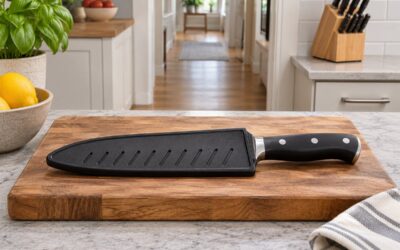
A paring knife is small enough to end up loose in a drawer, which damages the edge and risks cuts. Good storage protects both. A magnetic strip, an in-drawer block, a knife block with a small slot or a blade guard all work. If you plan to carry one to a picnic, a campsite or a friend’s house, a sheath is essential. Check whether one is included, and whether it fits securely.
Blade guards are often inexpensive and fit a range of sizes, but check the dimensions against your knife. A guard that is too tight can wear the edge, and one that is too loose can slip off. Store the knife dry, since moisture trapped in a sheath can lead to rust on some steels.
If you have children or other household members who might reach into drawers, consider a higher storage spot or a lockable option. Keep the knife where you can see and pick it up by the handle.
When transporting a knife:
- Keep it in a sheath or a dedicated holder.
- Pack it where it cannot shift against other items.
- Make sure it is clean and dry first.
Good storage habits keep a knife sharp longer and reduce accidents.
Cleaning and Signs of Replacement
Wash a paring knife by hand soon after use, especially after cutting acidic foods like citrus or tomatoes. Use warm water, a mild detergent and a soft sponge, wiping with the back of the blade facing you and your fingers away from the edge. Dry it immediately. Most knife makers advise against the dishwasher, because heat, detergent and knocking against other items can dull the edge, damage handles and cause corrosion. Check the manual in case your model says otherwise.
For stained blades, a little baking soda paste on a damp cloth can help, but avoid harsh abrasives. If rust spots appear on a carbon steel blade, remove them gently and dry more carefully in the future. Wooden handles may need an occasional light oiling, depending on the maker.
It may be time to replace the knife if:
- The tip is bent or snapped.
- The blade has chips that sharpening cannot reasonably remove.
- The handle is loose, cracked or splitting.
- Rust pitting has damaged the edge.
- It no longer stays sharp even after proper sharpening.
Paring knives are small tools doing frequent work. Treat them with care and you can enjoy them for many years.
FAQ
How many paring knives do I need?
One is enough for most home cooks. Some people keep a second one for peeling.
Can it replace a peeler?
It can, with practice, but a peeler is usually quicker for vegetables.
What blade length is best for small hands?
A shorter blade often feels more controlled for peeling and detail work. Try holding a few in a store if you can, and compare listed lengths. Comfort and control matter more than hitting a particular number.
Should I choose a plain or serrated edge?
A plain edge suits most tasks and is easier to sharpen. A serrated edge can help with slippery skins such as tomatoes. If you only buy one, a plain edge is usually the more versatile option.
Can I sharpen a paring knife at home?
Yes, in most cases, using a whetstone, a pull-through sharpener or a honing steel for light touch-ups. Follow the maker's advice about angle and method. If you are unsure, a professional sharpening service can help.
Is a cheap paring knife a bad idea?
Not necessarily, because a paring knife is small and simple. What matters is a sharp edge, comfortable handle and sound construction. Check the materials and care instructions in the listing before deciding.
Why does my paring knife dull so quickly?
Cutting on hard surfaces like glass or stone, storing it loose in a drawer or washing it in the dishwasher can all dull the edge. Use a suitable board, store it with a guard and hand wash. Regular honing also helps.
Is a paring knife safe for children to use?
That depends on the child's age and supervision. A sharp knife requires care, and an adult should decide whether and how to teach them. Teach safe grip and cutting posture before letting them practice.
The Short Version
Choose a paring knife with a blade shape suited to your tasks and a handle that feels firm. Keep it sharp, store it properly and use careful technique.