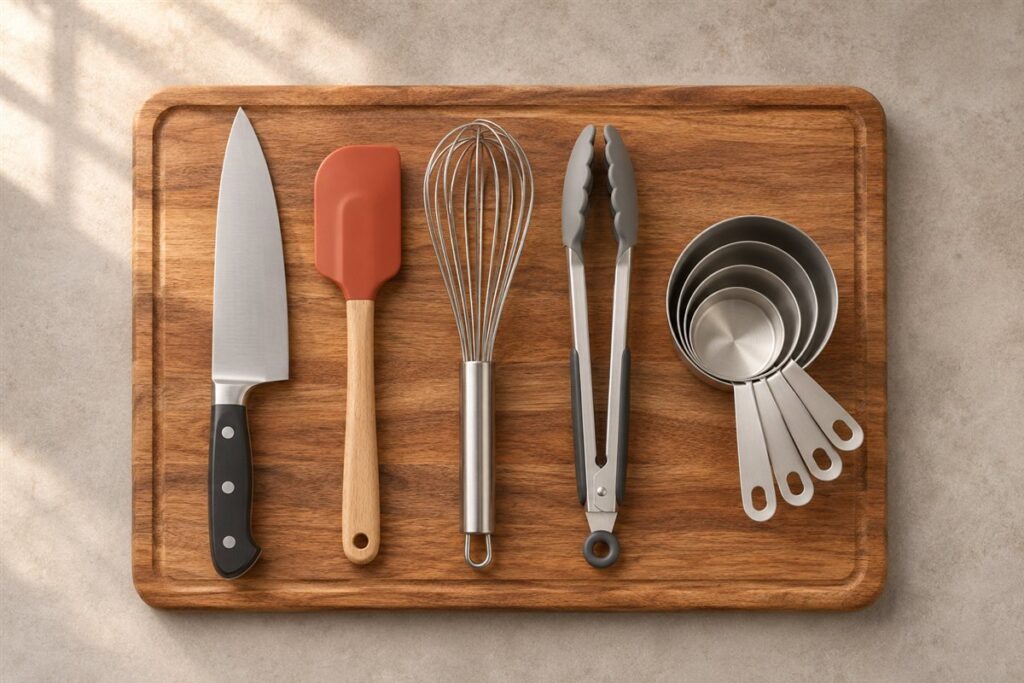
A wooden cutting board lasts longest when you wash it by hand soon after use, dry it upright, and oil it now and then. Wood does not like long soaking or dishwasher heat, so the routine below keeps things simple. Follow any care sheet from the board maker too.
Daily Cleaning
Wood absorbs water, which is why quick, gentle cleaning works better than soaking.
- Scrape off food scraps with a bench scraper or the back of a knife.
- Wash with a soft sponge, warm water and a little mild dish soap.
- Rinse well and wipe the surface with a clean cloth.
- Stand the board on its edge, or lay it on a rack, so air reaches both faces.
After cutting raw meat, poultry or fish, wash the board thoroughly and follow standard food hygiene guidance from your local food authority.
What to Avoid
- Do not put wooden boards in the dishwasher; heat and long wet spells can lead to cracks and warping.
- Do not leave a board sitting in the sink or lying flat and wet on the counter.
- Avoid harsh scouring pads that can roughen the grain.
- Keep the board away from the stove and other strong heat sources.
Oiling and Conditioning
Oil fills the pores in the wood and slows moisture from soaking in. Many people use food-grade mineral oil, which does not turn sticky over time. Plant oils such as olive oil can go off and smell, so many makers advise against them. Check what your board maker recommends.
A common rhythm is to oil a new board several times in its first weeks, then repeat whenever the surface looks dry or pale. Apply a thin layer with a cloth, let it sit for a few hours or overnight, and wipe away the excess. A board that feels dry or looks dull is asking for oil.
Dealing With Stains and Smells
| Problem | Gentle approach |
|---|---|
| Strong smells | Rub with half a lemon and coarse salt, then rinse and dry |
| Light stains | Scrub with a paste of baking soda and water |
| Rough or fuzzy surface | Sand lightly with fine sandpaper, then oil again |
| Sliding board | Place a damp cloth or grip mat underneath |
Long-Term Habits
- Check the board now and then for deep cracks, which can trap moisture and food.
- Keep it away from the dishwasher, radiator and direct sun.
- Let it dry fully before stacking it with other items.
FAQ
How can I tell if my board needs oil?
If water soaks in rather than beading on the surface, or the wood looks pale and dry, it is time to oil.
Should I use both sides?
Yes, rotating sides helps the board wear evenly and lets each face dry between uses. Some people keep one side for strong-smelling foods.
The Short Version
Wash by hand, dry on its edge, and oil when the wood looks thirsty. Avoid the dishwasher and long soaks. A few minutes of care after each use helps the board stay flat and smooth for a long time.