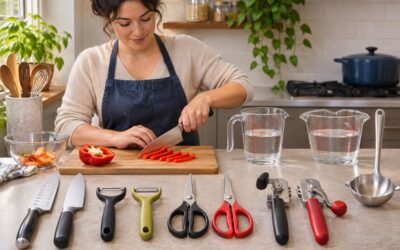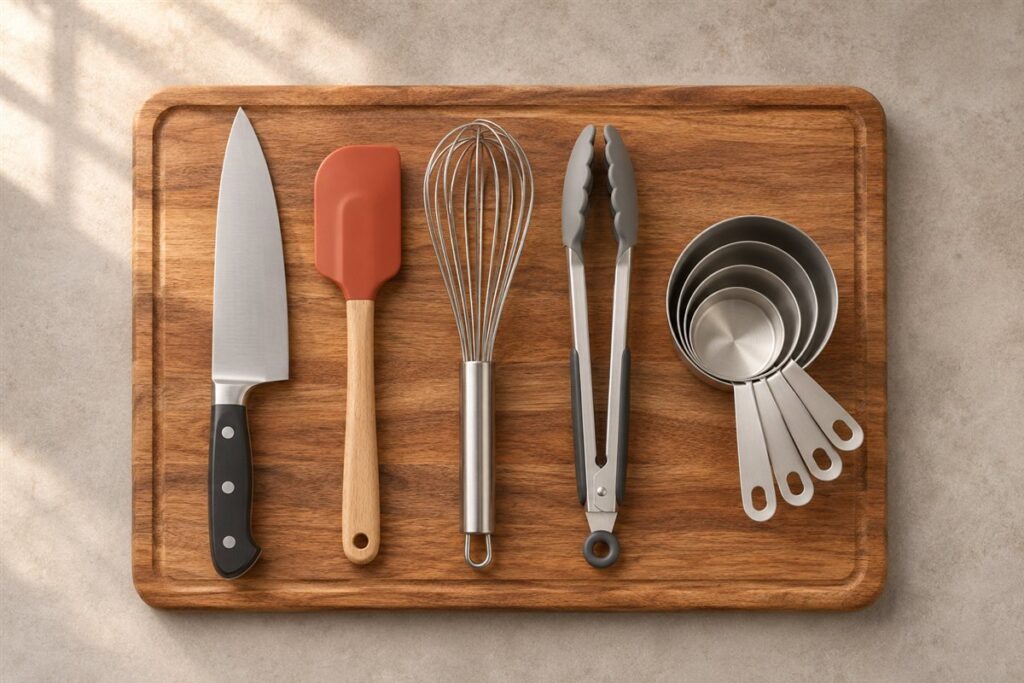
The gadgets worth having are the ones you will use every week: tongs, a peeler, a thermometer, a scale and a few good utensils. Many single-purpose tools take up room and rarely come out of the drawer. Use these guidelines to judge any gadget before you buy.
Gadgets That Earn Their Space
- Tongs: Turn meat, toss salad, and lift hot items from pots.
- Vegetable peeler: Quicker and safer than a paring knife for most peeling.
- Instant-read thermometer: Helps check doneness of meat, bread and puddings. Follow food safety guidance from your local authority.
- Kitchen scale: Gives consistent portions and baking results.
- Fine-mesh strainer: Drains, sifts and strains.
- Kitchen shears: Snip herbs, trim poultry and open packages.
- Bench scraper: Cleans boards, moves chopped food and cuts dough.
- Microplane or fine grater: Zest, hard cheese and garlic.
A Simple Test Before You Buy
- Name three meals you would use it for this month.
- Ask whether a tool you already own could do the job.
- Check how big it is and where it would live.
- Think about cleaning: parts that are hard to wash tend to gather dust.
- Read the maker’s guide for care, heat limits and safe use.
Gadgets That Often Go Unused
| Gadget | Why it may not earn its place | What to use instead |
|---|---|---|
| Egg slicer | Only slices eggs | A knife |
| Avocado tool | Does one task | A spoon and knife |
| Garlic press | Awkward to clean | A knife or fine grater |
| Herb stripper | Replaceable by hand | Fingers or shears |
| Banana slicer | Very narrow use | A knife |
Some people do enjoy these tools, and that is fine. The point is to buy after a real need shows up, not because a gadget looks clever.
Caring for What You Own
- Wash tools soon after use and dry them fully.
- Keep sharp parts covered or in a drawer tray.
- Replace items that have cracked, melted or rusted.
- Do a yearly clear-out and donate unused duplicates.
Thinking About Gifts
Gadgets are a popular gift, but they can pile up fast. If you receive one, try it a few times before deciding whether it earns a place. Keep the box for a few weeks in case you decide to pass it on to someone who will enjoy it more.
Build Quality Signs to Look For
A gadget that breaks quickly is no bargain. When you pick one up, look for signs it will last. Joints should be tight with no wobble, and moving parts should work smoothly. Handles should feel solid in the hand, not thin or sharp at the seams. Metal parts should be free of burrs, and plastic parts should not feel brittle.
Check the materials. Stainless steel resists rust, silicone tolerates heat within stated limits, and wood needs hand washing. Read the product listing for temperature ratings, since some tools cannot sit in a hot pan.
- Test hinges and springs for smooth action.
- Look for one-piece construction where food could collect.
- Check that the tool can be taken apart for cleaning if it has parts.
If you cannot handle the item before buying, read the product description closely and check the return policy. A simple, well-built tool often outlasts a feature-packed one.
Storage and Drawer Planning
Gadgets can overwhelm a drawer, so plan space before you buy. Count what you have and decide how many you can store comfortably. Group similar tools together and store the most used ones in the front or at hand height.
Consider how to store long tools like tongs and ladles. A crock near the stove keeps them within reach, while a drawer divider keeps small items from migrating. Sharp tools such as peelers and graters should be stored where edges cannot catch fingers.
Wall rails and hooks free drawer space, but think about grease and dust that collect on exposed items. Magnetic strips can hold metal tools, but check the strength and the wall type. Items with hanging holes are easier to store this way.
If space is tight, favor tools that nest or fold flat, and avoid awkward shapes. A tidy drawer makes you more likely to use what you own and see what you actually need.
Multipurpose Versus Single-Purpose Tools
A tool that does several jobs often earns its space. A bench scraper moves chopped food, divides dough and scrapes boards. Kitchen shears snip herbs, cut open packages and trim food. A fine grater handles zest, cheese and spices.
Single-purpose tools can still be worth owning if you do the task often. If you eat a particular food every week, a dedicated tool may be convenient. But if the tool sits unused, it is clutter.
- Ask what else the tool can do.
- Think about whether you already own something that works.
- Consider the frequency of the task, not just the idea.
Combination tools can be a trap if they do each job poorly, so read how they work. Try to find tools with a simple design and a clear purpose. If a gadget needs lots of parts to do one thing, think carefully before buying.
Safety and Hygiene With Gadgets
Small tools can still be hazardous. Graters, peelers and shears have sharp edges, so use them with care and keep fingers clear. Use a guard or holder if one is provided. Wash sharp tools carefully and do not leave them in a sink full of soapy water where you cannot see them.
Hygiene matters too. Tools with crevices can trap food and bacteria, so check that you can clean them thoroughly. Thermometers should be cleaned between uses, especially when moving from raw to cooked food. Follow food safety guidance from your local authority on temperatures.
Replace tools with cracked handles, melted edges or rust. Check if the item is dishwasher safe, as some tools lose function or finish in a dishwasher. Wooden and bamboo tools should be dried and not left to soak.
If a gadget uses batteries or electricity, follow the manual. Keep cords away from heat and water. A small amount of attention goes a long way in keeping gadgets safe and clean.
How to Test a Gadget Before Keeping It
Give any new gadget a fair trial. Use it for the task it was bought for several times over a few weeks. Notice whether it saves time, improves results or makes the job easier. Notice also how hard it is to clean and put away.
If you find yourself avoiding it, ask why. It may be awkward, slow or not as useful as expected. Keep a note of how often you reach for it. If a month goes by without use, consider passing it on.
- Use it at least a few times before deciding.
- Compare it with the tool you used before.
- Check whether it fits in your storage.
Keep the packaging and receipt during the trial period if you want the option to return it. Be willing to let go. A kitchen with fewer, better-used tools is easier to work in, and giving a gadget to someone who will use it is a good outcome.
FAQ
Is a gadget ever worth it for one task?
Yes, if you do that task often. A rice cooker is single-purpose to some, but a daily staple to others.
How do I avoid clutter?
Set a drawer limit: if a new gadget does not fit, something else has to go.
What gadgets should a new cook buy first?
Start with tongs, a peeler, a thermometer, a scale and a few good utensils. These cover many tasks, and you can add others as needs appear.
Are expensive gadgets worth it?
Not always. Price can reflect build quality, but a simple, sturdy tool often does the job. Consider how often you will use it.
How do I know if a gadget is dishwasher safe?
Check the product listing or the manual. If it is unclear, hand washing is the safer option.
What is a good way to organize kitchen tools?
Group them by task, keep daily tools at hand and use dividers or crocks. Store sharp items so edges are protected.
Should I buy gadget sets?
Sets can be convenient, but check that you will use each piece. Individual tools let you choose better quality for what you need.
How often should I replace kitchen tools?
Replace them when they crack, melt, rust or stop working well. There is no set schedule, so inspect your tools from time to time.
The Short Version
Choose gadgets that help with several jobs and that you will use weekly. Skip the novelty tools, test any purchase against your real cooking, and follow the maker’s guide for care.