A paring knife is a short blade for peeling and detailed work in your hand, while a utility knife is a longer, slimmer blade for tasks that are too big for a paring knife but too small for a chef knife. Many kitchens benefit from having both.
Paring Knife Basics
Paring knives usually have blades around 3 to 4 inches long. The short length gives close control, so they suit peeling fruit, trimming vegetables, removing seeds and cutting garnishes. Because you often hold the food in your other hand, take extra care to keep your fingers clear of the edge.
Utility Knife Basics
Utility knives usually have blades around 4 to 7 inches. Some are narrow with a straight edge, while others have a fine toothed edge. They slice sandwiches, cut cheese, portion small fruit, and handle tomatoes and cooked meat on a board.
Side by Side
| Feature | Paring | Utility |
|---|---|---|
| Length | Short | Medium |
| Typical use | In-hand peeling and trimming | Board slicing of small to medium items |
| Control | Very close | Good, with more reach |
| Best foods | Apples, strawberries, shrimp, garlic | Tomatoes, cheese, sandwiches, small roasts |
| Edge style | Plain | Plain or toothed |
Exact sizes differ among makers, so check the maker’s guide.
Which Should You Choose
- If you only have a chef knife, add a paring knife first. It fills the gap for small work.
- If you often slice sandwiches or tomatoes and find your chef knife too large, add a utility knife.
- If you cook in a small space or on a small board, the utility knife can stand in for a chef knife on light tasks.
- If you eat a lot of fresh fruit, a paring knife will get more use.
Safe Use Reminders
Use a stable board when slicing with a utility knife, and keep fingers curled. For peeling in the hand, move the blade away from your thumb and body. Keep knives sharp, since a dull blade needs more force and can slip. These are general tips only, so follow the maker’s manual and safety instructions.
A good habit is to keep the paring knife in a spot where you can reach it quickly, such as a magnetic strip or a sheath, so you do not leave it loose in a drawer. Small knives are easy to lose track of in a sink full of suds, so wash them separately and carefully, holding the handle rather than the blade.
Blade Shapes and Edge Styles
Small knives come in several blade shapes, and the shape changes what the knife does best. Knowing the common patterns helps you read a product listing and choose a knife that suits your tasks.
- Spear point: A symmetrical blade with a tip in the center. It is the classic paring shape and works well for peeling and general trimming.
- Sheepsfoot: A straight edge with a spine that curves down to the tip. The rounded point reduces accidental poking and suits controlled slicing on a board.
- Bird’s beak or curved blade: A downward curve designed for peeling rounded fruit and vegetables and for cutting garnishes in hand.
- Narrow slicing blade: Common in utility knives. It makes thin, even slices of tomatoes, cheese or cooked meats.
- Serrated or semi-serrated edge: A toothed edge grips soft skins, such as tomatoes, and cuts through crusty bread, though it can tear delicate items.
An edge style also affects upkeep. A plain edge can be sharpened with common tools, while a serrated edge usually needs a special tool or a professional. Check the maker’s guidance on sharpening before buying a toothed knife.
Consider the blade thickness and flexibility as well. A thin, slightly flexible blade works well for fine tasks, while a stiffer blade handles firmer produce with more confidence. The product description may mention the steel type and hardness; treat these as general information and rely on the care instructions.
Handles, Grips and Comfort
Small knives are used in close, precise movements, so a comfortable handle matters as much as the blade. A knife that feels awkward leads to tired hands and less control.
When looking at handles, consider:
- Size: A tiny handle may be hard to hold securely for large hands, while a bulky one can feel clumsy on a short blade.
- Shape: Round handles allow rotation in the hand, which is useful for peeling. Flat or contoured handles give a firmer grip for slicing.
- Material: Wood, plastic, composite and metal each have different feels. Plastic and composite are easy to clean, wood can be warm in the hand but needs gentler washing, and metal can be slippery when wet.
- Balance: A knife that tips toward the blade or handle may tire your wrist. Balanced knives feel lighter in use.
- Texture: A slightly textured handle gives grip when hands are wet or oily.
If you can, hold the knife before buying, or check the listed length and weight. If you are shopping online, read the dimensions and the return policy. Left-handed users should check that the grip and any bevel design work for them, since some blade edges are ground asymmetrically.
Pay attention to the guard, or bolster, at the blade end of the handle. A knife with a guard can protect your fingers from sliding forward, while a bolsterless knife lets you use the whole edge but gives less protection. Neither is right for everyone, so match it to your grip.
Tasks Each Knife Handles Best
The clearest way to choose is to list what you actually cut. The difference between the two knives shows up in tasks that sit between very small and very large.
Tasks that suit a paring knife:
- Peeling apples, pears and other fruit.
- Hulling strawberries and removing tomato cores.
- Trimming green beans, sprouts and other small vegetables.
- Deveining shrimp and removing small bones.
- Scoring bread or pastry and making small garnishes.
Tasks that suit a utility knife:
- Slicing tomatoes, firm cheese and cold cuts for sandwiches.
- Cutting small cuts of cooked meat or poultry.
- Portioning medium fruit such as peaches or oranges on a board.
- Trimming herbs, scallions and small sections of larger produce.
- Splitting rolls and cutting sandwiches in half.
For tasks that are too large for either, such as a big squash or a roast, a larger chef knife is safer. Using a small knife for heavy work can put strain on the blade and your hand. Likewise, a chef knife is clumsy for hulling a single strawberry.
If your tasks fall mostly into one group, choose that knife first. If you cook for many people or prepare lots of produce, having both makes sense, since each reduces the effort needed with the other.
Keeping Edges Sharp and Safe
Small knives need regular care because they are used often and their edges are easy to damage. A sharp knife is safer, because it cuts with less force and is less likely to slip.
- Cut on a suitable board: Wood or soft plastic is gentler on an edge than glass, stone or ceramic.
- Hone and sharpen: A honing rod can help realign an edge between sharpenings. When a knife no longer cuts cleanly, use a sharpening tool suited to the blade, following the maker’s guidance.
- Wash by hand: Many makers advise against dishwashers, which can dull edges and damage handles. Dry the knife right away.
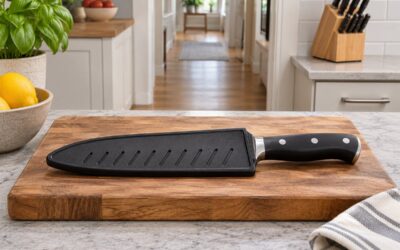
- Store safely: Use a sheath, block, magnetic strip or drawer insert so blades do not rub against other tools or your fingers.
- Do not use it as a tool: Avoid prying lids, opening cans or cutting through bone with a small knife.
Be careful with food that is held in the hand. If something is slippery or hard to grip, put it on a board or cut it in half to create a flat, stable surface first. Keep your thumb out of the path of the blade and cut away from your body.
Check the blade occasionally for chips, bends or rust. A chipped or bent knife is harder to use and can be unsafe, so consider replacing it. Always follow the maker’s manual and safety instructions.
Choosing by Budget and Set Value
Small knives come in a wide range of quality, and a higher price does not always mean a better fit. Describe your needs first, then decide how much to invest.
At the simpler end, basic knives can be perfectly good for light home use. They may have lighter handles and need more frequent sharpening. In the middle range, you often find better steel, more comfortable handles and a firmer build. At the higher end, knives may offer finer materials and detailed finishing, which suits people who cook daily and want to maintain their tools well.
Consider whether to buy single knives or a set:
- Single knives: Let you pick the best shape and handle for each task, and avoid paying for pieces you will not use.
- Small sets: Can offer value if they include the specific knives you want, and often come with storage.
- Large block sets: May include many pieces you never use. Look at the list carefully before choosing.
Questions to ask before buying include whether the knife can be resharpened easily, whether the maker offers care instructions, how the handle is attached, and what the return terms are. Signs it is time to replace a knife include a bent or chipped blade, a loose handle, persistent rust or an edge that will not hold after sharpening.
Because a paring knife is a small, inexpensive item compared with some tools, it can be worth trying one or two shapes to find what suits you.
FAQ
Can a utility knife replace a paring knife?
For many jobs yes, but it feels clumsy for peeling and fine trimming.
Should the utility knife have a toothed edge?
Either type works. A toothed edge helps with soft skins, while a plain edge gives cleaner slices on firm foods.
What length of utility knife is most useful?
It depends on your tasks and cutting board. A shorter utility knife is nimble for sandwiches and fruit, while a longer one suits slicing larger items. Sizes vary by maker, so check the listing.
Should my paring knife be serrated?
Most paring knives have a plain edge, which gives clean cuts and is easier to sharpen. A serrated version can help with tomatoes and soft skins, but it is less versatile.
Can I put these knives in the dishwasher?
Many makers advise against it, since heat, detergent and knocking against other items can dull the edge and damage the handle. Check the care instructions for your knife.
How do I know a paring knife is the right size for my hand?
Hold it in a pinch grip and check that you can control the tip without strain. The handle should not feel cramped or slip, and the blade should not feel too long for peeling.
Is a magnetic strip safe for storing small knives?
It can be, if the strip is mounted securely and the knives are placed with care. Keep it out of reach of children and make sure blades do not touch each other.
When should I sharpen a small knife?
When it begins to crush or slip on soft skins, such as a tomato, rather than cut cleanly. Regular honing helps, and sharpening restores the edge when honing is no longer enough.
The Short Version
The paring knife handles small hand work, and the utility knife covers mid-size board work. Choose the one that fills the gap in your current set.