A camping kitchen works best when it is small, durable, and organized into one or two bins. Pack tools that do several jobs, bring a way to wash up, and follow the rules of your campsite and your cooking gear. Use the checklist below as a base and adjust it for your trip.
Plan Around Your Menu
List your meals first, then list the tools each one needs. A trip of simple one-pan meals needs far less than one with baking or grilling. Check the rules for the campsite, including fire restrictions and rules about cooking equipment, before you go.
Core Cooking Gear
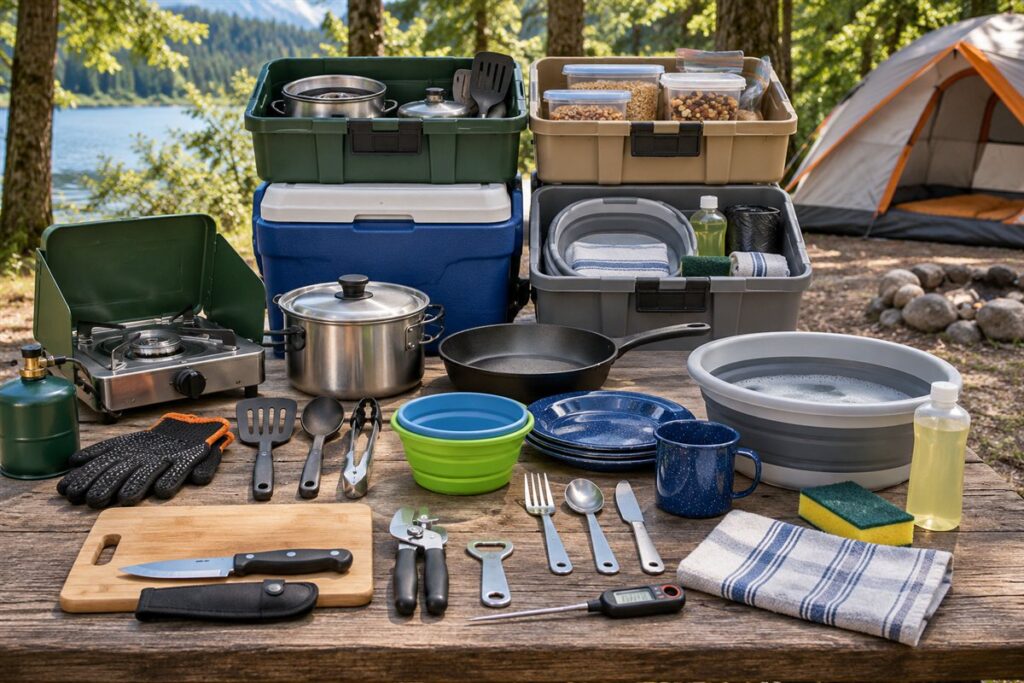
- A heat source designed for outdoor use, used strictly per the maker’s instructions and in a well-ventilated outdoor area.
- One pot with a lid and one skillet.
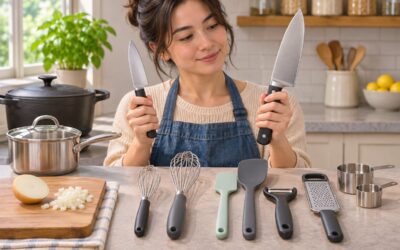
- A heatproof spatula, a spoon, and tongs.
- Pot grips or heatproof gloves.
- A lighter or matches stored safely.
Prep and Serving
- A compact knife with a sheath, and a small cutting board.
- A can opener and bottle opener.
- A collapsible bowl or two, plus plates and cups.
- Forks, spoons, and knives, or a multi-use utensil.
- A thermometer so you can check doneness according to official food-safety guidance.
Cleanup Kit
- A collapsible basin for washing.
- Biodegradable soap, a scrub pad, and a towel.
- Trash bags, and a plan to carry out what you carry in.
- A strainer to catch food scraps, which you should pack out.
Packing Guide
| Bin | Contents | Tip |
|---|---|---|
| Cooking bin | Stove, pots, utensils | Pack in order of use |
| Food bin | Dry food in sealed containers | Keep sealed against animals |
| Cooler | Perishable food | Keep cold, follow food-safety guidance |
| Cleanup bin | Basin, soap, towels, bags | Easy to reach |
Safety and Food Handling
Never use a fuel stove or grill inside a tent or enclosed space. Keep fuel away from flames, and keep a way to put out a fire close by. Follow local fire rules and the maker’s manual for each stove. Keep raw meat separate from ready foods, keep the cooler cold, and cook food as official food-safety guidance directs. Store food so wildlife cannot reach it.
Meal Planning for the Trail
Simple menus reduce gear. Plan for one-pot dinners, quick breakfasts, and snacks that need no cooking. Prep and chop ingredients at home, store them in sealed bags or containers, and pack them in the order you will use them. Bring a little extra water for cooking and cleaning, and check how much you can carry or find at your site.
Choosing a Camp Stove Style
The stove is the heart of a camping kitchen, and the right style depends on your trip. Compact canister stoves are small, quick to set up, and popular for backpacking or simple car camping. Two-burner freestanding stoves offer more cooking room and feel closer to a home stove, but they are larger and heavier. Liquid-fuel stoves are used in some cold or remote settings, while wood-burning stoves depend on local rules and available fuel.
Think about group size and menu. One or two people cooking one-pot meals can manage with a single small burner. A family or group that cooks a main dish and a side at the same time will appreciate two burners. Check the product listing for the fuel type, whether a regulator is included, and how wind is handled. Many stoves work better with a windscreen, but only use one if the maker’s instructions say it is safe.
Fuel availability matters. Make sure you can buy or bring the right fuel for your destination and know how to store it away from heat. Always follow the maker’s instructions and local fire rules, and use the stove outdoors on a stable, level surface away from tents and dry vegetation.
- Test the stove at home before the trip.
- Pack a spare ignition source in case the built-in one fails.
- Keep the stove clean and dry between uses.
Cookware Materials for the Outdoors
Camp cookware faces open flames, rough packing, and limited washing water, so material choice matters. Aluminum is light and heats quickly, which is why it is common for backpacking, although it can scratch and may heat unevenly at high flame. Stainless steel is durable and easy to clean, but usually heavier and slower to heat. Cast iron holds heat and is great for car camping, but it is heavy and needs seasoning and careful drying to prevent rust. Titanium is very light, yet thin walls can create hot spots, so stirring is important.
Nonstick coatings reduce sticking and cleanup, but they can scratch with metal utensils and have heat limits. Read the maker’s notes. Pots with lids that lock or double as pans help save space, and folding handles make packing easier. Check that handles are sturdy and that you have pot grips, because camp pot handles can get hot.
Think about nesting. A pot set that holds a stove, a fuel canister, and a few utensils inside takes less room than separate items. Make sure the size matches your party and the stove base; a very wide pot on a small burner can be unstable.
- Match pot size to your group, not to the biggest meal you might cook.
- Avoid cookware with plastic parts near flames.
- Bring a scrub pad that will not damage coatings.
Food Storage and Keeping Things Cold
Safe food storage is a major part of any camping kitchen. A cooler should keep perishable food cold, and how well it does depends on its construction, how full it is, how often it is opened, and the weather. Pre-chill the cooler and the food before packing, fill empty space so cold air is not wasted, and place the cooler in shade. Follow official food-safety guidance for how long perishable food can be held at which temperatures, and when in doubt, discard it.
Pack raw meat in sealed containers on the bottom to prevent drips onto ready foods. Use separate coolers or sections for drinks and food if you can, since drink coolers are opened more often. Frozen meals can help keep a cooler cold for the first day or two while thawing safely. A thermometer placed inside the cooler gives a quick check.
Dry goods need protection from moisture, pests, and wildlife. Use sturdy sealed containers and follow campsite guidance for storing food, which may include lockers, bear-resistant containers, or a hard-sided vehicle. Never keep food in your tent. Wash containers before use and dry them completely so odors and mold do not develop.
- Pack in meal order so you open the cooler less.
- Keep water for washing separate from drinking water.
- Label containers with the day or meal.
Washing Up and Leaving No Trace
Camp cleanup is easier with a plan. Scrape food scraps into a bag before washing, since scraps left in the environment can attract animals. Use a collapsible basin for dish water rather than washing directly in a stream or lake. Follow campsite rules about where to dispose of used water, and strain out food bits to pack out with your trash.
Use only a small amount of biodegradable soap if the campground permits it, and keep it away from natural water sources by the distance local guidance recommends. A scrub pad or brush, a quick-dry towel, and a drying line or mesh bag make the process smoother. For sanitizing dishes, follow official guidance on hot water or other methods, and let items air dry fully before packing.
Plan trash and recycling before you leave. Bring more bags than you think you need and pack out everything you bring in, including food scraps, packaging, and used wipes. Seal trash securely so wildlife cannot reach it, and store it according to campsite rules.
Keep a small cleanup kit separate from the food bin so it is easy to grab. Wipe down surfaces and tools after each meal, and check gear for leftover food before packing it away. Good habits protect both the site and your next trip.
Testing Gear and Last-Minute Checks
Before any trip, set up your kitchen at home or in the yard and cook a simple meal with it. This quick trial shows whether the stove lights, the pot sits stable, the fuel lasts for what you planned, and the cleanup kit works. It also reveals missing items, such as a lighter, a spoon, or a heatproof mat, before you are far from a store.
Check each item for wear. Look at stove hoses and connections for cracks or damage, and follow the maker’s instructions for leak checks. Inspect pot handles, lids, and folding parts. Replace anything damaged, and do not use gear that looks unsafe. If a stove or canister has been stored a long time, check the manual for guidance.
Make a checklist sorted by bin and cross items off as you pack them. Review the weather forecast and fire restrictions for your destination, since conditions may limit what you can cook. Bring a backup plan, such as no-cook meals, in case stoves are not allowed.
- Pack a small repair kit with tape and a spare lighter.
- Bring extra water containers.
- Confirm the fuel and its storage rules.
A short test and a careful checklist save more trouble than any single piece of gear.
FAQ
How do I keep my gear light?
Choose nesting pots, collapsible bowls, and multi-use tools. Plan simple meals so you bring fewer items.
What is the most overlooked item?
A good cleanup setup. Without a plan for washing and packing out trash, camp cooking quickly gets messy.
What is the simplest camp kitchen setup?
One stove, one pot with a lid, a spoon, a knife, and a small cleanup kit cover many one-pot meals. Add a cooler for perishables if the trip is more than a day. Test the setup at home first.
How do I choose between aluminum and stainless cookware?
Aluminum is lighter and heats quickly, while stainless steel is sturdier and easier to clean but heavier. Think about whether weight or durability matters more on your trip. Check the listing for coatings and care notes.
How can I keep food safe without a fridge?
Pre-chill your cooler and food, keep it shaded and closed, and follow official food-safety guidance on temperatures and times. Use a thermometer and discard food when unsure.
Can I use my home cookware when camping?
Often you can, but home pots may be heavy or have plastic handles that do not suit open flames. Check the maker's guidance and consider a dedicated set if you camp often.
How do I protect food from animals?
Store food in sealed containers and follow campsite rules, which may call for lockers, bear-resistant containers, or a closed vehicle. Never keep food in your tent, and pack out all scraps.
Do I need a windscreen for my stove?
Wind can reduce stove performance, and a screen may help. Only use one if the stove maker says it is safe, since trapped heat can be dangerous. Choosing a sheltered cooking spot also helps.
The Short Version
Plan your menu, pack a small set of durable cooking, prep, and cleanup tools, and follow the manuals and campsite rules. Keep food cold, cook as food-safety guidance directs, and pack out everything.