Basic knife cuts are named shapes that describe how food is cut, such as slices, dice, julienne strips and minced bits. Knowing the names helps you follow recipes and, more importantly, helps food cook evenly because pieces of the same size finish at the same time.
Why Cut Names Matter
A recipe that says “diced onion” and one that says “roughly chopped onion” expect different results. Small, even pieces melt into a sauce, while larger ones hold their shape. Learning a handful of terms lets you match the cut to the dish.
Cut size also changes flavor and texture on the plate. Fine pieces release more of their aroma and blend in, which suits a sauce or a filling. Thick slices and big chunks stay distinct and give a dish more bite, which suits a roast or a hearty stew. Think about the finished dish before you reach for the knife, then choose the shape that gets you there.
The Core Cuts, Defined
| Cut | What it looks like | Typical use |
|---|---|---|
| Slice | Thin, flat pieces of similar thickness | Sandwich tomatoes, cucumbers, mushrooms |
| Julienne | Thin matchstick strips | Stir-fries, slaws, garnishes |
| Dice | Small, even cubes | Soups, salsas, stews |
| Chop | Rough, uneven pieces | Stocks, braises, long cooking |
| Mince | Very fine, almost crumb-sized bits | Garlic, ginger, herbs |
| Chiffonade | Fine ribbons from stacked leaves | Basil, spinach, mint |
Exact measurements differ between cooking schools and recipes, so treat the shapes as a guide and follow the recipe when it gives a dimension.
How to Make a Dice
- Cut a thin slice from one side of the food so it sits flat.
- Slice the food into even planks.
- Stack a few planks and cut them lengthwise into strips, which gives you julienne.
- Turn the strips and cut across them to make cubes.
Making a flat base first is the most useful habit, because round foods that roll are a common cause of slips.
Examples Worth Practicing
- Onion: practice dicing, since it teaches you to keep the root end together.
- Carrot: practice julienne and slices at an angle.
- Garlic: practice mincing, crushing it first with the flat of the blade.
- Basil: practice rolling the leaves and cutting them into ribbons.
Use a stable board, keep fingertips curled, and follow the safety instructions that came with your knife.
Grip and Guide Hand Technique
Every cut named in this guide gets easier and safer when your hands do their jobs correctly. Hold the knife with a pinch grip, meaning your thumb and the side of your index finger squeeze the blade just ahead of the handle while the remaining fingers wrap the handle. This gives far more control than gripping only the handle, because you steer from the point where the blade meets the handle rather than from the end.
Your other hand is the guide hand. Curl the fingertips under, like a claw, and rest your knuckles against the flat of the blade. The knuckles act as a gauge: the blade travels along them, and your fingertips stay tucked out of the path. Move the guide hand back a little after each slice so the thickness stays even without you needing to look closely.
- Stable food first: flatten one side of round items so they cannot roll.
- Slow before fast: accuracy comes from repetition, and speed follows on its own.
- Relaxed shoulders: tension makes cuts uneven and tires your wrist.
If your hand starts to ache, check that you are not squeezing the handle too hard. A relaxed pinch grip with a sharp knife needs surprisingly little force, and a dull knife is the usual reason people press too hard.
Setting Up Your Board and Knife
Good cuts begin before the first slice. A cutting board that slides is one of the most common causes of uneven, nervous cutting. Place a damp cloth or a thin non-slip mat under the board so it stays put while you work. Choose a board large enough that the food and your guide hand both fit without hanging over the edge, and keep a clear space beside it for finished pieces.
For most of the cuts in this guide, a medium to large all-purpose knife is enough. A longer blade lets you make a single clean pass through an onion or a carrot, while a smaller paring knife is better for small, handheld jobs such as trimming or peeling. Check the product listing for blade length and handle shape, and hold the knife in a shop or at home if you can, since comfort differs from person to person.
Sharpness matters more than price. A sharp knife bites into the surface of a tomato or onion rather than skidding across it, which is safer and gives cleaner edges. If slicing a ripe tomato takes real pressure, it is time to hone or sharpen the blade, or have it sharpened professionally.
Matching Cuts to Food Shapes
Different ingredients ask for different approaches, and the cut names stay the same. Long, firm vegetables such as carrots and celery are cut into planks first, then strips, then cubes. Round vegetables such as potatoes should be trimmed to create a flat base before anything else. An onion has layers and a root end, so cutting it in half through the root and leaving the root intact helps hold the layers together while you slice or dice.
Leafy herbs and greens behave differently again. Stack the leaves, roll them tightly, and slice across the roll for ribbons. For soft herbs, a light touch is better than repeated rocking, because bruised leaves darken and turn watery. Garlic and ginger do well with a thin slice first, then a few passes of a rocking motion to mince.
Soft or slippery foods, such as ripe tomatoes, are easier to cut with a very sharp edge or a serrated knife. Meat is often easier to slice thinly when it is slightly chilled and firm. The goal in every case is the same: create a stable surface, then cut pieces of matching size.
Keep a bench scraper or the flat of the blade nearby to move finished pieces off the board, so the cutting area never gets crowded.
Mistakes That Cause Uneven Pieces
Most uneven results come from a handful of habits that are easy to fix once you notice them. The first is rushing the first cut. If the starting slice is crooked, every piece after it inherits the error. Take a moment to make the first plank flat and square.
The second is cutting too many layers at once. Stacking planks helps up to a point, but a tall, wobbly stack slides apart and gives ragged strips. Stack only as many as stay stable under your guide hand.
- Sawing instead of gliding: let the blade slide forward and down through the food rather than pushing straight down.
- Mixed sizes in one pan: small and large pieces finish at different times, so some burn while others stay raw.
- Ignoring the recipe dimension: if a recipe gives a size, aim for it, since the cooking time was written for that size.
- Using a crowded board: scraps in the way cause slips and cross-contamination.
Do not worry about perfection at home. Pieces that are close in size will cook evenly enough for most dishes.
Another habit that causes trouble is cutting without a plan. Decide the final shape first, then work backward, trimming ends and squaring sides so every later cut has a flat, stable reference to follow.
A Simple Practice Routine and Safety Habits
Skills improve fastest with short, regular practice on cheap, forgiving ingredients. Carrots, potatoes and onions are good choices because they are firm, inexpensive and useful in the next meal. Spend a few minutes at a time making planks, then strips, then cubes, and compare your pieces. If they vary a lot, slow down and focus on the guide hand.
Build safety into the routine from the start. Always cut away from your body and your guide hand, keep the knife tip on the board when making rocking cuts, and never try to catch a falling knife. Step back and let it fall. Wipe the handle dry before use, since a wet or greasy grip is easy to lose.
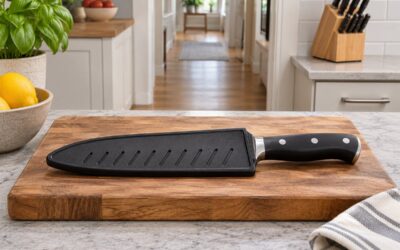
Clean and put the knife away immediately after use. Hand wash it, dry it, and store it in a block, on a magnetic strip, or in a sheath so the edge is protected and nobody reaches into a drawer blindly. Finally, keep your blade honed and sharpened according to the maker’s instructions, because a well kept edge makes every cut in this guide simpler and safer.
After a few sessions, try a new ingredient or a smaller size. Gradual progress keeps practice interesting and builds the steady rhythm that makes everyday prep faster.
FAQ
Does cut size change cooking time?
Yes. Smaller pieces cook faster and larger pieces take longer, so cut everything in a dish to a similar size.
Do I need several knives for these cuts?
No. A sharp chef knife handles most of them, and a small paring knife helps with detail work.
What is the difference between a chop and a dice?
A dice is a set of small, even cubes, while a chop is rougher and does not need to be uniform. Choose dice when appearance and even cooking matter, and chop when the food will cook down or be blended.
How do I stop onions from sliding while I cut them?
Cut the onion in half through the root, then lay it flat side down so it cannot roll. Keep the root end intact while you slice, since it holds the layers together.
Should I wash vegetables before or after cutting?
Wash them before cutting, then dry them with a clean towel. Wet food slips on the board, and cutting washed produce avoids pushing surface dirt into the cut faces.
Why do my herbs turn dark when I chop them?
Dull knives and heavy rocking crush the leaves instead of slicing them, which causes bruising and darkening. Use a sharp blade and cut just before using the herbs.
How sharp should my knife be for these cuts?
Sharp enough to slice a ripe tomato without pressing hard. If you need force, hone or sharpen the edge following the maker's instructions.
Do the cut sizes have exact measurements?
Not universally. Cooking schools and recipes define sizes slightly differently, so follow any dimension a recipe gives and otherwise aim for pieces that match each other.
The Short Version
Slice, julienne, dice, chop, mince and chiffonade cover most recipe language. Match the cut to the cooking time, keep pieces even, and practice on onions and carrots until the shapes feel familiar.