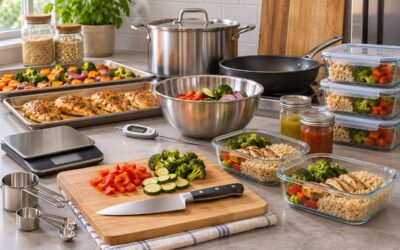
Choose food storage containers by material, lid design, size range and how well they stack. Glass handles reheating and does not hold odors, plastic is light and easy to carry, and stainless steel is durable for packed lunches. Always check the maker’s guide for oven, microwave and freezer limits.
Think About How You Use Them
Containers do many jobs: holding leftovers in the fridge, carrying lunch, freezing soup, and storing dry goods. A single type rarely covers all of these. Before you buy, list your main uses and choose the material that suits them.
Materials Compared
| Material | Strengths | Watch for |
|---|---|---|
| Glass | Does not stain, easy to see inside, can often go from fridge to oven if the maker says so | Heavy, can break; avoid sudden temperature changes |
| Plastic | Light, inexpensive-feeling, many shapes | Can stain or hold odors; check microwave advice |
| Stainless steel | Tough, good for lunches | Cannot go in the microwave; you cannot see the contents |
| Silicone | Flexible, folds flat | Needs support for liquids; may hold odors |
Lids Matter Most
A container is only as useful as its lid. Look for a lid that clicks or locks around the full rim, with a gasket if you will carry liquids. Vented lids let steam escape in the microwave. Check that lids are easy to remove and wash, and that they have not too many crevices. Some lids are not microwave friendly, so read the maker’s instructions.
Sizes and Shapes
- Small containers (about one cup) suit sauces, dips and snacks.
- Medium containers (two to four cups) suit leftovers and single meals.
- Large containers hold soups, salads and bulk prep.
- Rectangular shapes stack better in a fridge than round ones.
- Round and square shapes suit soups and are easier to clean in corners.
Practical Checks
- Confirm that lids and bases fit together in a stack, and that nested sets save space in your cupboard.
- Read the maker’s guidance on freezing, microwaving and dishwashers.
- Leave a little room at the top of the container for liquids that expand when frozen.
- Label with the date so leftovers get eaten in good time. Follow local food safety guidance on how long to keep them.
- Replace containers that are cracked, warped or no longer seal.
Freezer, Fridge and Pantry Use
The best container depends on where it will live. In the fridge, you want a container that stacks well, seals reliably and lets you see what is inside. In the freezer, you need walls and lids that tolerate cold without cracking, and a shape that leaves room for food to expand as it freezes. In the pantry, the priority is keeping dry goods away from moisture, pests and air. Check the listing to see which uses the maker supports, since not every container is rated for all three.
When freezing, leave a little headspace at the top, especially for soups and sauces, because liquids expand. Cool food before sealing it, and label containers with the contents and date. Rigid containers with straight sides stack neatly in the freezer, while flexible ones can be squeezed into gaps. Check whether glass lids or bases are safe for freezing, and avoid sudden temperature changes.
For the pantry, clear containers with tight lids make it easy to see how much is left of flour, rice, pasta or cereal. Square or rectangular shapes use shelf space more efficiently than round ones. Consider scoops or pour spouts if you handle these foods daily.
If you plan to use the same container across several areas, check the temperature limits and the maker’s care instructions.
Stacking and Nesting for Space
Storage containers can take over a cupboard if they are not planned. Two main designs exist: nesting containers, which fit inside each other when empty, and stackable ones, which fit neatly on top of each other when full. Nesting saves cupboard space and keeps lids and bases together. Stackable shapes save fridge and freezer space and reduce the risk of toppling.
Many sets combine both ideas. Look for containers in a few consistent sizes, so lids can be shared across several bases. Check the listing for the lid system, as lids that interlock on top make stacks more stable. Containers with uneven lid shapes can slide when stacked.
Some tips for organizing:
- Store containers with their lids on or in a dedicated bin so they do not go missing.
- Use a drawer or shelf at an easy height for the containers you use most often.
- Keep awkward shapes, such as round tubs, for foods that need them.
- Match the footprint to your fridge shelves, measuring the depth and height.
If you often lose lids, consider a set with a snap-on lid for each base, or reduce the number of different sizes you own. A smaller number of well-chosen containers is easier to manage than a drawer full of mismatches.
Leaks, Seals and Carrying Lunch
If you carry food to work or school, the seal is crucial. A container that leaks soup into a bag is frustrating, and not every lid that snaps shut is leakproof. Check the product description for claims about leak resistance, and look at the lid design. Silicone gaskets, locking tabs on all four sides and a flat, firm lid generally hold liquids better than a simple press-on lid. Do not assume that a container is leakproof unless the maker says so.
The gasket needs care. Remove it for cleaning and make sure it sits fully in the groove when you put it back, since a twisted gasket can cause leaks. Over time, gaskets may stretch, stain or crack, so replacement parts help if available. Check whether the maker sells spares.
Think about the foods you carry:
- Soups and sauces: need a tight seal and a deep container.
- Salads: may benefit from a separate compartment for dressing.
- Dry snacks: work in almost any lidded container.
- Meals to reheat: need a microwave-safe lid, vented if recommended.
Carry containers upright in a bag, and avoid overfilling. Test a new container with water at home before trusting it with soup in your bag.
Reheating Safely
Containers that go in the microwave or oven need to be rated for it. Check the listing and any markings on the container for heat safety. Plastic containers should be labeled microwave safe, and lids may need to be vented or placed loosely on top to let steam escape. Glass containers are often suitable for oven and microwave use, but lids may not be, so check each part separately.
Avoid putting a container straight from the freezer into a hot oven, as sudden temperature changes can cause glass to crack. Thaw first or follow the maker’s guidance. Remove metal parts, such as clasps or decorative elements, before using a microwave unless the instructions say otherwise.
Good habits for reheating include:
- Stirring food partway through for even heating.
- Using a container large enough to prevent boil-overs.
- Allowing hot containers to cool slightly before handling.
- Using mitts for glass, which holds heat longer.
Be cautious with stained or warped plastic, which may no longer behave as it should. If a container smells burned, shows melted spots or has become cloudy and rough, stop using it for heating. Food safety guidance also recommends reheating leftovers thoroughly, so follow local health recommendations for temperatures and storage times.
Building a Practical Set
Rather than buying a large set at once, consider what you actually store. Count how many leftover portions, lunches and pantry items you handle in a typical week, and note the sizes you need most. A small number of each of three or four sizes is often enough. Add specialty containers, such as a tall one for soup or a wide one for casseroles, only if your cooking calls for them.
Think about uniformity. A set where lids and bases are interchangeable simplifies storage and reduces frustration. If you mix materials, such as glass for the oven and plastic for lunches, keep them organized so you know what each is for. Check the listing to see whether replacement lids or extra pieces can be bought individually.
A few questions before you buy:
- Do the lids fit securely and release without a struggle?
- Will the containers fit in my fridge, freezer and dishwasher?
- Are they easy to hand wash, with no hard-to-reach grooves?
- Do I have a place to store them that works every day?
Replace containers that warp, crack, stain beyond cleaning, or no longer seal. A well-chosen set that matches your habits will save time and reduce food waste.
FAQ
Can I put hot food straight into a container?
Check the maker’s instructions. Many suggest letting food cool a little first, and glass in particular can be harmed by sudden changes.
How do I remove stains and smells?
Wash soon after use, and try a soak in warm water with a mild cleaner as the maker advises.
Are glass containers better than plastic?
Each has strengths. Glass resists stains and odors and is often oven safe, but it is heavier and can break. Plastic is lighter and less likely to break, which suits lunches. The best choice depends on how you use them.
Can I freeze soup in a container?
Yes, if the container is rated for freezer use. Leave space at the top for expansion, cool the soup first and seal tightly. Label with the date.
Why does my container warp in the dishwasher?
Heat in the dishwasher, especially near the heating element, can warp some plastics. Place containers on the top rack, or hand wash if the maker advises. Check whether they are dishwasher safe.
How can I prevent lid loss?
Store containers with their lids on, or keep lids in a dedicated bin. Choose sets with shared lid sizes. Retire bases that no longer have a lid.
Are round or square containers better?
Square and rectangular ones use space more efficiently on shelves and in stacks. Round ones can be easier to clean and to scoop from. Choose by the food you store and the space you have.
When should I replace old containers?
Replace them when they crack, warp, lose their seal, or hold stains and odors that do not wash out. Damaged containers can be unhygienic and harder to clean. Fresh ones may also encourage better organization.
The Short Version
Choose glass for reheating, plastic for light carrying and steel for tough lunch boxes. Prioritize lids that seal well, sizes that match your food, and shapes that stack neatly.