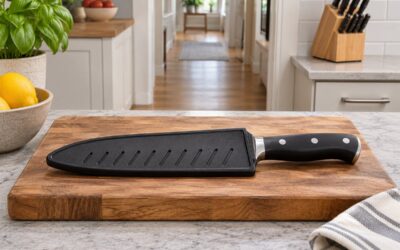
A fillet knife has a thin, flexible blade designed to glide along bones and under skin. Choose it by blade length for the size of fish you handle, the degree of flex you like, a handle that stays grippy when wet and a steel that is easy to maintain.
Why the Blade Is Different
The narrow, bendy blade lets you follow the shape of a fish’s backbone, leaving more meat on the fillet. The tip is fine and pointed for beginning cuts at the head and navigating around ribs. A stiffer blade offers more control on larger fish, while a more flexible blade excels on small, delicate ones.
Criteria Table
| Factor | Why it matters | What to check |
|---|---|---|
| Blade length | Matches fish size | About 6 to 7 inches for small fish, 8 to 9 inches for medium, longer for large |
| Flexibility | Control around bones | More flex for delicate fish, less for big fish |
| Steel | Edge hold and corrosion | Stainless is often chosen for wet work |
| Handle | Grip with wet hands | Textured, non-slip material |
| Sheath | Protects edge and you | Fit and ease of cleaning |
| Weight | Fatigue over many fillets | Light and balanced |
How to Decide
- List the fish you usually prepare: small trout, medium salmon or large fish.
- Choose a length that is slightly longer than the fish’s width.
- Decide on flex. If unsure, a medium flex works for varied jobs.
- Consider the handle. Wet, slippery hands call for a textured grip and a guard.
- Read the maker’s notes on sharpening, since thin blades need gentle handling.
Using It Safely
- Work on a stable board with a damp cloth underneath.
- Keep fingers behind the cutting direction and away from the tip.
- Use light, slicing motions instead of forcing the blade.
- Keep the edge sharp, as dull knives slip.
- Dry the knife immediately after washing it by hand, and store it in its sheath.
Follow food handling guidance for raw fish, including cleaning the board and knife after use.
Maintenance is slightly different with flexible blades. Their thin edges respond quickly to a fine stone or a honing rod, and a few passes before each session can keep them keen. Avoid prying or twisting, which can bend or snap the tip. After use, rinse away scales and oils, dry the blade fully and keep it in its sheath away from moisture to protect the edge and the steel.
Matching Blade Length and Flex to Specific Fish
Different fish demand different knives. Small panfish and trout are delicate, with fine bones and thin flesh. A short, very flexible blade lets you work close to the spine without tearing the meat. Medium fish such as bass or snapper reward a moderate length with medium flex, which balances control and strength. Large fish, such as thick fillets of salmon or big saltwater species, call for a longer blade with less flex so it can push through heavier muscle and skin.
Flexibility is easier to judge than to describe. Gently press the tip against a hard surface to see how the blade bends. A highly flexible blade bends easily; a stiff one resists. Neither is better in the abstract. Flex gives control over small bones, while stiffness gives power and a straighter cut.
- Small fish: short and very flexible.
- Medium fish: moderate length and medium flex.
- Large fish: longer and stiffer.
- Mixed catches: a medium blade is a common compromise.
If you fish for several species, consider two knives rather than one compromise.
Steel, Coatings and Resisting Corrosion
Fillet knives live in wet, salty or acidic conditions, so corrosion resistance is a real concern. Stainless steel is a common choice because it resists rust better than many carbon steels. Some knives have coatings designed to protect the blade or reduce friction, but coatings can wear off in use, so check the maker’s notes.
Saltwater use is harder on steel than freshwater. After a day on the water, rinse the knife with fresh water, wash it with mild soap, dry it fully and store it away from damp sheaths. A sheath that holds moisture can encourage corrosion, so remove the knife when you get home and let the sheath dry out too.
Edge retention depends on steel and heat treatment, and the listing may not tell the whole story. A very hard steel may hold an edge longer but be more brittle in a thin blade; softer steels flex more and are easier to touch up. For most anglers and home cooks, a blade that is simple to sharpen is more useful than one that is hard to maintain.
Handle Materials for Wet, Slippery Work
Fish slime, blood and water make handles slick. Handle material and shape are critical for safety. Rubberized or textured polymers offer grip when wet. Wood can feel good but may swell or crack if not sealed, so check how the maker treats it. Smooth plastic can become slippery, so look for finger grooves, ridges or a flared end.
A guard or bolster stops your hand from sliding forward onto the blade. On thin flexible knives, a small guard may be the only barrier, so check it carefully. A handle that is too thin can cramp the hand during a long session; one that is too thick may reduce control. Hold the knife the way you will work, using a pinch grip near the blade or a hammer grip at the handle, and see which feels natural.
Consider whether you will wear gloves. Cut-resistant gloves and thick fishing gloves change how a handle feels. If you use them, choose a handle that remains secure with the glove on.
Sheaths, Storage and Taking the Knife Outdoors
If you carry the knife in a tackle box, boat or backpack, the sheath is part of the purchase. A good sheath fits closely enough to hold the blade without rattling, protects the tip and has drain holes or a design that dries out. Hard sheaths protect the edge better than soft ones, while soft sheaths take up less space.
Consider how you will carry it. Belt loops and clips are convenient but should hold the knife securely when you bend or move. For a boat, a magnetic holder or a dedicated slot keeps it from sliding around. At home, a block with a slim slot or a drawer organizer protects the thin tip.
Never toss a loose fillet knife into a drawer. Thin blades bend, chip and cut hands. Keep it in its sheath whenever it is not in use, and keep it out of reach of children. If you travel with it, follow local rules about carrying knives in vehicles and on public transport.
Sharpening and Maintaining Thin Flexible Edges
A fillet knife must be very sharp to work well, and dull edges make dangerous slips more likely. The thin, flexible blade needs a gentle approach to sharpening. Many users prefer a fine stone, a fine ceramic rod or a guided system with a low-angle setting. Aggressive pull-through sharpeners or coarse stones can remove too much metal and damage the delicate profile.
Check the angle the maker recommends, and hold it steady. Use light pressure and short, consistent strokes on each side. After sharpening, wipe the blade clean of metal dust and test the edge on a piece of paper or a soft fruit skin.
Stropping or a quick pass on a fine rod between sessions can keep the edge keen. If the blade develops a bend, chip or rust spots, assess the damage before continuing. A small chip can sometimes be ground out; a bent blade may be unsafe to keep using. When maintenance becomes more work than replacement, it is time for a new knife.
FAQ
Can I use a fillet knife for meat?
It can trim and slice thin cuts, but it is not made for heavy chopping or cutting through bone.
Do electric fillet knives work better?
They suit high volume work, but a manual knife is simpler to store and maintain.
What length fillet knife do I need for trout?
A short blade of around six to seven inches is a common choice for small fish. Check the manufacturer's guidance and match the blade to the size of fish you handle most.
Is a flexible blade harder to use?
It takes a little practice but gives better control around bones on small fish. A stiffer blade may be easier for beginners on larger fish.
Can I sharpen a fillet knife with a pull-through sharpener?
Some can be used with care, but aggressive designs may remove too much metal from a thin blade. A fine stone or guided system is often gentler.
Why does my knife rust after fishing?
Salt, moisture and a damp sheath all promote corrosion. Rinse, wash, dry fully and let the sheath dry out.
Should I wear a glove while filleting?
Some people wear a cut-resistant glove on the hand that holds the fish. Make sure it fits well and that your grip stays secure.
What is the best cutting surface for filleting?
A stable board with a non-slip mat or damp cloth underneath works well. Choose a surface that is easy to wash after handling raw fish.
How often should I sharpen a fillet knife?
It depends on use. Touch up the edge when it begins to tear flesh or needs extra pressure, and avoid over-sharpening.
The Short Version
Match the length and flex to your fish, choose a grippy handle and keep the thin edge sharp and dry. Treat it as a precise tool, not a general chopper.