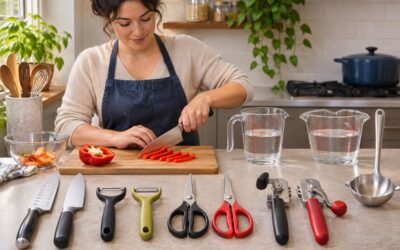
The easiest way to stop a cutting board from slipping is to place a damp cloth or a non-slip mat underneath it. A board that moves while you cut makes knife work harder to control, so fix the problem before you begin. Follow the knife maker’s safety instructions at all times.
Quick Fixes at Home
- Wet a dish towel or paper towel, wring it out until it is damp, and fold it flat.
- Lay it on the counter and set the board on top.
- Press down on the corners to check that the board does not shift.
- If it still moves, add a second layer or switch to a mat.
A damp towel works because it grips the counter and the board. Keep it just damp, not dripping, so water does not run onto the board surface or under the cabinet edge.
Longer-Term Options
- Grip mat: A thin rubber or silicone sheet sold for lining shelves can sit under the board.
- Rubber feet: Some boards come with feet, and some can have them added. Check the maker’s guide before drilling or gluing anything.
- Rubber board: Boards made from rubber tend to grip on their own.
- Heavier board: Thick, weighty boards resist sliding, though they are harder to lift and wash.
Why Boards Slip
| Cause | What you notice | What to try |
|---|---|---|
| Smooth counter | Board glides sideways | Damp cloth or grip mat |
| Wet underside | Board floats on a film of water | Dry the board and counter |
| Warped board | Board rocks on one corner | Flip it, or replace it |
| Thin board | Board flexes and shifts | Use a thicker board |
Check Your Setup First
Before you reach for a fix, wipe the counter and the underside of the board. Crumbs, oil and moisture are common reasons for sliding, and a quick wipe sometimes solves the problem on its own.
Habits That Keep You Steadier
- Work at a counter height that lets your elbow stay relaxed.
- Keep the board clear of loose items, so the blade has nowhere unexpected to go.
- Keep fingers curled and away from the edge.
- Stop and reset the board if it moves, rather than working through it.
- Use a sharp, well kept knife, as the maker recommends, because a dull blade needs more force and slips more readily.
Choosing Non-Slip Mats and Liners
If a damp towel works but feels fiddly, a dedicated non-slip mat is the next step. These are thin sheets, usually made of rubber, silicone or a similar grippy material, that sit between the counter and the board. The best ones are slightly larger than the board so the edges do not hang off, and they are thick enough to stay flat but thin enough not to raise the board unevenly. Check the product listing for size, material and care directions, and look for a texture on both faces so the mat grips the counter and the board.
Materials behave differently. Silicone mats are flexible, easy to rinse and often safe on many surfaces, but check the listing for any statements about heat or staining. Natural rubber grips well but may leave marks on some finishes or carry a smell when new. Foam and shelf-liner products are inexpensive and easy to cut to size, though thinner ones can compress or slide when wet. Mesh liners allow water to drain and are common in drawers, but they may leave a pattern on soft boards.
Think about surface compatibility. Some grippy materials can react with certain countertop finishes, leaving a film or discoloration, particularly when moisture is trapped. Test the mat on a small area first, or place a thin cloth between mat and counter if you have a delicate finish. Clean both the mat and the counter regularly, since dust and grease reduce grip. If a mat curls or slides, it may be too thin or dirty. Replace it when it becomes slick, brittle or cracked, as a worn mat is no better than a bare counter.
- Choose a mat slightly larger than your board.
- Look for grip on both faces.
- Test on a small area if your counter finish is delicate.
Board Features That Reduce Sliding
Some boards are built to resist movement. Rubber feet or a rubber backing grip the counter without extra accessories. A thick, heavy board resists sliding because of its weight, though it is harder to lift, wash and store. Boards with a flat, true base sit evenly, while warped boards rock and shift. When you choose a board, press down on each corner and see whether it stays flat.
Edge details also matter. A board with a groove or lip can catch juices, but if the groove is on the underside it may also affect how well it grips. Some boards have a non-slip border made of a different material, which adds grip on smooth counters. Others use a textured underside. The listing should describe these features, so look for clear details rather than assuming.
Material affects behavior. Wood boards are naturally grippy on many surfaces when dry, though they can slide if the underside gets wet. Plastic boards vary, with some having soft rubber inserts or feet. Composite boards may be dense and stable. Glass boards are smooth and often slide, so they usually need a mat. Think about weight: very light boards are easy to move but also slide readily. Very large boards may overhang the counter and tip. Choose a size that fits your workspace and a base that suits your counter. If you already own a board you like, adding feet or a mat is often easier than replacing it, subject to the maker’s advice.
Workspace Height and Counter Conditions
Slipping is not always about the board. The counter itself plays a role. Polished stone, glossy laminate and stainless steel are slick, so boards slide more readily, while matte or textured surfaces give more grip. Moisture, oil and flour dust on the counter act like a lubricant. A thorough wipe with a dry cloth before you start can improve stability. If your counter has a slope or an uneven spot, the board may creep, so find a flatter area.
Counter height influences how much force you use and how the board moves. If the counter is too high, your shoulders lift and your strokes become awkward, which can push the board. If it is too low, you hunch, and the board may shift under your weight. Many cooks find that a counter around the height of their elbows is comfortable. If your counter is not ideal, a thicker board or a stable mat can adjust the working height slightly.
Edges matter. Working at the edge of a counter increases the risk of a board tipping off, so keep it a few inches back. Avoid placing the board over seams, tile lines or raised edges. On islands or tables, make sure the surface is stable and not on wheels. If you chop in a small kitchen, consider a board that fits across a sink or over a drawer, but only if it is designed for that and sits securely. Clear the area of items that could snag your sleeves or distract you while cutting.
Technique and Grip Habits That Reduce Movement
Even a stable board can move if your technique pushes it. Use controlled strokes and let the knife do the work. A dull knife needs more force, which makes boards slide, so keep blades in good condition according to the maker’s advice. Cut with a smooth, even motion rather than short, forceful chops. Keep your guiding hand in a claw shape so knuckles guide the blade and fingertips stay clear.
Position your body so that the cutting motion is straight in front of you. Stand with your feet apart and the board at a comfortable distance. Avoid cutting at a sharp angle across the board, which can create sideways force. When cutting round items such as onions or squash, slice a thin piece off one side to create a flat base, so the item does not roll. For slippery foods such as tomatoes, start with a gentle drawing motion. For hard foods, use a heavier knife and take care to place the food securely.
Stop and reset if the board shifts. Do not try to hold it with one hand while cutting with the other, since this places your fingers near the blade. Instead, readjust the mat, wipe the surfaces and begin again. Keep a damp cloth handy to wipe spills during prep. If you often work with wet ingredients, use a board with a juice groove and a grippy mat, and dry the underside when you set up. Taking a few seconds to prepare your station is a simple habit that improves safety and comfort.
When to Replace or Upgrade Your Setup
Some slipping problems indicate that equipment has reached the end of its life. A board that is warped, cracked or deeply grooved may no longer sit flat, and sanding or flipping may not fix it. If you cannot get stable contact even with a mat, consider replacing the board. A mat that has become slick, cracked or hard will not grip. Rubber feet that have fallen off or worn flat can be replaced if the maker offers them, or you may choose to add a mat.
Before buying new gear, ask yourself some questions. What is the size of my counter and my typical prep? Do I prefer a heavy board or a lighter one? Do I want a board with feet, or a separate mat? What materials are easiest for me to maintain? Is my main problem slipping, rocking or both? Do I cut on other surfaces, such as a table or an island? The answers can steer you towards a heavier board, a mat or both.
Budget tiers vary from simple liners to boards with built-in grip features. Basic mats and shelf liners are inexpensive and effective for many kitchens. Mid-range options often offer better materials, sizes and finishes. Higher-priced boards may include grip features, thicker construction and premium materials, but the key is whether they suit your counter and cutting style. Look for clear care instructions and sizes in the listing. If you are unsure, start with a mat and see whether it solves the problem before investing in a new board.
FAQ
Can I use a wet towel instead of a damp one?
It is better to wring it out. A very wet towel can slide and drip, which defeats the purpose.
Does a slipping board mean I need a new one?
Not necessarily. If the board rocks because it is warped, a replacement may help. If it only glides, a mat or cloth is usually enough.
What is the best material for a non-slip mat?
Silicone, rubber and similar grippy materials work well. Check the listing for size, texture and care, and test on a small area if your counter finish is delicate.
Can I use shelf liner under a cutting board?
Many people do. Cut it slightly larger than the board and make sure it stays flat. Replace it when it becomes slick or cracked.
Why does my glass cutting board slide so much?
Glass is smooth, so it has little grip on the counter. A mat helps, but many cooks choose other board materials, since hard surfaces can also dull knives.
Should a cutting board have feet?
Feet can add grip and let air circulate under the board, but they must be secure. Check that the board stays level when you press on the corners.
How can I stop a small board from moving?
Use a damp cloth or mat that is slightly larger than the board, work away from the counter edge, and avoid forceful chopping.
Does a sharper knife help?
Yes. A sharp, well-kept knife needs less force, which reduces the sideways pressure that makes boards slide. Follow the maker's care advice.
Is it safe to use a mat on a stone counter?
Usually yes, but check the countertop maker's care advice. Keep the mat and counter clean and dry, and avoid trapping moisture underneath for long periods.
The Short Version
Put a damp cloth or grip mat under the board, make sure the board lies flat, and stop to reset it if it moves. Careful habits and a sharp knife matter as much as the fix itself. Always follow the knife maker’s safety guidance.