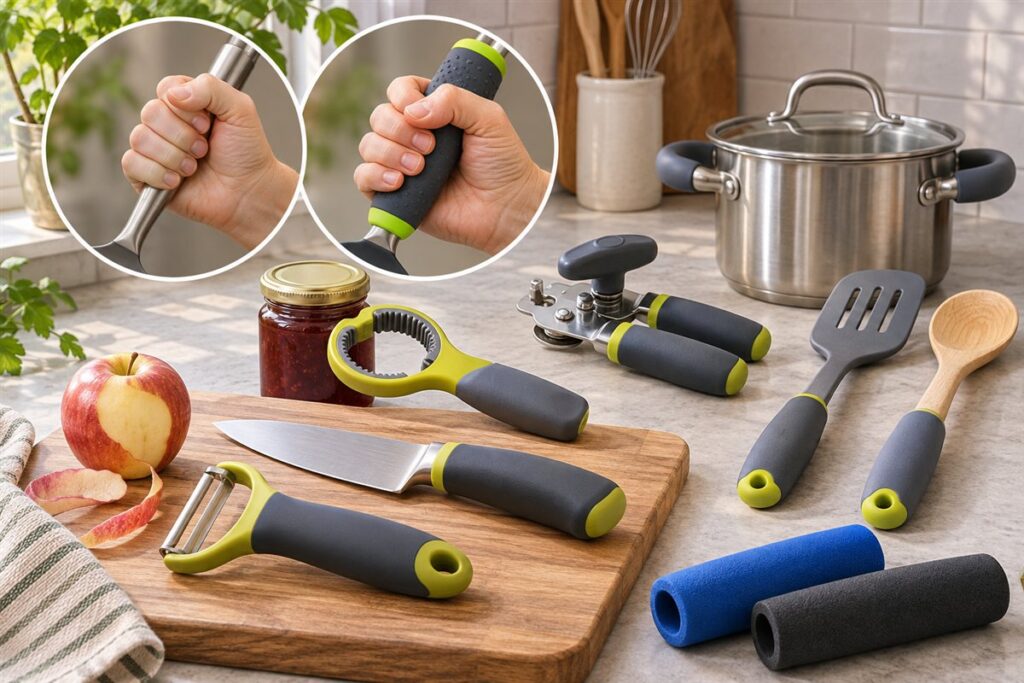
Easy-grip kitchen tools have thick, rounded, or textured handles that let you hold them without squeezing hard. If gripping is tiring, look for soft materials, larger diameters, and designs that keep your wrist straight. This guide covers what to look for and how to adapt tools you already own.
What Makes a Handle Easy to Hold
- Diameter. A somewhat thicker handle can reduce the need to clench your fingers.
- Shape. Oval and slightly flared handles fit the palm and resist rolling.
- Texture. A soft or ribbed surface adds friction, which helps when hands are wet or oily.
- Weight and balance. Light tools reduce strain, and balanced ones feel steadier.
- Angle. Angled handles can keep the wrist in a more natural position.
Tools That Benefit Most
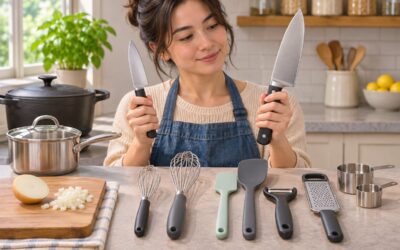
- Peelers. Wide, cushioned handles can make peeling easier.
- Knives. A comfortable handle and sharp blade reduce the force you need.
- Jar and bottle openers. Large levers and rubber grips lower the effort required.
- Can openers. Look for large, easy-turn knobs or wide handles.
- Spoons and spatulas. Thicker handles ease long stirring sessions.
- Pots and pans. Helper handles and light weights support safer lifting.
Handle Materials at a Glance
| Material | Feel | Consider |
|---|---|---|
| Soft rubber-like grip | Cushioned, good friction | Check cleaning and heat guidance |
| Wood | Warm, natural | Needs hand washing and drying |
| Plastic | Light, easy to clean | Can be slick when wet |
| Metal | Sturdy | Can be cold or slippery without texture |
Adapting Tools You Already Own
Sometimes a simple addition makes a handle easier to hold. Foam tubing or grip sleeves can add thickness to slim handles, provided they fit snugly and the maker allows it. Avoid using add-ons near heat or sharp edges unless they are designed for that purpose. Check them regularly for slipping or damage.
Cooking Habits That Reduce Strain
- Take breaks during long prep sessions.
- Keep knives sharp so you can cut with less force.
- Use a stable board and a non-slip mat.
- Slide heavy pots instead of lifting when it is safe to do so.
- Choose smaller pans and lighter lids for daily use.
If you have ongoing hand discomfort, speak with a qualified professional about what suits you. This guide is general information only.
Trying Before Buying
If you can visit a shop, hold several handles and mimic the motions you use at home, such as stirring, peeling, or turning a lid. If you shop online, read the stated handle size and weight, and check the return terms. A tool that feels fine for a minute may tire your hand after ten, so give it a fair trial at home.
FAQ
Are thicker handles always better?
Not always. The best size depends on your hand and your condition. Try different diameters if you can and choose what feels natural.
Do easy-grip tools work for everyone?
Yes, many people find them more comfortable, whether or not they have grip difficulty. Comfort is useful for any long task.
The Short Version
Choose rounded, textured, or cushioned handles with good balance, and consider grip sleeves for tools you already own. Pair comfortable tools with sharp blades and stable boards for less strain.