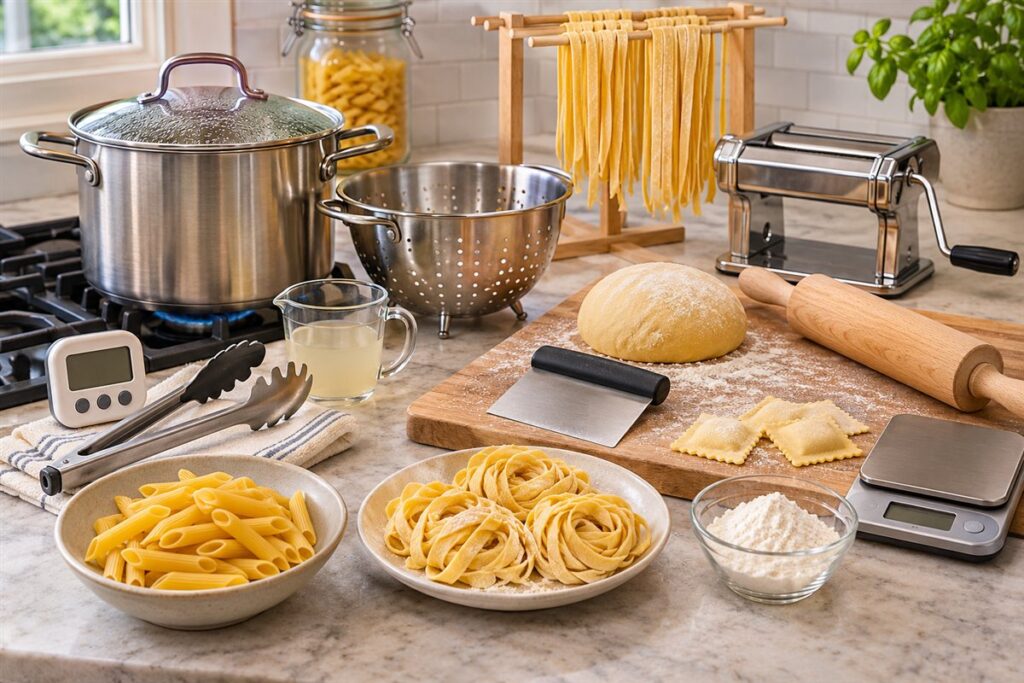
Cooking dried pasta needs only a large pot, a colander, and a spoon. Making fresh pasta adds a work surface, a rolling tool, and a cutter. This guide covers both paths so you can choose the tools that fit how you like to cook.
Tools for Cooking Pasta
Pasta cooks best in plenty of water, so size matters. Check the package directions for the amount of water and the cooking time, since they vary by shape and maker.
- A large pot with a lid. The lid helps water come to a boil faster.
- A pasta fork or tongs. They help you stir and lift long strands.
- A colander. A sturdy, stable one with feet or handles drains safely. Keep steam away from your face when pouring.
- A ladle or mug. Save a little cooking water to loosen sauces.
- A timer. Taste a piece a minute before the stated time to judge texture.
Tools for Making Fresh Pasta
- A large board or clean counter. You need room to knead and roll.
- A bench scraper. It helps gather dough and cut portions.
- A rolling pin or hand-crank machine. Either one flattens dough to the thickness you want.
- A sharp knife or cutter. Use it for ribbons or shapes.
- A drying rack or floured tray. Cut pasta needs space so strands do not stick.
- A kitchen scale. Weighing flour and eggs gives consistent dough.
Choosing by Approach
| Approach | Key tools | Good for |
|---|---|---|
| Dried pasta only | Pot, colander, tongs | Quick weeknight meals |
| Hand-rolled fresh pasta | Board, pin, knife, scraper | Occasional projects, little gear |
| Machine-rolled pasta | Crank machine, drying rack | Regular fresh pasta |
| Filled pasta | Cutters, small spoon, tray | Ravioli and similar shapes |
Technique Notes
Salt the water once it boils, add the pasta, and stir early so pieces do not stick. Fresh pasta usually cooks in just a few minutes, while dried pasta takes longer, so follow the package guidance. If you make dough with raw eggs, wash hands and surfaces after handling, and follow official food-safety guidance for egg-based dishes. Fresh pasta that you plan to keep should be dried or chilled as the recipe states.
Pot Size and Water Volume for Dried Pasta
The pot is the most important tool for cooked pasta, and size drives results. Pasta needs room to move as it softens, and a pot that is too small lets pieces clump and stick. Choose a pot that holds comfortably more water than the package suggests for your portion, and leave several inches of space above the water line so it does not boil over. Check the package directions, since amounts and times vary by shape and maker.
A tall stockpot suits long strands such as spaghetti, which can be eased down as they soften, while a wide, shallow pot suits short shapes and lets you use less water. Pots with a thick base hold heat steadily, and a lid speeds up the initial boil. Handles should be sturdy and stay cool enough to grip with a mitt; check the product listing for handle material.
Some pots come with a strainer insert, which lifts the pasta out without a separate colander. These are convenient, but check that the insert is stable and large enough for your portion, and that it does not trap pasta against the pot wall. If you cook for a crowd, consider the weight of a full pot and whether you can move it safely to the sink.
- Match the pot to your burner size.
- Keep a pot holder or mitt within reach.
- Pour away from yourself and keep steam from your face.
Straining, Sauces, and Finishing Pasta in the Pan
How you drain and finish pasta changes how well the sauce clings. A colander with a wide base and sturdy handles is a safe choice. Look for holes small enough to keep short shapes from slipping through. Stainless or enameled colanders are easy to clean, and plastic ones are lighter but may have temperature limits, so read the listing. A fine mesh strainer helps with tiny shapes and with filled pasta that is delicate.
Many cooks reserve a cup of the cooking water before draining. The starchy water helps loosen sauces and bind them to the pasta. Use a ladle or heatproof measuring cup to scoop it out. After draining, many recipes finish the pasta in the sauce pan over gentle heat for a short time, which brings the dish together. A wide skillet or saute pan with sloped sides makes tossing easier, and tongs or a pasta fork help you turn the strands.
Sauces differ in what they need. Thin, oil-based sauces pair well with long strands, while chunkier sauces cling to shapes with ridges or hollows. Choose the pasta shape according to the sauce, and check your recipe for guidance.
- Do not rinse pasta unless the recipe says to, such as for a cold salad.
- Warm the serving bowl if you want the pasta to stay hot.
- Taste for salt after combining pasta and sauce.
Choosing a Pasta Machine or Attachment
If you plan to make fresh pasta often, a machine can save effort and give consistent thickness. The two main types are hand-crank machines and motorized attachments for a stand mixer. Hand-crank machines clamp to a table edge and use rollers with a thickness setting. They are simple, compact, and need no power. Attachments use the mixer motor and free up a hand, but require a compatible mixer, so check the maker’s compatibility notes.
Look at how the thickness dial works, whether the rollers are smooth, and how many cutter widths are included. Many machines include a wide cutter for ribbons and a narrow one for strands, and some offer extras for other shapes. Consider whether you will actually use the cutters you get, because additional ones take up space.
The clamp must hold firmly to your work surface. A thick or slippery counter edge can make it hard to mount, so measure before buying. Machines are usually cleaned with a dry brush rather than water, because water can rust rollers; follow the maker’s care guide.
If you only make fresh pasta now and then, a rolling pin and a knife are enough, and you can decide later whether a machine is worth the space. Beginners often do well starting by hand to learn how dough should feel.
Dough, Drying, and Storing Fresh Pasta
Fresh pasta dough is simple but sensitive to its surroundings. Flour type, egg size, and humidity all change how wet or dry the dough feels, so go by feel as well as the recipe. Dough that is too sticky tears in the machine, and dough that is too dry cracks. Let the dough rest, covered, so it relaxes and rolls out more easily. Use a scale for flour and eggs to keep results consistent.
After cutting, dust the pasta lightly with flour or semolina to prevent sticking. Lay strands in loose nests or hang them over a clean rack or dowel to dry briefly. Overcrowding causes sticking, so give pieces space. Cook fresh pasta soon after cutting for the best texture, since it cooks in just a few minutes. If you want to keep fresh pasta, follow your recipe for chilling or freezing. Many cooks freeze nests on a tray and then bag them, but this depends on the dough, so follow the recipe’s guidance and official food-safety advice, especially for dough made with raw eggs. Wash hands, boards, and tools after handling raw egg.
Dried homemade pasta needs thorough drying in a well-ventilated space before storage, since leftover moisture can lead to mold. Store it in an airtight container and check it before use. When in doubt about doneness or storage, cook it fresh or discard it.
Filled Pasta and Shaping Tools
Filled pasta such as ravioli or tortellini takes a bit more gear and patience. A small spoon or piping bag keeps filling neat, and a ravioli cutter, stamp, or tray helps form even pieces. A pastry wheel or sharp knife can cut squares without special molds. A small bowl of water or a brush helps seal edges so the filling stays inside. Choose fillings that are not too wet, since moisture makes seams burst. Let cooked fillings cool before using them. Roll the dough thin enough to be tender but strong enough to hold the filling, and press out air pockets before sealing. Work in batches and keep unused dough covered so it does not dry out.
Specialty gadgets, such as shaping molds and cutters in decorative forms, can be fun, but they add clutter. Start with a basic round or square cutter and learn the technique first. Check the material and cleaning instructions, since metal can rust and plastic can stain.
- Flour trays lightly so filled pieces do not stick.
- Cook filled pasta in gently simmering water so it does not break.
- Use a slotted spoon to lift pieces out.
Keep raw egg doughs and meat-based fillings chilled and follow official food-safety guidance when cooking and storing them.
FAQ
Do I need a pasta machine?
No. A rolling pin and a sharp knife work well for many shapes. A machine mainly gives more even thickness with less effort.
How do I keep pasta from sticking?
Use enough water, stir in the first minute or two, and give cut fresh pasta room on a floured tray. Do not rinse cooked pasta unless a recipe says so.
How big should my pasta pot be?
Choose one that holds comfortably more water than the package calls for, with space above the water line to prevent boil-over. Tall pots suit long strands and wide pots suit short shapes. Check your burner size too.
Why save pasta water?
The starchy cooking water helps sauces loosen and cling to the pasta. Scoop out a cup before draining with a ladle or heatproof measuring cup. Add it a little at a time while tossing.
Hand-crank machine or stand mixer attachment?
A hand-crank is compact and needs no power, while an attachment frees a hand but needs a compatible mixer. Check the maker's compatibility notes before buying. Both give more even thickness than hand rolling.
How do I clean a pasta machine?
Most makers advise dry cleaning with a brush and avoiding water, which can rust the rollers. Let leftover dough dry and flake off. Follow the manual for your model.
Can I freeze fresh pasta?
Many cooks freeze nests on a tray and then bag them, but it depends on the dough. Follow your recipe and official food-safety guidance, especially for dough with raw eggs.
What shape goes with which sauce?
Long strands suit smooth, thin sauces, while ridged or hollow shapes hold chunkier ones. Follow your recipe for pairings. There is no single correct match.
The Short Version
Dried pasta needs a big pot, a colander, and tongs. Fresh pasta adds a board, a rolling tool, a cutter, and a drying space. Follow package and food-safety guidance and choose tools to match how often you cook it.