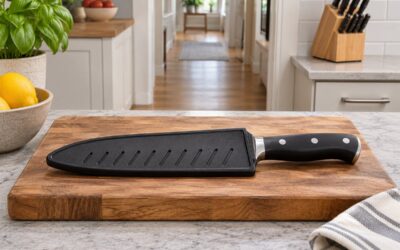
The usual advice for passing a knife is to hold it by the spine and offer the handle to the other person, with the edge facing away from both of you. A better option is often to set the knife down and let them take it from the counter. These are general habits and cannot remove all risk, so stay alert and follow your knife maker’s guidance.
The Two Main Methods
Passing hand to hand is quick but needs eye contact and clear communication. Setting the knife on a board or counter avoids the handover altogether, which many cooks prefer in busy kitchens. Either way, make sure the other person is ready before you let go.
Handle-First Handover
- Stop what you are doing and get the other person’s attention.
- Say that you are passing a knife, so they expect it.
- Turn the blade so the sharp edge faces down or away from both of you.
- Hold the knife by the spine near the heel, with fingers clear of the edge.
- Offer the handle to them, pointing toward their hand.
- Wait until they say they have it and their grip is firm.
- Release only after they confirm, then step back.
Setting It Down Instead
- Place the knife on a clear, dry counter or board.
- Point the blade away from the person and from the counter edge.
- Leave the handle toward them and say it is there.
Handling Cues to Remember
| Situation | General approach |
|---|---|
| Crowded kitchen | Set it down and announce it |
| Children nearby | Keep knives out of reach; do not hand them over |
| Wet or greasy hands | Dry your grip first or place it down |
| Dark or distracting space | Pause and wait until visibility improves |
Never toss a knife, and never leave one in a sink of soapy water where hands may not see it. Following good habits lowers the chance of cuts but cannot promise a risk-free outcome.
Building Shared Kitchen Habits
If you cook with others, agree on a few simple rules. Say aloud when you lift a knife, keep a clear spot for knife work, and always return knives to the same place when you finish. Show younger helpers how to hold a knife, and supervise closely. Avoid walking while holding a knife. Where people work close together, a quiet word before turning around with a blade in hand costs nothing. These routines do not remove all risk, but they make a shared kitchen calmer and more predictable.
FAQ
Is it better to hand over by the handle or the blade?
The common method is to hold the blade by the spine and offer the handle. Some cooks avoid handing knives at all and use the counter.
What if the other person is not paying attention?
Wait. Do not release until they have clearly taken the handle.
The Short Version
Announce the knife, keep the edge turned away, offer the handle and wait for a firm grip. When in doubt, set it down on the counter.