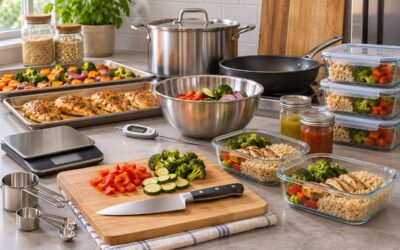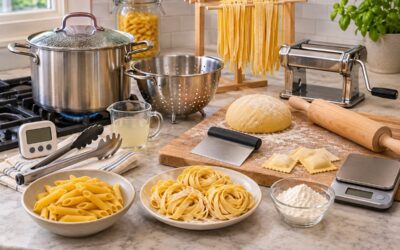
Using a kitchen scale for baking means weighing ingredients in grams instead of scooping them by volume. Place a bowl on the scale, zero it with the tare button, add an ingredient to the target weight, then tare again before the next. Weighing is more consistent because a cup of flour can vary a lot depending on how it is packed.
Why Weigh Instead of Scoop
Volume measures change with how loosely or firmly an ingredient sits. Weight does not. Scales also mean fewer dishes, since you can measure several ingredients into one bowl. Many baking recipes list gram weights for this reason.
Weighing Step by Step
- Set the scale on a flat, hard surface and switch it on.
- Choose grams for the most precise readings, unless the recipe uses ounces.
- Place your empty bowl on the scale and press tare, so the display reads zero.
- Add the first ingredient slowly until you reach the recipe weight.
- Press tare again, then add the next ingredient.
- For liquids such as milk or oil, weigh them too; many recipes give weights for those.
- If you add too much, remove a little rather than adding other ingredients to compensate.
Handy Habits
- Check that the scale is on a level, steady surface and not touching the wall.
- Keep the bowl centred on the platform for the most reliable reading.
- For tiny amounts such as yeast or salt, check whether your scale can show small increments. Check the maker’s guide.
- Replace the batteries when the display flickers or drifts.
Rough Weight Reference
| Ingredient | Typical weight per cup |
|---|---|
| Plain flour | About 120 to 140 g |
| Granulated sugar | About 200 g |
| Water or milk | About 240 g |
| Butter | About 225 g |
These are approximate; recipes differ, so use the weights in your recipe first.
Converting a Recipe
If a recipe only gives cup measures, you can weigh the ingredients yourself. Measure the first batch the usual way with a cup, weigh it, then write the number in the recipe margin. Next time, use the weight. Over a few bakes you will build a personal set of reliable figures. Flour weights vary by type and moisture, so note which kind of flour you used. When a recipe provides both, trust the weight, since small differences in a cake or bread can have a larger effect than they appear to.
FAQ
Do I need to weigh everything?
Not necessarily. Weighing matters most for flour, sugar and fat. Small spoonfuls of spices are fine to measure by volume.
What if my scale shows an error?
Weight above its limit or a low battery can cause errors. Check the maker’s instructions for the maximum load.
The Short Version
Tare the bowl, weigh in grams and tare between ingredients. Keep the scale level and follow recipe weights for steady results.