Disclosure: topratedkitchenware.com is reader-supported. When you buy through links on our site, we may earn an affiliate commission from Amazon and other retailers, at no extra cost to you.
Where to buy
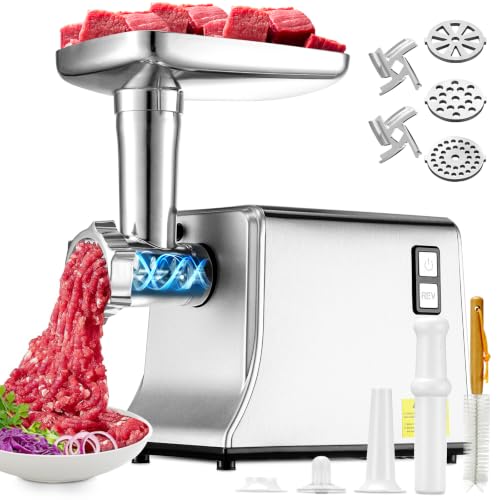
All six grinders below are sold through Amazon, where you can confirm head size, plate sets, and included stuffer tubes before ordering — worth doing before the season, not during it. The first machine listed, the CHEFFANO Life Electric Meat Grinder, opens the shortlist — Check on Amazon — and the rest follow:
- LEM Products BigBite #8 Meat Grinder, 0.5 HP
- RVGMBO Electric Meat Grinder, 3500W, 3 Blade & Plate Sets
- FOHERE Electric Meat Grinder, #12 Head, 1 HP
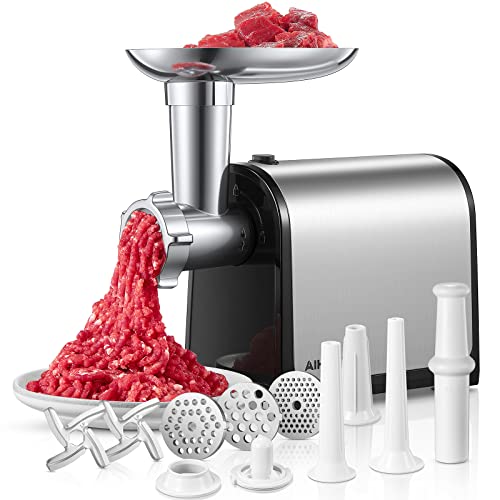
- Aiheal Electric Meat Grinder, 3200W Max
- AAOBOSI Electric Meat Grinder with 3-Speed Touch Screen
Read the full guide ↓ for how each machine scales — or does not — to the biggest grinding day in North American home processing.
The best meat grinders for elk are defined by one word: volume. An elk is not a big deer; it is a different order of work. Where a whitetail gives a household a solid day of processing, an elk gives a weekend — quarters that fill a chest freezer before they are even boned, and a mountain of trim that all wants grinding while it is still cold. The best meat grinders for elk are therefore the machines that treat grinding as sustained production: a head large enough to swallow serious chunks, a motor rated for the long run rather than the short burst, a throughput figure you can plan a day around, and a build that is still running sweetly in hour three. Everything else — presets, styling, compactness — is decoration next to that central question of scale.
Elk meat itself adds two more demands. It is exceptionally lean, leaner even than venison, so the fat blend is not a preference but a structural part of the grind: burger and sausage batches need pork or beef fat folded through them evenly, which means the grinder must alternate dense lean meat and soft fat without smearing either. And elk trim, coming off a very large animal, includes substantial sinew and connective tissue that punish dull blades and wrap around hubs. The workflow that works — trim hard, chill harder, grind in staged batches with the fat distributed — is described in the how-to section below. Hunters who also process deer will recognise the same principles at a friendlier scale in our reporting on seasonal workflows; readers whose grinding year is mostly domestic should start from our Best Meat Grinders For Home Use guide and treat this page as the heavy-duty end of the same family.
Key Takeaways
- Elk is a volume problem first: head size and sustained throughput decide the shortlist, not peak wattage.
- The FOHERE’s #12 head, 1 HP positioning, and throughput quoted at 8.8 lbs/min make it the elk benchmark in this guide.
- Elk is extremely lean — plan the fat blend before the hunt, and distribute fat through the grind, never as one lump.
- Work in staged batches with rest breaks; even big machines pace better than they sprint, and meat quality depends on staying cold.
- Spare blades matter at elk scale: a long session can dull a set, and the RVGMBO’s three sets exist for exactly this day.
- Trim sinew aggressively at the table — elk connective tissue defeats plates and wraps hubs faster than deer trim does.
In this guide
Quick Picks
| Pick | Badge | Standout detail from the listing | Link |
|---|---|---|---|
| CHEFFANO Life Electric Meat Grinder | Best for One Elk, Paced | 2000W max, stainless steel, 2 blades, 3 plates | Check on Amazon |
| LEM Products BigBite #8 | Best Trusted #8 | 0.5 HP, #8 head, stainless steel | Check on Amazon |
| RVGMBO Electric Meat Grinder | Best Spare Cutting Sets | 3500W motor claim, 3 sets of 304 stainless blades and plates | Check on Amazon |
| FOHERE Electric Meat Grinder | Best Overall for Elk Volume | #12 head, 1 HP, 600W all-copper motor, 8.8 lbs/min maker rating | Check on Amazon |
| Aiheal Electric Meat Grinder | Best Accessory Bundle | 3200W max, 2 blades, 3 plates, 3 sausage tubes | Check on Amazon |
| AAOBOSI 3-Speed Touch Screen Grinder | Best Paced Home Batches | 3000W max, 4 lbs/min maker rating, built-in storage | Check on Amazon |
How These Picks Were Chosen
This guide is research-led, built by comparing manufacturer listings and specifications across the heavy-duty home grinder market and filtering for elk-scale work. The filtering was stricter than for ordinary home grinding. Peak wattage — a momentary figure — was discounted heavily; continuous-style information (horsepower, all-copper motor ratings, head size, throughput per minute) led the ranking, supported by construction evidence such as stainless food paths and multi-set blade bundles.
Four filters produced the six. First, sustained capacity: elk day is measured in hours, so machines with a #12 head or a published throughput figure anchor the list, and smaller machines are included only with an honest “paced batch” framing. Second, blade logistics: over a long session, edges dull; bundles with spare blades or full spare sets scored as production features, not accessories. Third, the sausage pathway: a large share of every elk becomes sausage, so stuffer tubes and kubbe kits in the box were required, not optional. Fourth, cleaning at scale: the machine must strip fully and wash completely, because elk day generates the largest wash-up of the year and any design that traps residue fails it. Stand mixer attachments and manual grinders were excluded outright — neither belongs anywhere near an elk. If your season is deer-sized, our deer guidance covers the same brands at a calmer scale; this page is deliberately the heavy end, cross-referenced with our Best Meat Grinders For High Volume At Home shortlist, where throughput is the only criterion that matters.
The 6 Best Meat Grinders for Elk

CHEFFANO Life Electric Meat Grinder, 2000W Max
Badge: Best for One Elk, Paced
Strengths
- Stainless steel construction with the full working bundle — 2 blades, 3 plates, sausage tube, kubbe kit.
- The most accessible entry point in this six for a hunter facing a first elk.
- Three plates cover coarse chili grind through medium burger across a long, staged session.
Trade-offs
- 2000W max is the gentlest power claim here; an elk is a multi-session project on this machine, not a single run.
- No reverse and no published throughput — pacing and rest breaks are the owner’s job.
- Anyone who draws elk tags regularly will outgrow it; it is the occasional-elk answer.
Mini spec box: Power: 2000W max · Construction: stainless steel · Blades: 2 · Plates: 3 · Extras: sausage tube, kubbe kit · Duty described: heavy duty for home use.
Let us be straightforward about the CHEFFANO Life and elk: this is the budget-realist pick, included because many hunters face exactly one elk — the tag of a decade — and need to process it without buying commercial equipment for a single weekend. The strategy that makes it work is staging. Bone out the animal, sort trim into destination tubs, and grind in chilled batches across the processing days: burger one session, chili grind the next, sausage meat last. Between batches the machine rests, the meat re-chills, and the operator’s knife work stays careful. Run that way, a well-bundled home grinder with three plates and a spare blade genuinely can process an elk.
What it cannot do is hurry. The honest limitation is throughput: there is no published pace, the motor claim is the smallest here, and a packed feed tube on hour two is how modest machines get hurt. Feed it cold, modest pieces, and let the auger set the tempo. The accessory set is the saving grace — when the first blade tires late in the weekend, the second blade is in the box. Hunters who expect elk to be a recurring season rather than a single event should read this review as a description of the floor, and buy from further down the list; our Best Meat Grinders For Hunters guide frames that step-up decision across the whole season’s work.
Best for: the once-in-a-decade elk, processed patiently in staged batches / Not suited for: regular elk seasons or multi-animal weekends.

LEM Products BigBite #8 Meat Grinder, 0.5 HP
Badge: Best Trusted #8
Strengths
- A horsepower rating — 0.5 HP — from the name most associated with game processing, instead of a peak wattage claim.
- The #8 head is a genuine step up in piece size and pace from compact home grinders.
- Stainless steel construction built around grinding and sausage stuffing as one workflow.
Trade-offs
- Half a horsepower is honest but not large; an elk is steady, staged work on a #8.
- The pool listing does not enumerate the included plates and blades — confirm the set before ordering.
- No electronic aids: no presets, no storage system, no reverse mentioned.
Mini spec box: Motor: 0.5 HP · Head size: #8 · Construction: stainless steel · Roles: grinding and sausage stuffing · Duty described: home use, heavy-duty positioning.
The BigBite #8 is the traditional elk answer for households that process one animal a year and value a machine with a reputation earned in exactly this work. The #8 head changes the feel of the day versus a compact grinder: trim goes in as real chunks, the auger pulls with the authority the BigBite name promises, and a quarter of elk becomes a manageable session rather than an endless one. The 0.5 HP rating is the honest centre of the specification — it will not match a 1 HP #12 machine’s pace, and it does not pretend to.
Run an elk through it the staged way: grind a tub, bag a tub, rest the machine while the next tub chills. Across a processing weekend that rhythm suits how elk are actually handled at home, where boning, trimming, and wrapping all compete for the same hands. The honest limitations are information and ceiling — confirm the included plate set on the listing, and accept that two elk in one weekend push this machine into long days where the FOHERE below is the right tool. For the one-elk household that buys on track record, the LEM remains the calm, proven middle of this guide.
Best for: one-elk households that trust horsepower ratings and a game-processing pedigree / Not suited for: multi-elk weekends or buyers who need a published lbs-per-minute pace.

RVGMBO Electric Meat Grinder, 3500W, 3 Blade & Plate Sets
Badge: Best Spare Cutting Sets
Strengths
- Three full sets of 304 stainless blades and plates — fresh edges on demand across a marathon session.
- Sets can be staged by job: coarse set for the first pass, finer set for finishing, one resting clean.
- Kubbe and sausage kit included for the large sausage share of an elk.
Trade-offs
- The 3500W figure is a peak-style claim; sustained pace is not separately published.
- No gear material, head size, or reverse function is stated in the listing.
- Three sets of parts is three sets to wash at the end of the longest wash-up of the year.
Mini spec box: Power: 3500W (maker’s “super motor” claim) · Blades and plates: 3 sets, 304 stainless steel · Extras: kubbe and sausage kit · Duty described: home use.
Elk day exposes a truth that smaller jobs hide: blades are consumables. Halfway through a big animal, a cutting set that started sharp is working through sinew-heavy trim with a tired edge, and grind quality slides — more smear, more heat, more stalls. The RVGMBO is built around that moment. With three complete sets of 304 stainless blades and plates, the fix is to swap in a fresh set and keep moving, sending the tired set to be sharpened later. You can also stage the sets by role across the day, which turns plate changes from a wash-and-fumble into a clean swap.
The rest of the listing is comparatively quiet — a large peak-power claim, a kubbe and sausage kit, and no published head size, gear material, or reverse — and the honest review keeps that in proportion: this is a machine bought for its cutting-gear depth and a big motor claim, not for a fully documented drivetrain. In an elk workflow, that trade has real logic, because the parts that demonstrably wear during one long weekend are the parts this machine triples. Pair it with disciplined staging — cold meat, rested machine between tubs — and it is a credible elk tool. Owners whose elk trim also feeds dogs will find the same spare-set logic praised in our dog-food coverage, and the Best Meat Grinders For Raw Dog Food guide explains the dedicated-set hygiene pattern in detail.
Best for: elk processors who have felt a blade go dull mid-animal and never want to again / Not suited for: buyers who want published head size, gear, and throughput specifications.

FOHERE Electric Meat Grinder, #12 Head, 1 HP
Badge: Best Overall for Elk Volume
Strengths
- A #12 head with throughput quoted at 8.8 lbs/min — the only specification in this six that lets you plan an elk day by the clock.
- 600W all-copper motor with 1 HP positioning gives a continuous-duty story, not just a 3600W peak.
- Stainless plates, sausage nozzle, and kubbe kit cover an elk’s destinations from burger to sausage.
Trade-offs
- The largest footprint and wash-up here; it is a production machine in a home-sized guide.
- No reverse function is stated, so sinew stalls are manual clear-outs despite the batch focus.
- Overkill for deer-only households — its case rests entirely on elk-scale volume.
Mini spec box: Motor: 600W all-copper, 1 HP positioning · Peak: 3600W · Head size: #12 · Throughput: 8.8 lbs/min (maker rating) · Plates: stainless · Extras: sausage nozzle, kubbe kit · Duty described: home use.
The FOHERE is the machine this guide exists to find. Elk processing is planned in pounds and hours, and this is the only pick that publishes the numbers to plan with: a #12 head that takes elk trim in serious pieces, an all-copper motor described in continuous terms with 1 HP positioning, and throughput quoted at 8.8 lbs/min. In practical terms, that means the grinding station stops being the bottleneck of elk weekend. While one person bones and trims, the FOHERE keeps pace; tubs move from cooler to grinder to packaging without a growing queue of warming meat — and keeping meat cold by keeping it moving is the core quality trick of the whole operation.
It still rewards technique. Elk sinew will find the blade hub eventually, and with no reverse stated, the clear-out is manual — trim hard so it happens rarely. Fat blending benefits most from the pace: alternating handfuls of lean elk and pork fat through a fast, cold grind produces the even distribution that hand-mixing never quite achieves. The honest limitations are scale and surplus: this machine wants counter space, a big sink session afterwards, and a freezer programme worthy of it. If elk is your recurring season — or your household processes for an extended family — the FOHERE is the best overall grinder for elk in this guide, and it is not close.
Best for: regular elk hunters and multi-family processing, where the day is planned in pounds per hour / Not suited for: deer-only households or small kitchens.

Aiheal Electric Meat Grinder, 3200W Max
Badge: Best Accessory Bundle
Strengths
- Two blades and three plates in the box — the two-pass elk workflow covered without extra purchases.
- Three sausage tubes included, matching the large sausage share of an elk’s yield.
- Stainless steel grinding components in a black finish that wears its working life gracefully.
Trade-offs
- 3200W is a maximum rating; sustained pace across an elk is a matter of staging, not spec.
- No reverse is listed, so sinew stalls mean opening the head.
- No head size or throughput is published, which limits day-planning precision.
Mini spec box: Power: 3200W max · Blades: 2 · Plates: 3 · Sausage tubes: 3 · Body/components: stainless steel, black finish · Duty described: heavy duty for home kitchen use.
The Aiheal’s elk case is completeness. Everything the workflow needs arrives in one box: three plates for coarse-to-medium work, a second blade for the moment the first one tires, and three sausage tubes for the day the sausage meat gets stuffed. For a hunter setting up elk processing from scratch — no drawer of inherited plates, no spares — that completeness is worth real money and real time, and the stainless grinding path suits the wet, heavy wash-downs elk work generates.
Used with the staged method, it processes an elk the way the CHEFFANO Life does, with a stronger power claim behind it: chilled tubs, steady feeding, rest between batches, fat distributed through the grind. Its honest limitations are the familiar ones for this class — peak-only power information, no reverse, no published throughput — so the operator supplies the discipline the spec sheet does not. Households that also grind poultry frames for pets will find this same bundle logic useful there, and our Best Meat Grinders For Turkey Bones guide covers the poultry-bone technique that elk hunters often need in the same season. As the one-box elk starter kit, the Aiheal earns its place.
Best for: hunters equipping for elk from zero who want every plate, blade, and tube in one purchase / Not suited for: planners who want published throughput, or reverse-assisted clearing.

AAOBOSI Electric Meat Grinder with 3-Speed Touch Screen
Badge: Best Paced Home Batches
Strengths
- Throughput quoted at 4 lbs/min — a real planning number in a home-sized body.
- Three speeds let you run elk trim low and steady, where torque lives, and speed up for softer loads.
- Built-in storage and an easy-cleanup design suit a machine that must be found, used hard, and stored again each season.
Trade-offs
- 3000W max is a peak claim; the 4 lbs/min figure is for meat and elk sessions will run slower with sinew and fat blending.
- Touch controls and elk-day hands are uneasy partners; expect panel wipes mid-session.
- It is a home machine at heart — an elk is a staged project on it, not a single run.
Mini spec box: Power: 3000W max · Throughput: 4 lbs/min (maker rating) · Controls: 3-speed touch screen · Storage: built-in · Roles: 3-in-1 sausage, burger, raw pet food · Certification noted: LFGB approved · Cleanup: designed for easy cleanup.
The AAOBOSI touch model is the thoughtful middle of this guide: a home machine that nonetheless publishes a throughput, offers speed control that elk work can actually use, and stores its own parts between seasons. The speed range is the feature to understand. Elk trim on the lowest setting turns the auger slowly and pushes hardest — the correct temperament for dense, sinewy meat — while softer loads like the fat fraction or a falafel-style mixture on a quieter week can run faster. That adaptability is why this machine appears across so many of our cluster guides, including the Best Meat Grinders For Falafel shortlist, where the load is chickpeas rather than game.
For elk specifically, plan the day at a discount to the quoted pace: the 4 lbs/min figure describes cooperative meat, and elk trim with its connective tissue and your fat blending will run slower. Staged tubs, cold meat, and the low gear will get an elk processed across a weekend without drama. The honest limitations are the touch panel’s dislike of messy hands and the absence of reverse; a sinew wrap is a manual clear. As the paced, planning-friendly home option for elk — the machine for the hunter who processes one animal carefully and then uses the grinder all year — it closes this list with a different, legitimate philosophy: not the biggest machine, but a well-instrumented one.
Best for: one-elk households that also grind year-round and want a published pace plus speed control / Not suited for: multi-elk production days.
Comparison Table
| Grinder | Power as listed | Head | Plates / Blades | Standout for elk | Link |
|---|---|---|---|---|---|
| CHEFFANO Life | 2000W max | Not stated | 3 / 2 | Accessible staged-batch option | Check on Amazon |
| LEM BigBite | 0.5 HP | #8 | Not stated | Pedigree and honest rating | Check on Amazon |
| RVGMBO | 3500W claim | Not stated | 3 sets / 3 sets | Fresh edges all weekend | Check on Amazon |
| FOHERE | 600W copper / 1 HP, 8.8 lbs/min | #12 | Stainless / not stated | True elk throughput | Check on Amazon |
| Aiheal | 3200W max | Not stated | 3 / 2 | Complete one-box bundle | Check on Amazon |
| AAOBOSI Touch | 3000W max, 4 lbs/min | Not stated | Not stated | Speed control, storage | Check on Amazon |
How to Choose a Meat Grinder for Elk
Plan backwards from the animal. Estimate your grind pile before you shop: the burger, chili, and sausage fractions of an elk together make the largest single grinding load most households ever face. If that load must move in one day, only a #12 head with a published throughput truly fits. If your processing style spreads across a weekend — bone one day, grind the next, stuff sausage on the third — the staged-batch machines in this guide are legitimate, cheaper answers.
Demand a planning number. For elk, the most useful spec is a rate: pounds per minute or per hour, or a horsepower figure that implies one. Peak wattage cannot be converted into a schedule, and elk weekend is a schedule. The FOHERE and AAOBOSI publish rates; the LEM publishes horsepower; the rest ask you to trust construction and staging, which is fine if your timeline is flexible.
Budget for blades like fuel. A long elk session consumes edge. Either buy a machine whose bundle includes spares — two blades, or the RVGMBO’s three full sets — or add spares to the order. Discovering a dull blade at the halfway point of an elk, with the nearest replacement days away, is the classic preventable disaster of this category.
Decide the fat strategy before choosing. Elk’s leanness means the grinder will spend much of its life blending. Machines that run steadily at low speed distribute fat most evenly, and a coarse first pass followed by a medium pass gives the blend its structure. If your household’s elk mostly becomes sausage, weigh the stuffer tubes and the stuffing workflow as heavily as the grinding specs.
Be honest about recurrence. One elk ever: stage it on a bundled home machine and spend the savings on freezer packaging. An elk most years: buy the #12. The worst purchase in this category is the middle one repeated — a modest machine replaced after two seasons by the machine that should have been bought first.
How to Grind an Elk, Step by Step
Step 1 — Bone and sort at the table. Break the animal down and sort trim into labelled tubs as you go: burger, chili, sausage, stew. Trim silverskin and heavy sinew now, while it is visible and your knife is already working — the grinder is the wrong place to discover it.
Step 2 — Cut for your head size. #12 machines take generous chunks; #8 and home heads want smaller pieces. Uniform size matters more than small size: even pieces feed evenly and keep the auger’s rhythm steady.
Step 3 — Chill in rotation. Stage tubs through the freezer so the tub being ground is always hard-chilled. On a long day, rotate three tubs — one grinding, one chilling, one being filled — and the meat never warms.
Step 4 — Stage the fat. Weigh the pork or beef fat for each destination batch, cube it, and chill it as hard as the elk. Feed lean and fat in alternating handfuls so the blend builds itself in the grind.
Step 5 — Grind in destination order. Burger first (coarse pass, then medium), chili next (coarse only), sausage meat last. Between destinations, a handful of plain meat through the head clears the previous batch’s seasoning if you are seasoning as you go.
Step 6 — Rest the machine deliberately. Between tubs, switch off for a few minutes. The pause cools the motor, lets you package the finished grind, and keeps the whole day sustainable — elk rewards the paced operator.
Step 7 — Package the same day. Portion, flatten, label with animal, blend, and date, and freeze in a single layer before stacking. Elk is a year’s eating; the labels are the difference between a larder and a lottery.
Step 8 — The big wash. Strip the head fully, wash everything in hot soapy water, brush the plates clear, dry completely, and store the cutting sets where next season will find them.
Troubleshooting. Problem: grind quality fades halfway through the animal → the blade set is dull; swap in the spare set and sharpen the tired one later. Problem: the auger keeps wrapping with white strands → sinew is reaching the plate; stop, clear the hub, and trim the remaining tubs harder. Problem: burger blend looks streaky, with fat in ribbons → the fat went through in lumps; re-chill and re-pass the batch, feeding lean and fat alternately.
Managing the Cold Chain on a Long Elk Day
Every quality failure in elk grinding — smeared fat, grey colour, soft texture, shortened freezer life — traces back to temperature. A big animal creates a queue, and queues warm up. The defence is choreography: small tubs rather than one giant pile, a freezer rotation that keeps the working tub hard, a receiving bowl set over ice, and a packaging station that moves finished grind into the freezer continuously instead of accumulating it on the counter. Two-person teams should assign one person permanently to the cold chain — cutting, chilling, rotating — while the other owns the grinder.
Weather is part of the plan for garage and camp processors. A cold snap is free refrigeration; a warm spell means ice, coolers, and shorter sessions. Elk season is short and the meat is precious — the households that eat well all year are the ones that treated temperature as an ingredient, not an afterthought.
Elk Sausage Day: Grinding for the Stuffer
On most elk, the sausage fraction is large enough to deserve its own day, and it should get one. Sausage making chains three operations — grinding, seasoning and mixing, stuffing — and each has its own temperature and texture logic. Grind the sausage meat the day you stuff, or the night before at the earliest, and keep it hard-chilled between operations; seasoned ground meat left warm is where texture and safety both go to die. The plate strategy that experienced elk sausage makers use is split: lean through the medium plate, fat through the coarse, so the finished sausage shows fat as flecks rather than disappearing into a uniform paste.
Every pick in this guide ships with stuffing tubes or a sausage nozzle, which matters more at elk scale than anywhere else in this cluster — the difference between stuffing with the grinder you already own and improvising is measured in hours across an elk’s sausage share. Work in small seasoned sub-batches so one recipe’s mistake cannot swallow the whole animal, fry a test patty from each sub-batch before stuffing it, and adjust seasoning while adjustment is still possible. Casings, like fat, belong on the pre-season shopping list; sausage day is a poor day to discover either is missing.
Two-Person Elk Processing: Roles That Keep the Grinder Fed
An elk is a two-person animal, and the grinder’s performance depends on the partnership around it. The productive split is cutter and runner. The cutter bones, trims, cubes, and manages the freezer rotation — the quality-control job, because everything the grinder will ever see passes through the cutter’s hands first. The runner owns the grinder station: feeding at the machine’s natural pace, watching output texture, swapping plates between destinations, and moving finished grind to packaging. Neither role is senior; the day fails if either starves the other.
Communication is the lubricant: the cutter calls out what is coming (“burger tub, watch the sinew on this quarter”), the runner calls back the machine’s state (“blade is tiring, swap at the next tub”). Build the natural pauses into the partnership — plate changes, blade swaps, packaging runs — as the rests that keep both people and machine fresh across a long day. Solo processors can simulate the same rhythm by batching strictly: cut a tub, chill a tub, grind a tub, pack a tub, and never let two stations’ work pile up at once. The grinder, whatever its badge, performs at its best inside that rhythm — which is the real secret behind every “this machine handled my elk easily” story you will ever hear.
Common Buying Mistakes
Shopping after the tag is drawn. Elk-capable machines are seasonal stock. Buy in spring, test on beef, and let the machine be a known quantity when the animal is on the ground.
Believing a peak wattage equals elk capacity. The biggest “max” number in this guide sits on machines with no published throughput, while the elk benchmark publishes a rate a third as flashy. Plan with rates and horsepower.
Forgetting the fat. Arriving at elk weekend with no pork or beef fat sourced means lean, dry burger all year. The fat blend is part of the equipment list; arrange it with the butcher before the season.
One giant session. Even on a #12, grinding an entire elk in one unbroken run degrades meat and operator alike. Staged tubs with rests produce better food and a happier crew.
No spare blade plan. Covered above because it is that common: at elk scale, a dull blade is a scheduling emergency, not an inconvenience.
Freezer Maths: Planning a Year of Elk
An elk is not a meal; it is a year of meals, and the grinding decisions you make in one weekend set the menu for all of them. Before the animal is boned, decide the split in writing: how much burger, how much chili grind, how much sausage, how much kept as roasts and steaks outside the grinder’s remit. Households consistently over-grind in the excitement of processing day and then spend the year wishing for more whole cuts — or the reverse, keeping tired trim as “stew meat” that nobody cooks. The written split, made with last year’s eating in mind, prevents both errors.
Package for the household you actually are: portion sizes matched to real dinners, a few larger packs for gatherings, everything labelled with the blend and the date. Keep a running inventory on the freezer door and cross off packs as they are eaten; by mid-year the inventory tells you whether next season’s split should shift toward burger or sausage. The grinder’s work ends on processing day, but the planning around it is what turns one large animal into twelve months of good, varied eating instead of a freezer of identical mysteries.
Final Recommendation
For elk, buy the FOHERE #12 Electric Meat Grinder if elk is a real season in your house: its #12 head, all-copper motor, and published throughput are the only specifications here that turn elk weekend into a plan instead of an endurance test. If your elk is occasional, the LEM BigBite #8 with staged batches is the trusted middle path, and the RVGMBO’s spare cutting sets solve the dull-blade problem that every long session eventually meets. Whichever you choose: trim hard, chill harder, blend the fat through the grind, and package like you mean it — the elk deserves it.
Finally, a note for the hunter reading this guide in the off-season, which is exactly when it should be read: the time to choose an elk grinder is when no animal is waiting on your decision. Buy early, run a test batch of beef through the machine, learn its assembly and its wash-up while the stakes are a grocery receipt, and store it ready. Elk season rewards preparation in every other department — scouting, shooting, packing — and processing, the department that turns all the others into a year of food, deserves the same respect.
Frequently Asked Questions
What size grinder do I really need for an elk?
A #12 head is the comfortable elk size and the only size that processes an animal in one flowing day. A #8 head, like the LEM in this guide, handles an elk well across a staged weekend. Compact home grinders can do it in many small chilled batches, but the session count and rest breaks make it a project — feasible for a once-only elk, wearying as an annual routine.
How much fat should go into elk burger?
Elk is leaner than deer, so the fat share usually sits at the generous end of the range home processors use for game burger — commonly somewhere between a tenth and a quarter of the batch by weight, depending on taste and the fat used. Blend it through the grind in alternating handfuls rather than mixing afterwards, and fry a small test patty from the first batch to judge seasoning and fat before committing the whole animal.
Why does my elk grind keep clogging with sinew?
Elk connective tissue is tougher than deer’s and wraps the blade hub instead of cutting. The fix is upstream: trim harder at the table, keep the meat partially frozen so strands shear, and use a coarse plate for the first pass. When a wrap builds up, stop and clear the hub rather than forcing — forcing is how motors and gearboxes get hurt.
Can I grind elk and deer on the same machine?
Yes — every machine in this guide handles deer easily if it handles elk at all, and most elk households process both in a season. The workflow is identical; only the batch arithmetic changes. Wash the head thoroughly between animals as a matter of routine hygiene.
How long can elk processing take with a home grinder?
It depends on the machine class and your staging. A #12 with a published throughput in the high single digits of pounds per minute turns the grinding itself into the shortest station of the day; boning and trimming dominate. On a staged home machine, plan the grinding across the processing weekend in tub-sized sessions with rests, and let the freezer rotation — not the motor — set the overall pace.
Should elk sausage meat be ground differently from burger?
Sausage meat usually takes a medium grind like burger, but it is seasoned and often rested before stuffing, and many recipes grind the fat fraction a touch coarser so it shows as distinct flecks in the finished sausage. Use the plate range your bundle provides — coarse for the fat pass, medium for the lean — and keep everything cold, since sausage texture suffers fastest from warmth.
Can these grinders handle an elk’s leg bones for stock or dog food?
No — and this is the firmest line in this guide. Elk leg bones are among the densest weight-bearing bones in North American game, and no home grinder in this class should ever meet one. Keep bones whole for the stockpot, where long simmering extracts what they have to give, and keep the grinder for the boneless trim it was built for. A machine protected from that single mistake will serve for many seasons.
Is it worth grinding an elk at home instead of paying a processor?
For most elk hunters, yes — and the grinder is the heart of the case. Home processing gives you control over trim quality, fat blending, grind texture, and exactly which meat ends up in which package, and it turns the animal you hunted into food you finished yourself. The economics depend on your local processor and how often you draw a tag, but the quality argument does not: nobody trims your elk as carefully as you will, and no processor’s schedule revolves around your freezer. A capable grinder, bought once, is what makes that independence practical.
What do I do with elk trim that is too sinewy to grind well?
Demote it rather than fighting it: heavily sinewed trim makes excellent stock, slow-braised dishes where long cooking dissolves connective tissue, or dog food where it will be ground fine and cooked. The grinder is for the trim that grinds cleanly; forcing the worst of it through only dulls blades and fills good burger with chewy flecks.