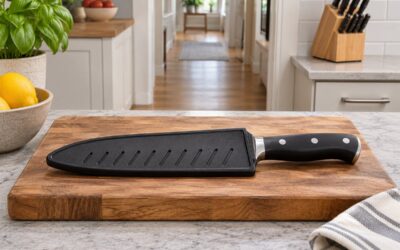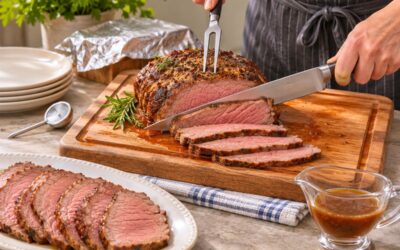
This glossary describes the words used to describe kitchen knives, from the parts of the blade to common cuts. Knowing them makes product descriptions and recipes easier to follow.
Parts of a Knife
- Blade: The cutting part of the knife.
- Edge: The thin, cutting side of the blade.
- Spine: The thick, unsharpened top of the blade.
- Tip: The pointed end, used for fine work.
- Heel: The back part of the edge, nearest the handle, used for heavier cutting.
- Bolster: A thick band between blade and handle on some knives.
- Tang: The part of the blade that extends into the handle.
- Handle: The part you hold, made in many shapes and materials.
Edge Words
These terms describe the shape of the cutting edge and how it is kept.
- Straight edge: A smooth edge, common on chef’s and paring knives.
- Toothed edge: An edge with small points, common on bread knives and helpful for crusts.
- Bevel: The angled surface that forms the edge.
- Honing: Realigning the edge with a rod, which is not the same as sharpening.
- Sharpening: Removing a little metal to form a new edge.
- Dull: An edge that has worn and no longer cuts cleanly.
Common Knife Types
| Knife | Usual job |
|---|---|
| Chef’s knife | General chopping, slicing and dicing |
| Paring knife | Small, detailed work in the hand |
| Bread knife | Slicing loaves without crushing |
| Utility knife | Mid-sized tasks between paring and chef’s |
| Boning knife | Trimming meat from bone |
Size words also appear in listings. Blade length is measured along the edge from tip to handle, and a longer blade can slice larger foods in fewer strokes, while a shorter one gives more control. Weight and balance describe how the knife feels in the hand. Different makers measure slightly differently, so check the maker’s guide.
Blade materials are another group of terms. Stainless steel resists marking from moisture, while carbon steel can take a keen edge but needs prompt drying. Each has its own care needs, so read the notes that come with the knife.
Common Cuts
- Dice: Small cubes of even size.
- Mince: Very fine pieces, as for garlic.
- Julienne: Thin, matchstick strips.
- Chiffonade: Fine ribbons from rolled leaves.
Handle every knife with care, keep your attention on the cut and follow the maker’s instructions for use and storage.
Using the Terms
When you read a listing, look for blade length, steel type, handle material and care notes. When you read a recipe, match the cut word to the size you need, and use a steady board.
FAQ
Is honing the same as sharpening?
No. Honing straightens an edge that has bent slightly; sharpening removes metal to make a new edge.
What does full tang mean?
It means the metal of the blade runs the full length of the handle, which many cooks link with balance and strength.
The Short Version
Knowing the blade parts, edge words and cuts helps you read listings and recipes with confidence. Check the maker’s guide for care details.